The Reason is to Restore What Sustains Us · The Reason is to Restore What Sustains Us · The Reason is to Restore What Sustains Us · The Reason is to Restore What Sustains Us · The Reason is to Restore What Sustains Us · The Reason is to Restore What Sustains Us · The Reason is to Restore What Sustains Us · The Reason is to Restore What Sustains Us · The Reason is to Restore What Sustains Us · The Reason is to Restore What Sustains Us · The Reason is to Restore What Sustains Us · The Reason is to Restore What Sustains Us · The Reason is to Restore What Sustains Us · The Reason is to Restore What Sustains Us · The Reason is to Restore What Sustains Us · The Reason is to Restore What Sustains Us · The Reason is to Restore What Sustains Us · The Reason is to Restore What Sustains Us · The Reason is to Restore What Sustains Us · The Reason is to Restore What Sustains Us ·
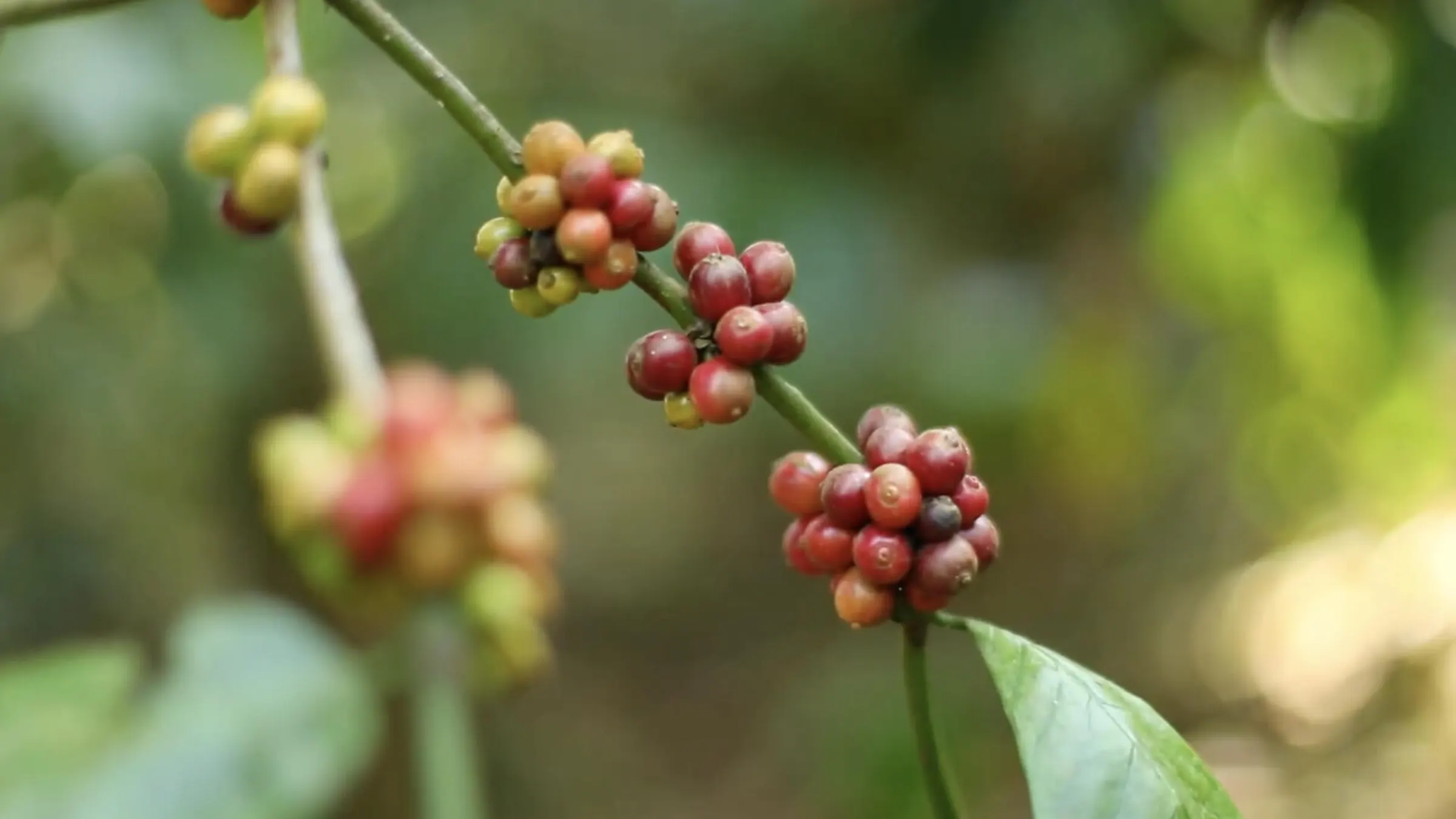
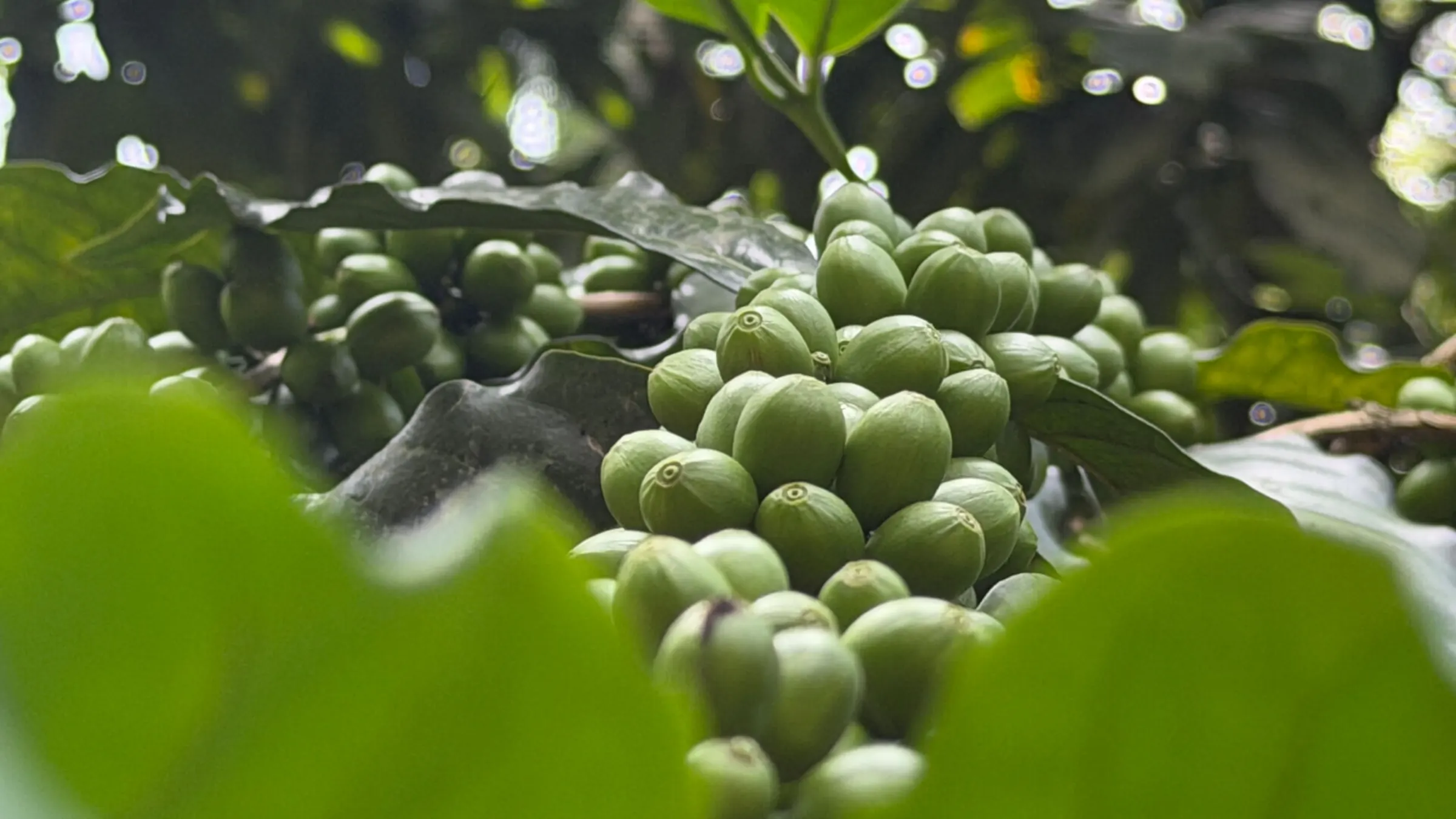
Nine lots come off the same trees on the same morning. What separates them happens afterwards, in the wet mill, over about a week.
The wet mill decides it.
Four decisions, over about a week.
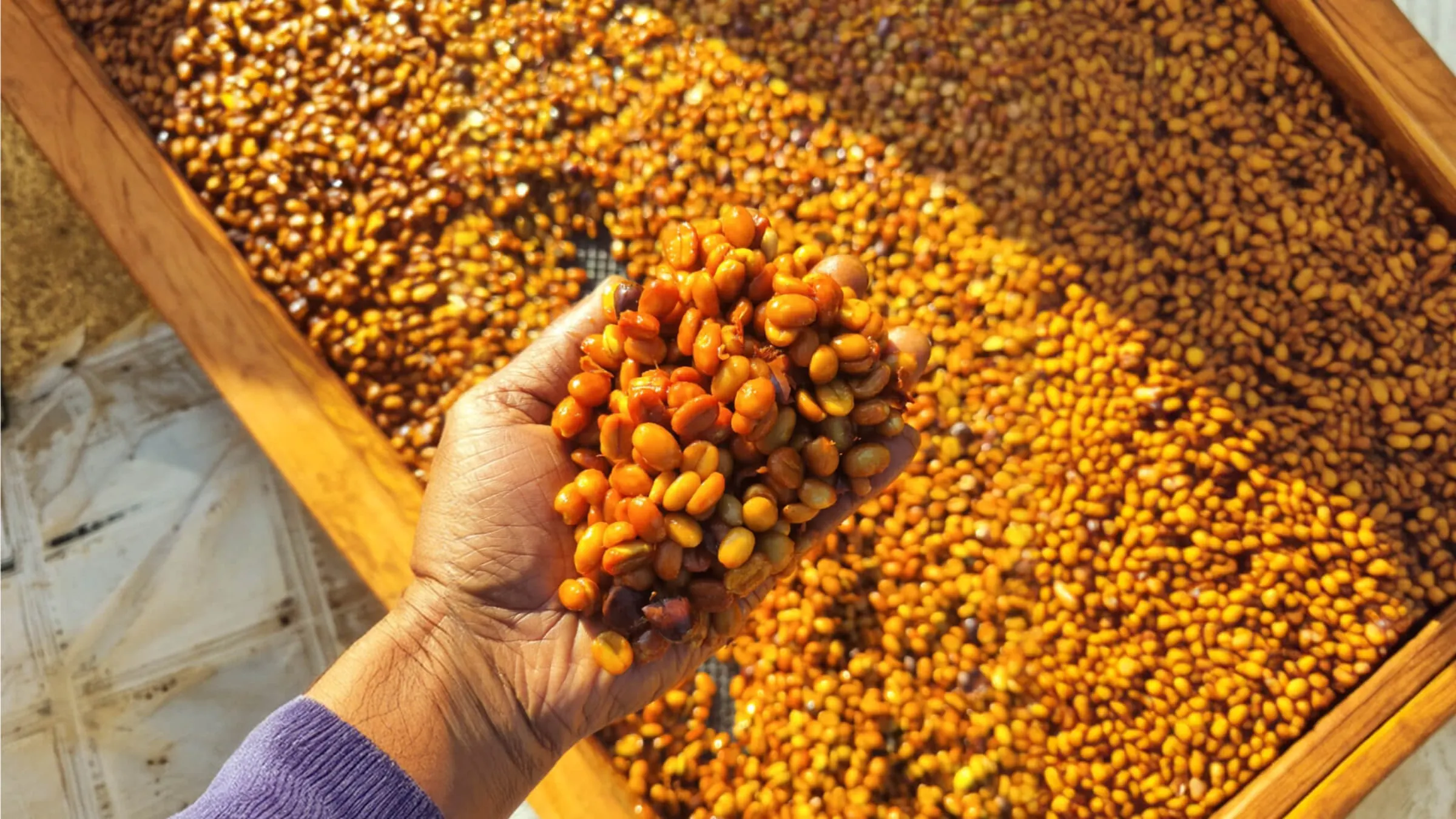
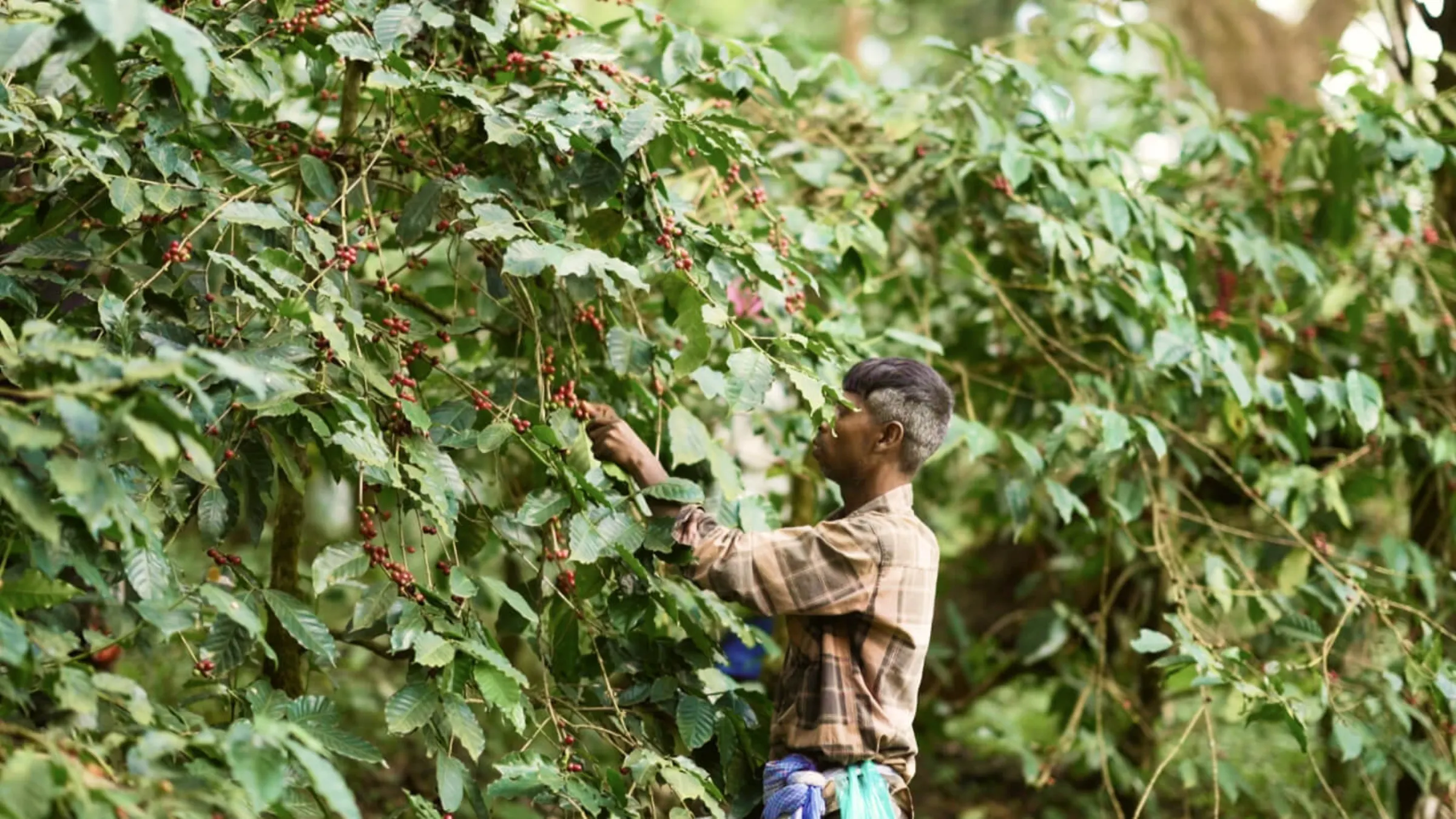
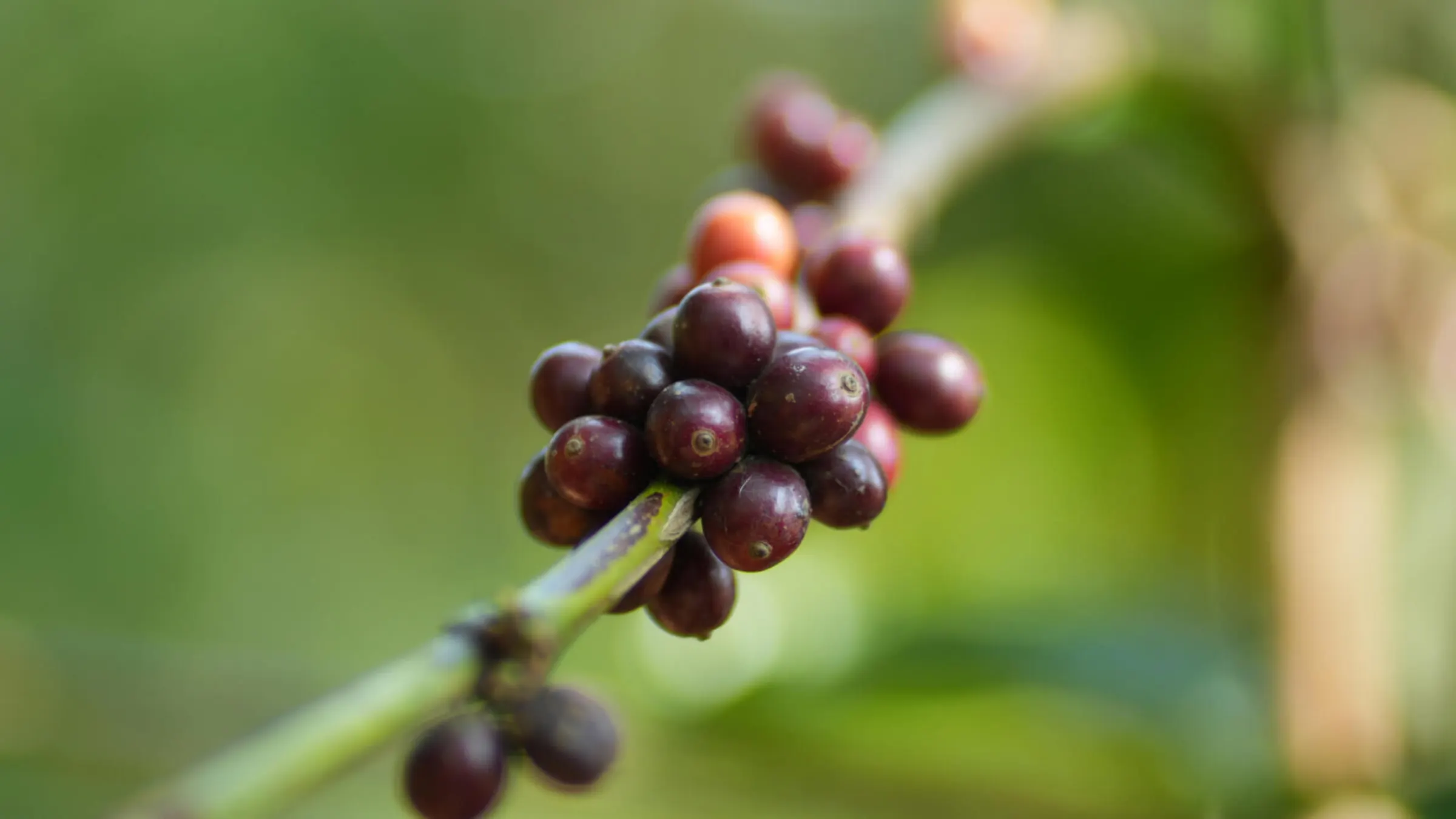
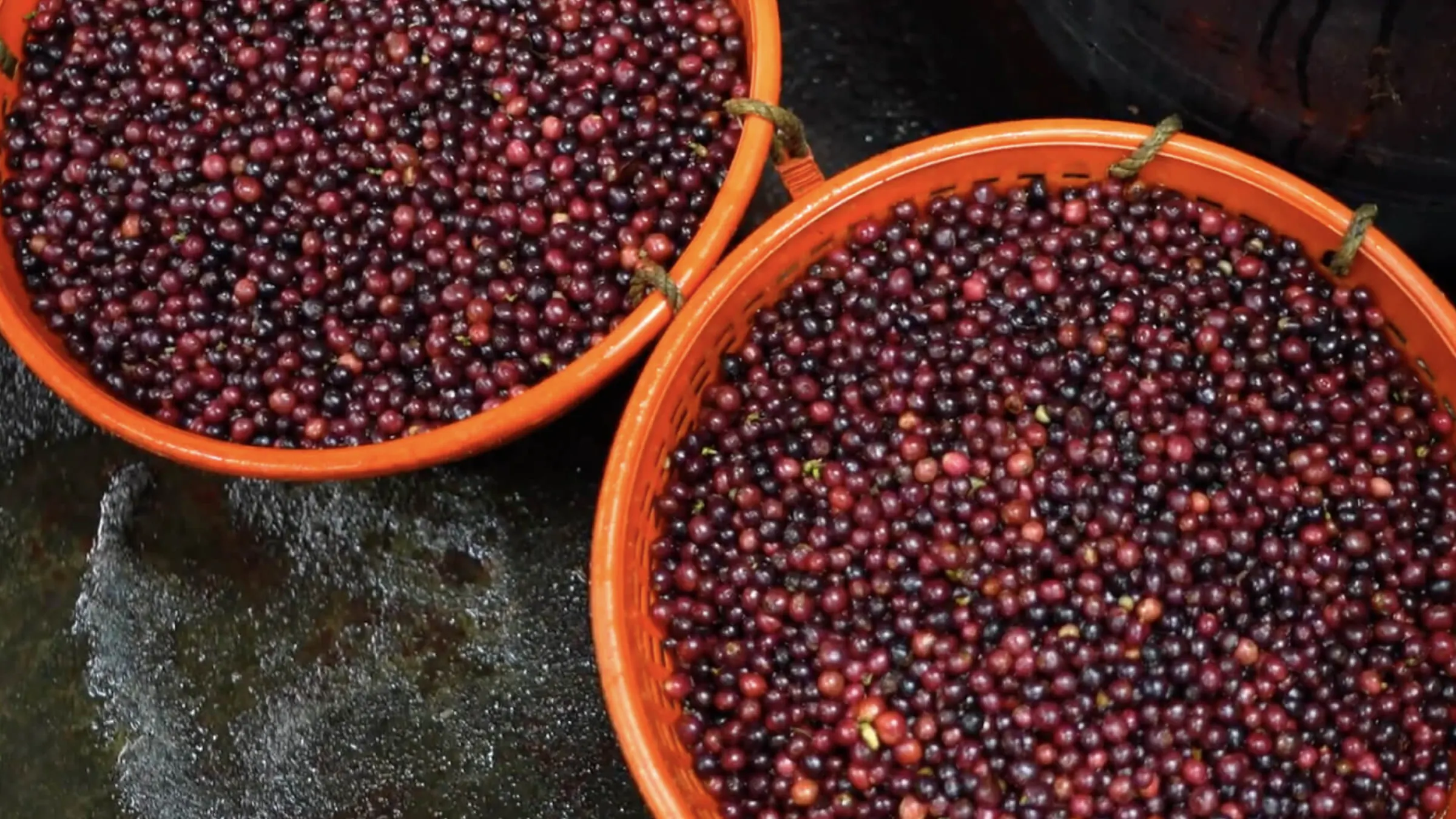
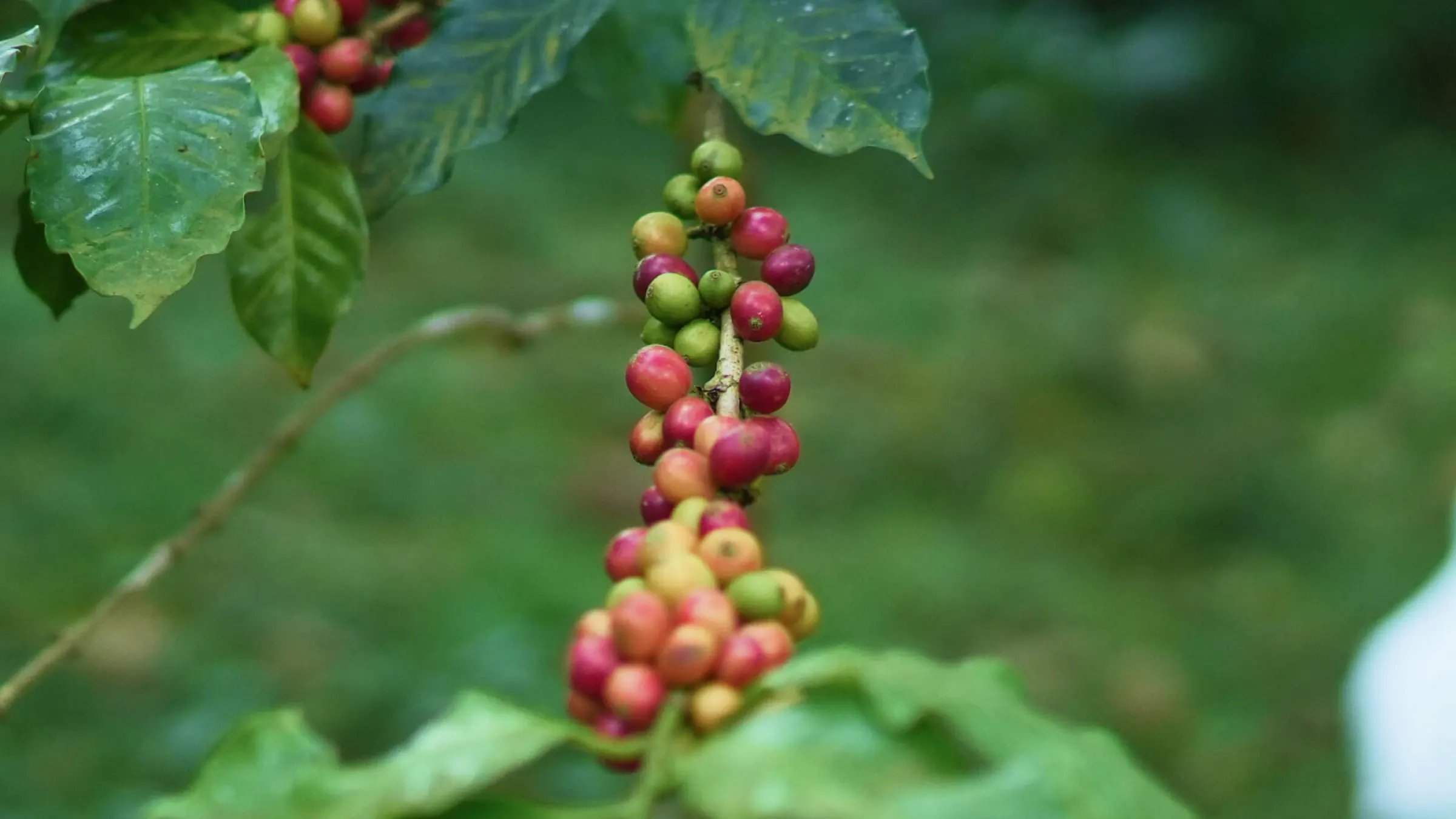
Oxygen: sealed, or open. Time: twenty-four hours, or forty-eight. Mucilage: left on, partial, or washed away. Culture: the cherry’s own, or wild off a banana leaf, or carried forward from the last tank. Everything a lot becomes is settled by those four — and before any of them, by the picking, because only fully ripe cherries are taken and every floater is pulled out.
Wild yeasts do most of the work.
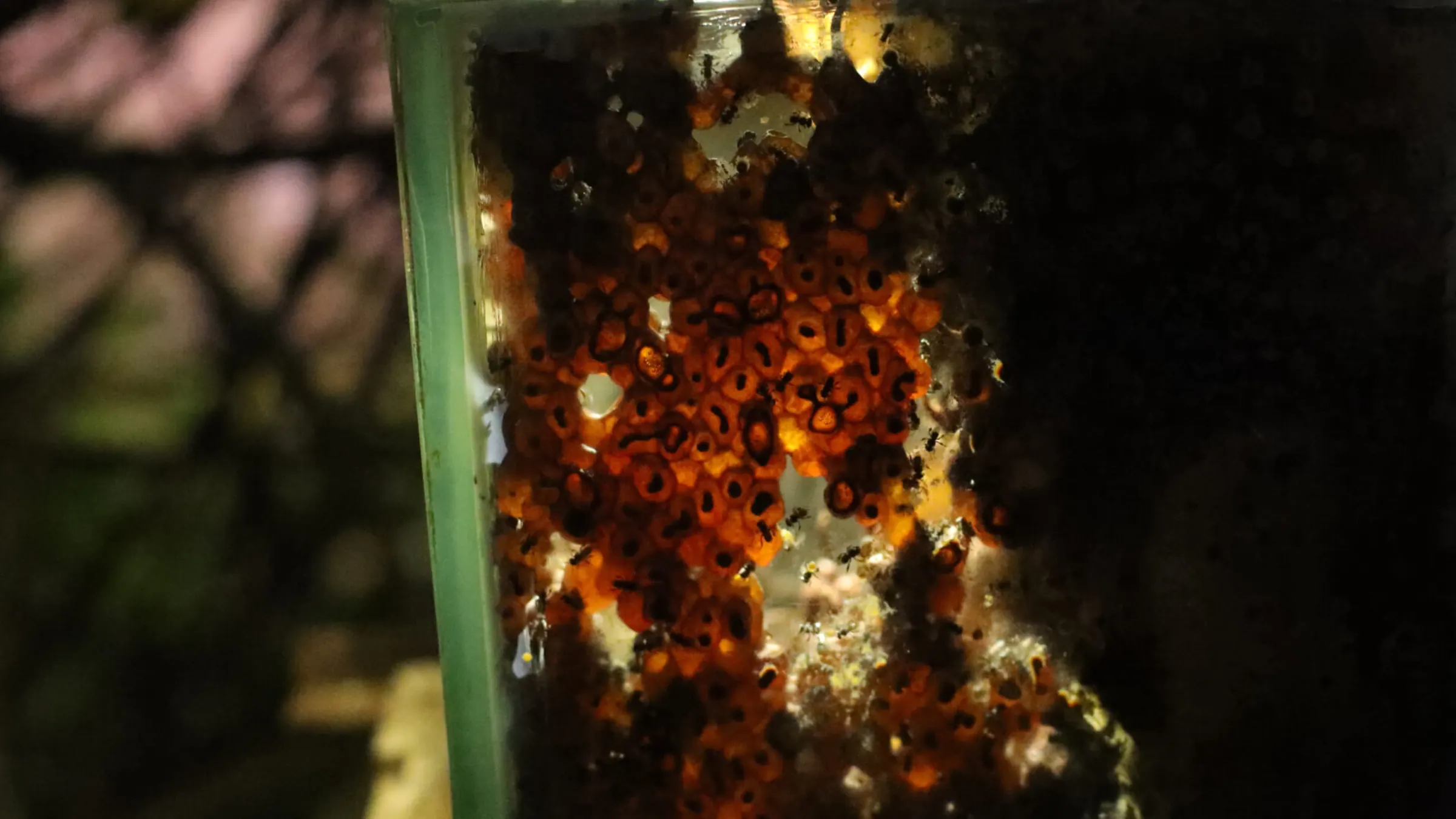
Yeasts and lactic acid bacteria eat the mucilage off the bean while the pH falls. The alcohols and acids they leave behind are what a taster later calls fruit. Nobody adds flavour to coffee here — they set the conditions and let the microbes get on with it.
The ferment ends on a number.
The tank is read every fifteen minutes, all night.
A member of the mill team takes the pH by hand, on the quarter hour, for as long as the ferment runs — which is where the twenty-four and forty-eight hour lots stop being an abstraction and start being somebody’s night. Temperature goes down three times a day, Brix at the start, the middle and the end.
At pH 4.2 the tank comes off, whatever the shed smells like. Those readings follow each lot as an individual rather than averaging across the harvest, which is the only reason nine lots off one farm can be told apart at all — and they are what a roaster is handed, months later, with the coffee.
Then somebody tastes it.
Four lots scored between 82.25 and 85.25.
In August 2026 four of the Arabica lots were cupped to SCA protocol on the estate’s own table. Anything at 80 or above is specialty grade; every one of the four scored a perfect ten on uniformity, clean cup and sweetness. The grader’s note put the ceiling at the roast — the coffee is already ahead of what anyone has so far got out of it in a roaster.
Then a national panel scored it, blind.
The Robusta went to the Coffee Board of India’s Flavour of India Fine Cup Awards, judged nationally by people with no stake in the result. At the 2026 awards Aura Estate took first place in Robusta Experimental and second in Robusta Washed. Two tables, one of them ours and one of them not, agreeing about the same coffee.
Robusta.
Three lots. Two national wins.
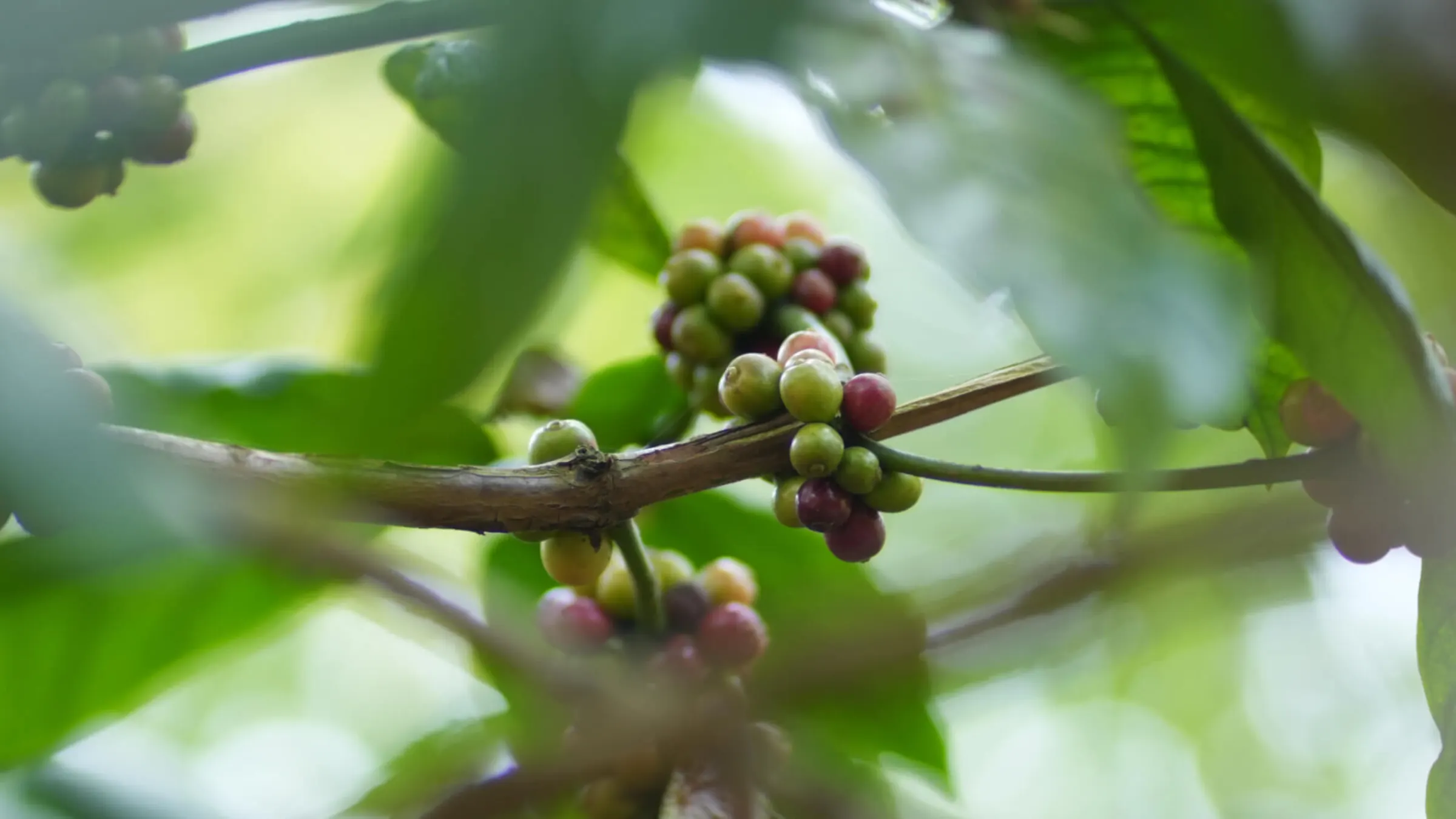
Old Peridenia, a heritage varietal, grown at 3,600 feet under the same four-storey canopy as everything else here, picked at 97% ripeness. Brix comes in between 26% and 28% — no Arabica on this estate has ever read that high. Robusta does not usually get mornings like that. Grown on this ground, with this biology underneath it, it did.
The three Robusta lots.
Available for allocation. Cold ferments, a three-day wash, and a bacterial culture we grew from our own wet cascara.
National winner · Robusta Experimental
Appassimento Maceration
Robusta Old Peridenia
Blueberry, prunes, caramel. Robusta’s higher sugar transforms under the extended cold ferment — the highest Brix of any lot on the estate.
Lot: AM01 · Robusta
Block: T Line Robusta Patte
Varietal: Robusta Old Peridenia
Elevation: 1,127 m
Fruit weight: 1.05 g
Bulk density: 0.73 g/cc
Brix at harvest: 28%
pH fruit → end: 6.2 → 4.0
Profile: Blueberry, Prunes, Caramel
Cold-soaked below 10 °C for 48 hours. Anaerobic ferment for 8 days in a dark, closed room. Dried on raised beds in a dark room for 25 days — bagged at night, returned each morning. Ripeness 97%+.
National winner · Robusta Washed
Volcanic Wash
Robusta Old Peridenia
Caramel, hazelnuts, brown sugar. Clean, structured, deeply sweet. The lot that proves specialty Robusta is not a contradiction.
Lot: VW01 · Robusta
Block: Gida Patte
Varietal: Robusta Old Peridenia
Elevation: 1,127 m
Fruit weight: 1.05 g
Bulk density: 0.73 g/cc
Brix at harvest: 27%
pH fruit → end: 6.2 → 4.0
Profile: Caramel, Hazelnuts, Brown Sugar
48-hour anaerobic fermentation. Pulped and soaked in water for three days with daily fresh water changes. Washed and slow-dried on raised beds for 18 days. Ripeness 97%+.
Proprietary process
Grappa
Cascara-derived G1 culture
Black grape, mixed berry jam, molasses. A bacterial strain cultured from our own wet cascara — a process we have not found written down anywhere else, yet.
Lot: G01 · Robusta
Block: Shed Patte
Varietal: Robusta Old Peridenia
Elevation: 1,127 m
Fruit weight: 1.05 g
Bulk density: 0.73 g/cc
Brix at harvest: 26%
pH fruit → end: 6.2 → 4.0
Profile: Black Grape, Berry Jam, Molasses
Fermented for six days with the proprietary G1 bacterial strain developed from wet coffee cascara, applied layer-by-layer with the cherries. Slow-dried on raised beds for 18 days. Ripeness 97%+.
Arabica.
Six lots from the same cherry.
Sln.9 and Sln.795 at 3,600 feet, under a canopy held between 65% and 75%. Picked the same morning, from the same block, by the same hands — and then sent six different ways in the mill. The 2026 Arabica went, in full, to one specialty cafe in Mumbai. The complete file for every lot sits below, and the next harvest is the one to talk about.
The six Arabica lots.
Separated lots, controlled oxygen, temperature logs, Brix and pH measured by hand — the complete file for each.
Our table: 85.25 · excellent range
Liquid Gold
Dry Osmosis
Berries, chocolate, spice, prune, grapefruit. Honey-like mouthfeel. The highest-scoring lot — zero defects, clean cup.
Lot: DO01 · Arabica
Block: Byton Patte
Varietal: Arabica Selection 9
Elevation: 1,127 m
Fruit weight: 1.43 g
Bulk density: 0.74 g/cc
Brix at harvest: 20%
pH fruit → end: 6.5 → 4.2
Profile: Apricot, Dark Plum, Date Syrup
Cherries dried on raised beds to 45% moisture, then sealed for a 48-hour anaerobic fermentation. Slow-dried on raised beds for 25 days with temperature and humidity controlled.
Our table: 84.25 · specialty range
Silver Lining
Appassimento Maceration
Tropical fruit, floral top notes, wine-like nuance, hazelnut, brown sugar. Bright acidity, long clean cocoa finish.
Lot: AM01 · Arabica
Block: Nagarakatte
Varietal: Arabica Selection 9
Elevation: 1,127 m
Fruit weight: 1.43 g
Bulk density: 0.74 g/cc
Brix at harvest: 20%
pH fruit → end: 6.0 → 4.2
Profile: Grapefruit, Red Apple, Raspberry
Cold-soaked below 10 °C for 48 hours. Anaerobic ferment for 8 days in a dark, closed room. Dried on raised beds in a dark room for 25 days — bagged at night, returned to the beds each morning.
Our table: 83.00 · specialty range
Coal Black
Banana Wash
Dark chocolate, dried fruit, citrus, cocoa. Perfect uniformity and clean cup. Every banana leaf comes from the estate.
Lot: BW01 · Arabica
Block: One Gida Patte
Varietal: Arabica Selection 9
Elevation: 1,127 m
Fruit weight: 1.43 g
Bulk density: 0.74 g/cc
Brix at harvest: 21%
pH fruit → end: 6.5 → 4.2
Profile: Jasmine, Orange, Sweet Lime
24-hour anaerobic natural fermentation, then pulped and layered with estate-grown banana leaves for a 48-hour controlled ferment. Washed and slow-dried on raised beds for 18 days.
Our table: 82.25 · specialty range
Red Affair
Red Honey Anaerobic
Clear citrus, spice, nuts, raisin. Zero defects — the score ceiling is roast development, not green quality.
Lot: RH01 · Arabica
Block: Charandi Patte
Varietal: Arabica Selection 9
Elevation: 1,127 m
Fruit weight: 1.43 g
Bulk density: 0.74 g/cc
Brix at harvest: 20%
pH fruit → end: 6.0 → 4.2
Profile: Orange Blossom, Grapefruit, Honey
48-hour anaerobic fermentation, then pulped with the mucilage retained. Dried at minimum thickness on raised beds for 5 days, then spread thin for up to 25 days under controlled conditions.
Flagship
Solera Maceration
Carry-forward fermentation
Borrowed from sherry: a fraction of the previous batch carried forward as a live mother culture. One batch shapes every batch that follows.
Lot: SMN01 · Arabica
Block: Byton Patte
Varietal: Arabica Selection 9
Elevation: 1,127 m
Fruit weight: 1.43 g
Bulk density: 0.74 g/cc
Brix at harvest: 20.5%
pH fruit → end: 6.5 → 4.2
Profile: Blueberry Jam, Blackberry, Musk Melon
Sealed stainless-steel tank fermentation for 3 days. Half of the actively fermenting cherries blended with fresh harvest, alternating two-day ferment and rest cycles. Sun-dried by day, rested overnight in breathable bags to 12% moisture.
Rarest
Solera Wash
Minimal intervention
Everything non-essential stripped away. The smallest lot we have ever made, and the cleanest expression of the cherry.
Lot: SMW01 · Arabica
Block: Tenginamara Patte
Varietal: Arabica Selection 9
Elevation: 1,127 m
Fruit weight: 1.43 g
Bulk density: 0.74 g/cc
Brix at harvest: 20%
pH fruit → end: 6.5 → 4.2
Profile: Floral, Blood Lime, Brown Sugar
48-hour anaerobic fermentation. Half pulped, half remains with fresh cherries added for the Solera carry-forward. The pulped coffee is soaked three days with daily water changes, then washed and dried on raised beds for 20 days.
Every lot has a block behind it.
150 acres. Eight blocks. Every zone mapped.
Each block has its own microclimate, shade composition, soil profile and coffee character. Select one to see what grows there, what it feeds, and what the data says about the zone.
The Appassimento block. Cold-fermented below 10 °C, dried in a dark room for 25 days — the block that produced the SCA 84.25 lot. High canopy density, cool microclimate.
Estate blocks
Nagarakatte
The Appassimento block. Cold-fermented below 10 °C, dried in a dark room for 25 days — the block that produced the SCA 84.25 lot. High canopy density, cool microclimate.
Varietal: Arabica Selection 9
Lots: AM01 — Appassimento Maceration
Brix: 20%
Shade: Silver Oak, Rosewood, Fig
Trees: ~4,500
Byton Patte
Two flagship lots from a single block. The 85.25 Dry Osmosis and the Solera Maceration both draw from Byton’s dense shade canopy and well-drained laterite soil. The estate’s highest-scoring Arabica zone.
The Solera Wash block. 48-hour anaerobic, Solera carry-forward, 3-day soak, hand-washed. Minimal intervention — the cleanest expression of the cherry, and the rarest lot on the estate.
Varietal: Arabica Selection 9
Lots: SMW01 — Solera Wash
Brix: 20%
Shade: Silver Oak, Teak, native canopy
Trees: ~3,800
Charandi Patte
The Red Honey block. Mucilage-on drying after an anaerobic ferment. The Q grader notes a citrus core with room to climb as the roast develops. Zero defects, perfect clean cup.
Varietal: Arabica Selection 9
Lots: RH01 — Red Honey Anaerobic
Brix: 20%
Shade: Mixed native, Silver Oak
Trees: ~4,100
One Gida Patte
The Banana Wash block. Estate-grown banana leaves layered with pulped cherries for 48 hours. The highest Brix among the Arabica lots, and the most distinctly Indian process on the estate.
Varietal: Arabica Selection 9
Lots: BW01 — Banana Wash
Brix: 21%
Shade: Banana, Silver Oak, mixed native
Trees: ~4,800
T Line Robusta Patte
National winner — Robusta Experimental. Brix 28%, the highest of any lot on the estate. Heritage Old Peridenia under dense shade, transformed by the same cold-ferment Appassimento technique.
Varietal: Robusta Old Peridenia
Lots: AM01 — Appassimento Maceration (Robusta)
Brix: 28%
Shade: Dense four-storey canopy
Trees: ~3,600
Shed Patte
The Grappa block. Home of the proprietary G1 bacterial strain cultured from wet coffee cascara, applied layer-by-layer through a six-day fermentation. Available for allocation.
Varietal: Robusta Old Peridenia
Lots: G01 — Grappa
Brix: 26%
Shade: Mixed canopy, estate infrastructure
Trees: ~3,200
Gida Patte
National winner — Robusta Washed. Pulped after a 48-hour anaerobic ferment, soaked three days with daily water changes. Clean, structured, deeply sweet.
Varietal: Robusta Old Peridenia
Lots: VW01 — Volcanic Wash
Brix: 27%
Shade: Dense mixed canopy
Trees: ~3,400
A block of their own.
The estate is open to roasters who want more than a purchase order. A roaster picks a block, sets the varietal focus, the processing method and the drying protocol, and the estate builds a lot that exists nowhere else.
Every tree in it is tagged. Brix, pH, ripeness, soil moisture and shade cover are tracked at zone level, and the roaster reads the same numbers the estate does. Harvest decisions get made together, in the week they matter.