Aura manages the shade canopy over its coffee at Mudigere as a strategic instrument for light — an old Western Ghats practice, now measured in lux and cut to prescription, tuning how much sun each block of coffee gets on a horizon measured in decades.

The Light Instrument

Shade is the estate's oldest tool.

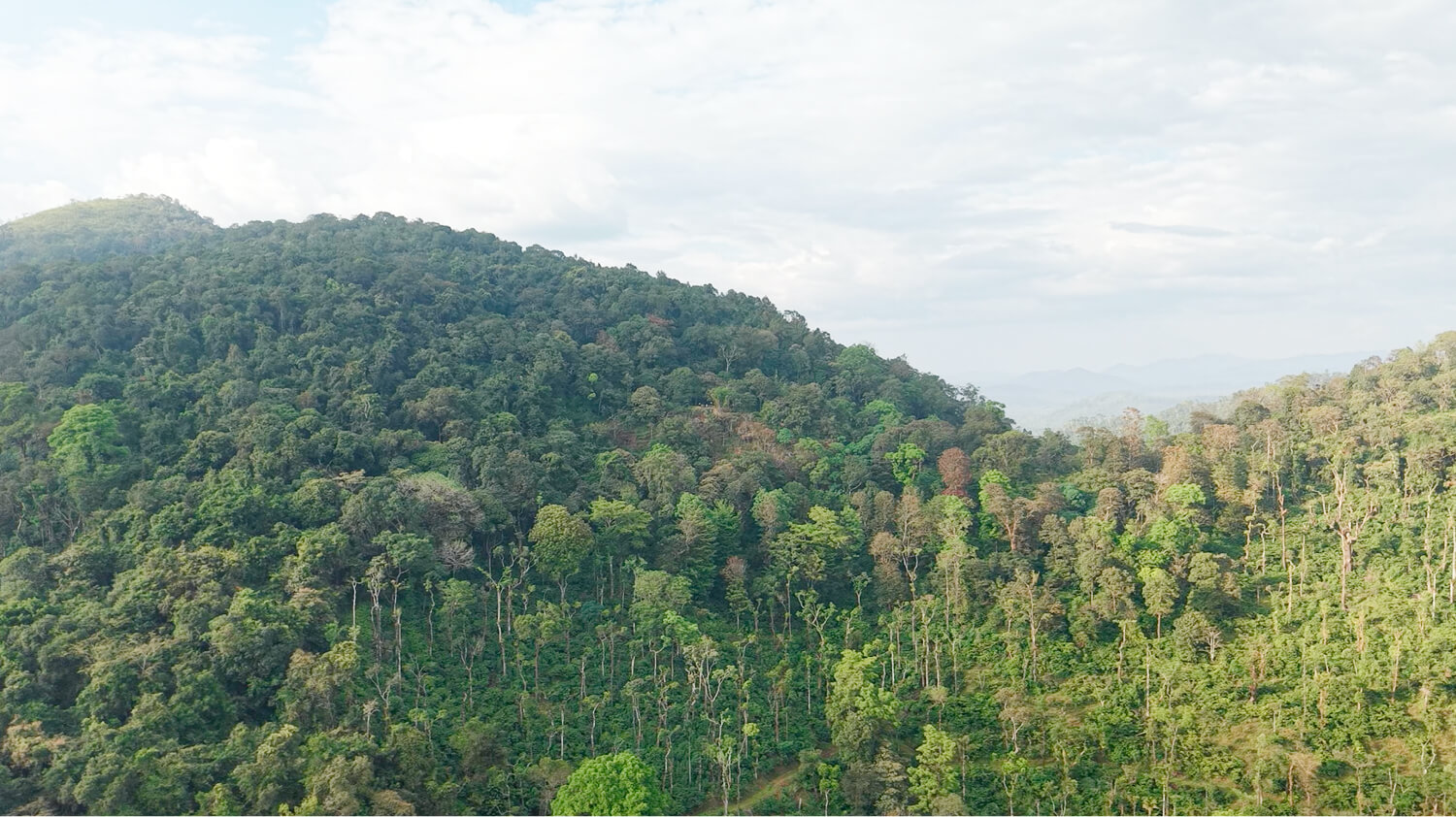
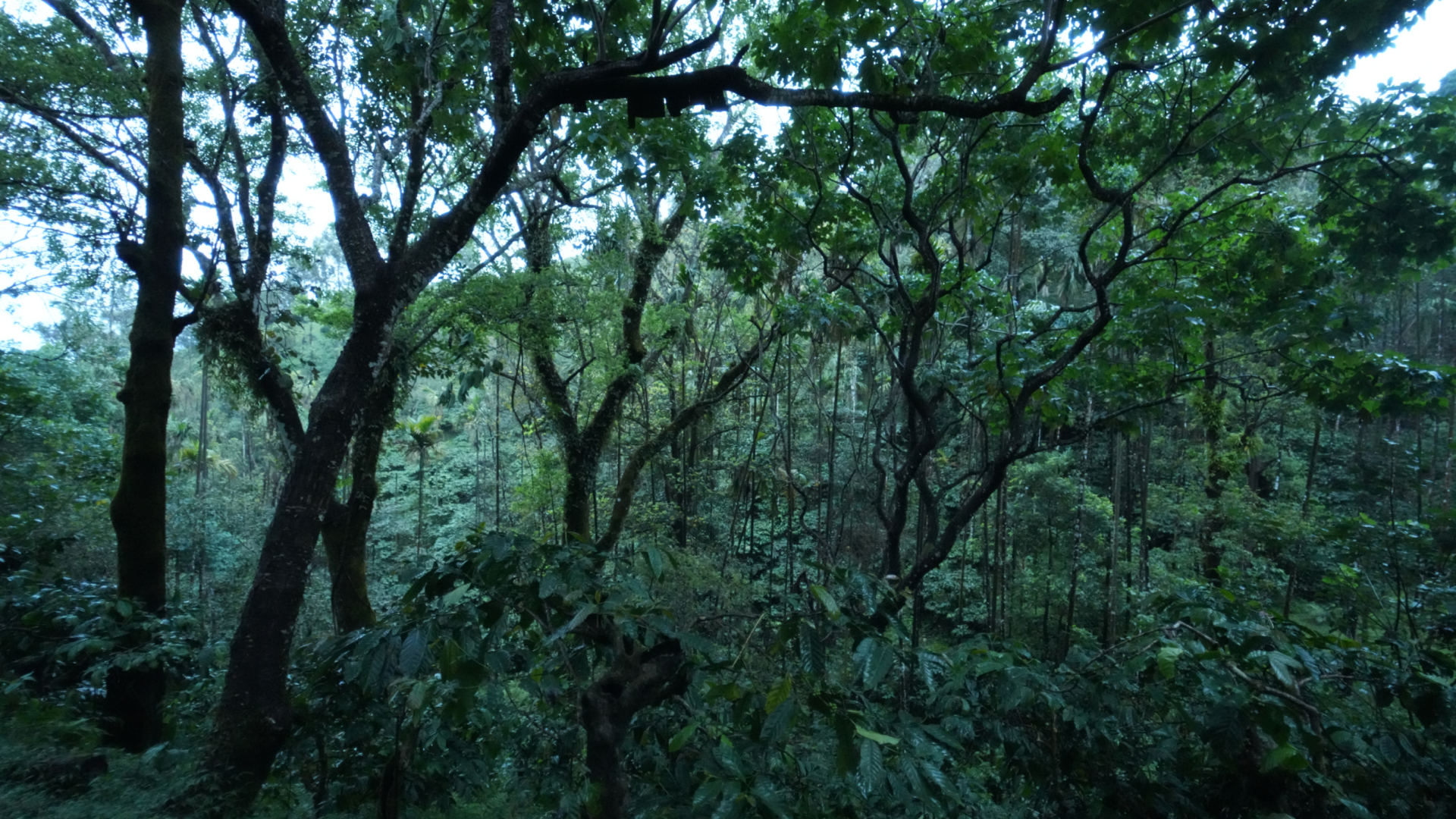
The coffee of the Western Ghats has grown under trees for more than three centuries. Here shade is structural: native forest trees and planted Silver Oak form a multi-layered canopy that holds moisture, moderates temperature, cycles nutrients, and carries the biodiversity that makes this one of the world's recognised hotspots. Aura works that canopy as an instrument — the layer that decides how much sun reaches the coffee below.

The tuning is a practice called shade whiskering: the selective removal of branches to regulate the light without felling the tree or breaking its form. Too much shade suppresses flowering; too little exposes the coffee to heat and moisture stress. The work is to find the balance a block of coffee actually wants, and hold it — season after season, tree by tree.
Canopy profile

Estate
Sampigekhan, 150 acres
Canopy layers
4 vertical stories
Target coverage
60–80% per block
Optimal range
65–75% (highest Brix)
LUX data points
Hundreds, GPS-tagged
Full sun reference
100,000+ lux

The Western Ghats canopy — three centuries of shade-grown coffee

Four stories, one canopy.

The canopy is not a uniform blanket — it is a four-story architecture, and every tree in it has been counted, tagged, and mapped. An emergent layer of silver oak, fig, and jackfruit regulates temperature and holds carbon. Beneath it, areca palm and native hardwoods carry the mid-level shade and trellis the pepper. The coffee — Arabica Sln.9 and 795 — sits in the understory, reading the light that falls through. A ground layer of pepper, cardamom, ginger, and cover crops protects the soil.

The stories are coupled. Prune the emergent layer too hard and the canopy below floods with light; the areca palms stress, and within six to eight weeks the pepper vines climbing them lose vigour. The intervention window is roughly three weeks. Every cut in the top layer ripples through the system beneath it — which is why the light is measured before a branch comes down.

Canopy — four stories

01 · Emergent
Silver oak, fig, jackfruit
02 · Canopy
Areca palm, native hardwoods
03 · Understory
Coffee — Arabica Sln.9, 795
04 · Ground
Pepper, cardamom, ginger, cover crops

The old way was a guess.

Whiskering has traditionally run on the eye. A contractor reads the canopy, judges what to take, and directs the cut. Done by feel, it removes branches indiscriminately, opens the canopy unevenly, and distorts the crown of a tree that will stand for another fifty years — leaving some coffee scorched and some starved of light within the same block.

In the 2026 pre-monsoon season, Aura rebuilt the practice around measurement. Before a branch came down, the light was quantified; the cutting followed a prescription written from that data; the result was checked against it afterwards. The guiding order was plain, and it governed every block:

Measure first. Prune later. Validate afterwards.

We measure the light before we cut.

The baseline was read in lux. Forestry interns Nayana and Jagadeshwari walked the blocks with two digital lux meters, taking the sunlight reaching the coffee as a measurement rather than an impression. The targets came from the CCRI: fifty to seventy thousand lux for Arabica, seventy to ninety thousand for the hardier Robusta.

To catch how much the canopy varies within a single acre, Aura built a five-cluster method. Each acre was divided into five clusters, and ten readings taken at random inside each — fifty observations an acre, resolved into five cluster averages. The readings map each block into zones — dense shade, medium, open — so it reads not as one number but as a gradient. The cut answers the zone, not the block: fine enough to find a shaded pocket a few trees wide and leave the rest standing.

CCRI light targets

Arabica
50,000–70,000 lux
Robusta
70,000–90,000 lux
Managed shade canopy
30,000–80,000 lux
Full sun
100,000+ lux
Dense shade under the closed canopy

Zone A · dense shade — two-thirds of the direct sun filtered before it reaches the coffee

Illuminance survey — Block 3 (Byton Patte), 2026

Zone A · Dense shade
~33,000 lux avg
Zone B · Medium shade
~62,000 lux avg
Zone C · Open canopy
~82,000 lux avg
Readings per cluster
10 measurements
Full sun reference
100,000+ lux

Five clusters × ten readings = fifty observations per acre.

Every cut is prescribed.

The light data were read block by block, and each block got its own prescription — how much to take, and where — rather than one uniform pass across the estate. The operation covered roughly eighty acres, worked in the May–June window before the south-west monsoon closed the canopy in for the year. A team of eleven tree loppers and ten branch choppers carried it out.

What separates whiskering from lopping is where the judgement sits. Every significant cut was directed by a supervisor against the prescription, weighed for branch orientation, crown symmetry, the tree's centre of gravity, and its stability through the storms ahead. The tree keeps its architecture and its life; the coffee below gets the light the numbers asked for.

Cut too much and you flood the coffee with light. Cut too little and the cherry never ripens. The right cut is in the reading, not the manual.

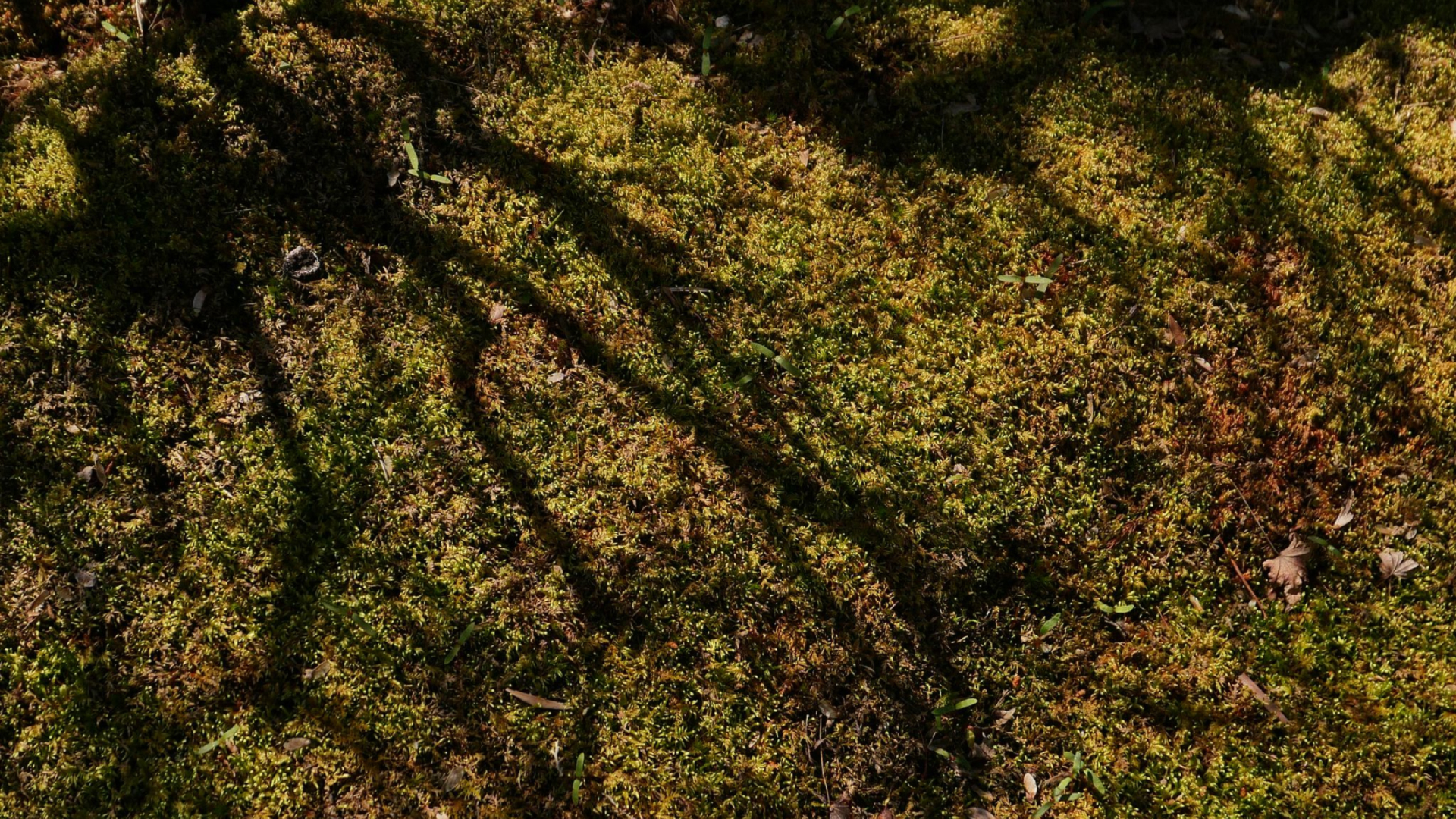
Sunlight falling through the canopy onto the forest floor

Light reaching the floor — the reading the whole practice is tuned to

Nothing cut leaves the ground.

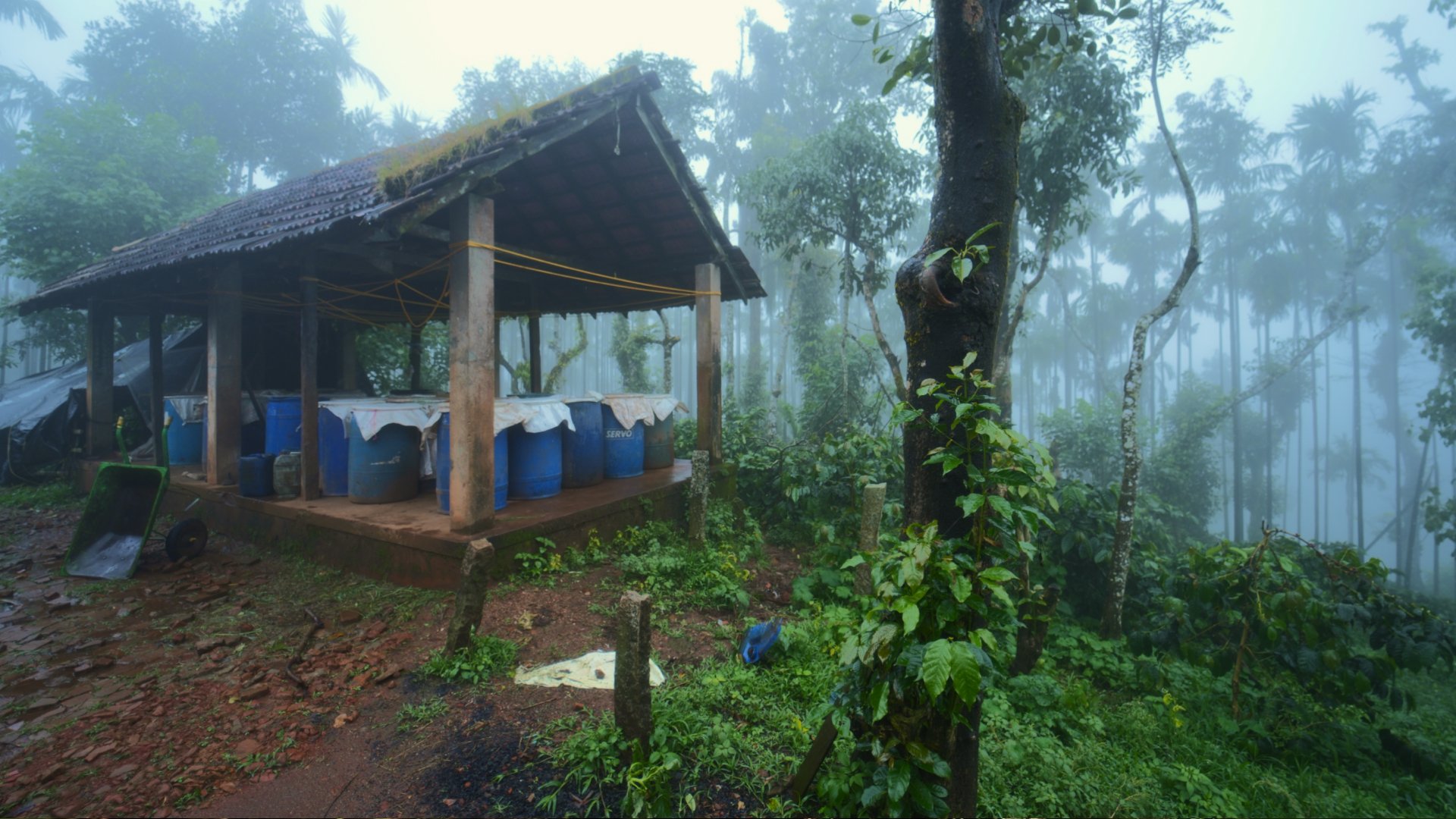
Whiskering eighty acres makes a great deal of wood, and Aura treats it as feedstock, not waste. Large branches are stacked to break down in place; leaf litter stays where it falls, as mulch that holds soil moisture and feeds the nutrient cycle. Silver Oak is set apart from the native wood — it decomposes slowly and is mildly allelopathic, so it composts on its own terms rather than checking the growth around it.

The trees are tended too. A fresh cut is an open wound and a way in for wood-decaying fungi, so every major cut is sealed with a paste of cow pat preparation and turmeric — the herd's dung and a native antiseptic, closing the wound the same way the rest of the estate is fed.

Measure the light.Cut only what the numbers ask.Feed the cut back to the ground.Measure the light again.The canopy holds; the coffee ripens.

How Aura manages the canopy.

The estate already knows the light is worth this much attention: blocks held at sixty-five to seventy-five per cent canopy cup measurably better, and canopy vitality is tracked by satellite every quarter. Whiskering is where that knowledge meets the tree — the annual decision that sets the light for the whole season beneath it.

What Aura added is the loop that makes it repeatable: baseline reading, block-wise prescription, selective cutting, biomass returned, wounds dressed, and a post-operation survey to confirm the targets were hit and the coffee was not over-exposed. An old regional craft, run on measurement and validated against its own numbers — Natural Intelligence, applied to light.

50–70k lux

The light an Arabica block is tuned to under the canopy, on CCRI targets — Robusta is held higher, at seventy to ninety thousand.

80 acres

Whiskered to block-by-block prescription in the 2026 pre-monsoon window, before the south-west rains closed the canopy for the year.

50

Lux readings taken per acre — five clusters, ten readings each — before a single branch came down.
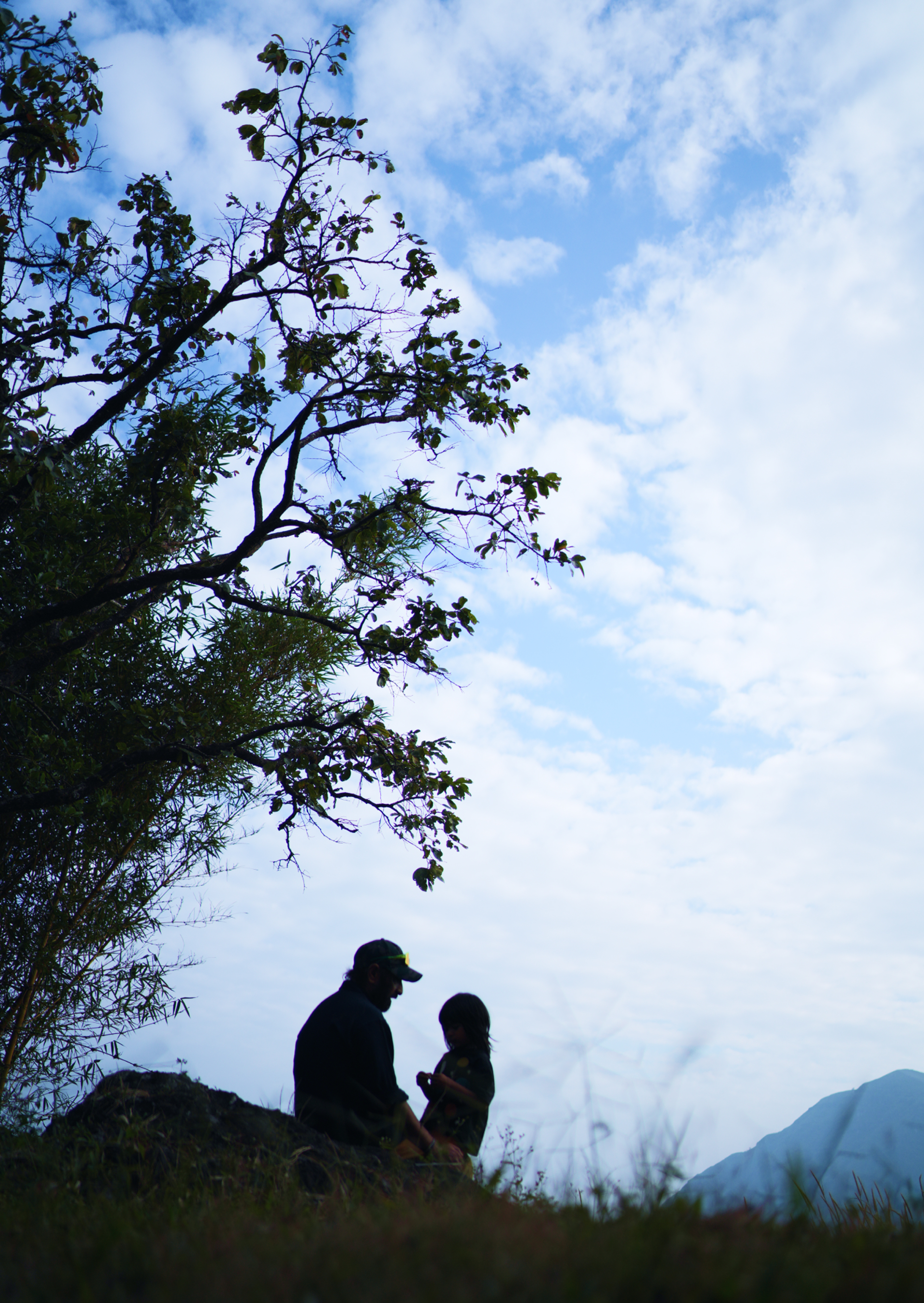
A father and child, silhouetted against the mountains at dusk
A canopy planted for a generation that will inherit it

Light is a generational decision.

A shade tree cut this season carries the coffee for years, and the tree itself was planted for a canopy the planter would never see mature. Managing that canopy by measurement rather than by eye is how Aura keeps a three-century landscape productive without spending it down — light held at the level the coffee wants, trees kept in their full form, the wood returned to the soil that grew it. Old practice, modern measurement, a horizon in decades: one block, one season, at a time.