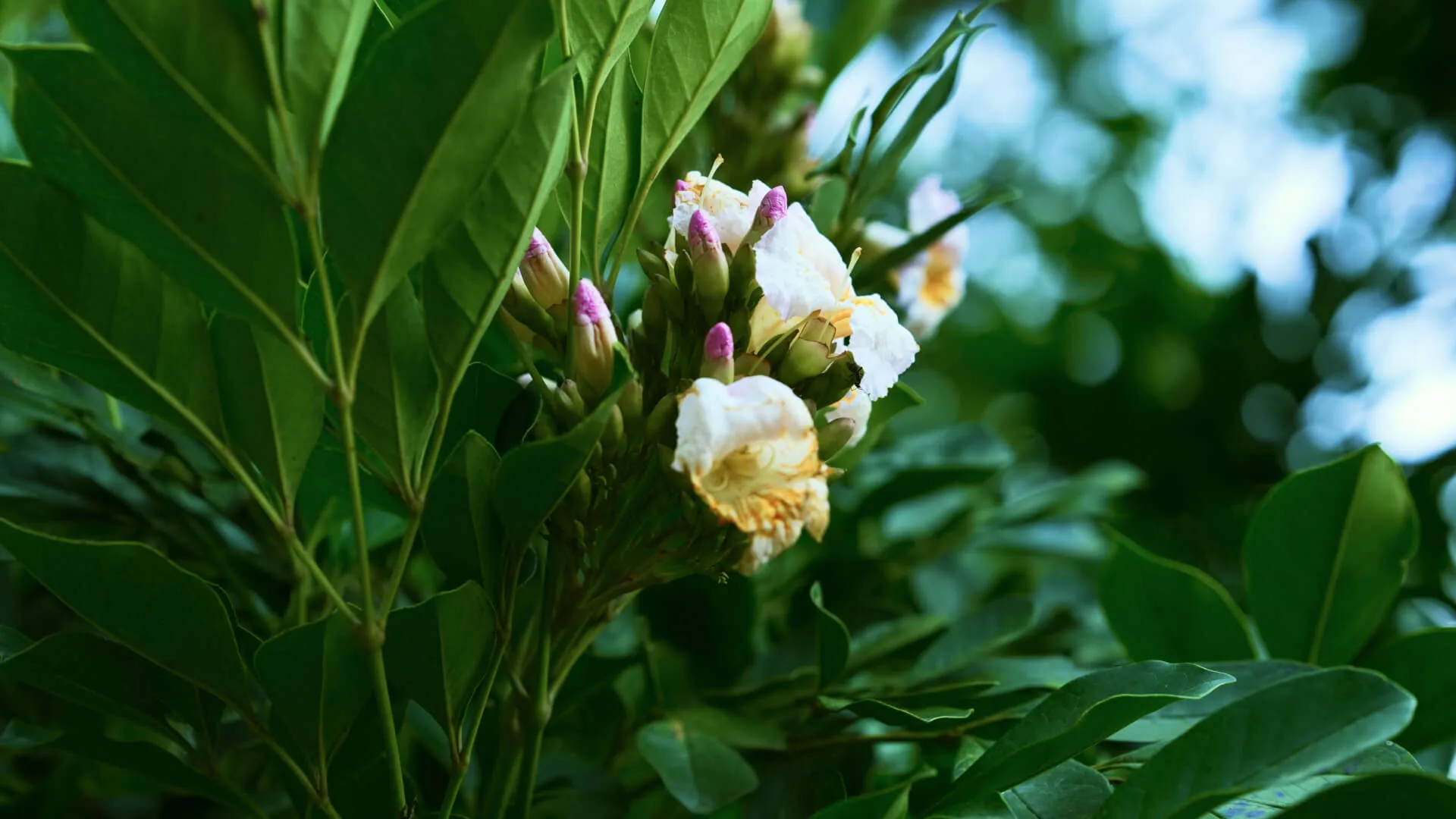
White and pink blossom opening on a shade tree above the coffee

What flowers under the coffee — Aura Estate, Mudigere

The Flowering Understory

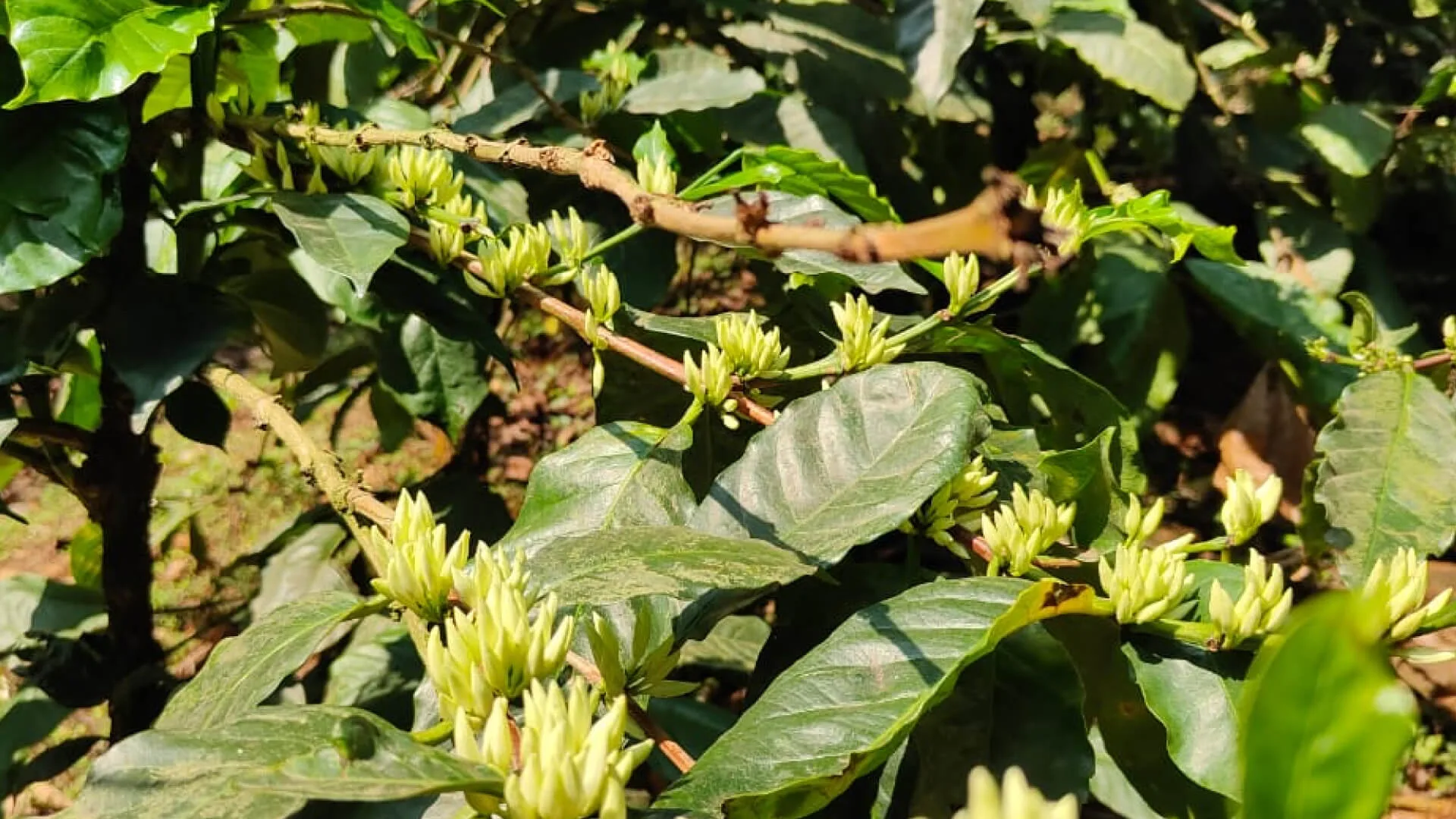
Coffee branches in bud, flowers about to open along the wood

Three days a year, and everything that feeds on flowers has to be alive for the other fifty-one weeks

Coffee flowers for about three days a year.

Arabica is largely self-fertile, so a coffee estate can crop without much help. What insect pollination reliably does is improve set and evenness — and it needs a population of insects that are alive in the other fifty-one weeks.

That population does not live on coffee. It lives on the ground layer: the native herbs, grasses and shrubs flowering in sequence under the canopy, at different heights and in different months. Whatever happens to that layer happens to the pollinators.

At Aura, a good deal has been happening to it, and not by design.
Six plants taking the larder

The Western Ghats support an extraordinary native flora. They also host a set of introduced plants that have made themselves at home, and six of them are established across this estate — in the coffee, in open ground, along forest edges and drainage lines.

An alien plant is not automatically an invasive one. The concern begins when a species spreads fast, forms persistent stands, and starts changing the vegetation around it. These six do.

Lantana camara

A woody shrub that forms dense thickets, suppresses native herbs and seedlings, and interferes with tree regeneration. One of the major invasive plants in Indian forests.

Bidens pilosa

A fast herb of open and disturbed ground, seeding abundantly and crowding native herbs out of light and space.

Wedelia

A ground-cover that forms dense mats, occupying the layer where native herbs and seedlings would establish.

Hypoestes phyllostachya

The pink polka dot plant, an ornamental that establishes in moist ground. Its spread here is being monitored before anyone decides what to do about it.

Ageratina adenophora

Crofton weed. Forms dense stands in moist landscapes, and its effects reach below ground — documented changes to soil conditions and microbial communities, with allelopathic compounds suppressing neighbours.

Chromolaena odorata

A fast shrub that alters vegetation structure outright. Already recognised as a major invasive across the Western Ghats.

A flowering understorey is where the pollinators eat.

How a thicket empties a canopy.

The six behave differently but their effects rhyme. Dense growth takes the physical space where native plants would establish. Tall growth takes the light that reaches seedlings. Between them, native regeneration slows and the composition of the understorey shifts.

As a few fast species become dominant, native diversity falls — documented for Lantana and Ageratina invasions elsewhere, with substantial change to understorey composition and reductions in species richness. Some invasives also alter soil moisture, nutrients and microbial communities in ways that favour their own continuation.

The end state is a site held still: instead of moving gradually toward a diverse native community, it stays simplified and invasive-dominated. For anything that feeds on flowers, that is a shorter menu, available for fewer months.

Space. Light. Regeneration. Diversity. The ground the next generation starts in.

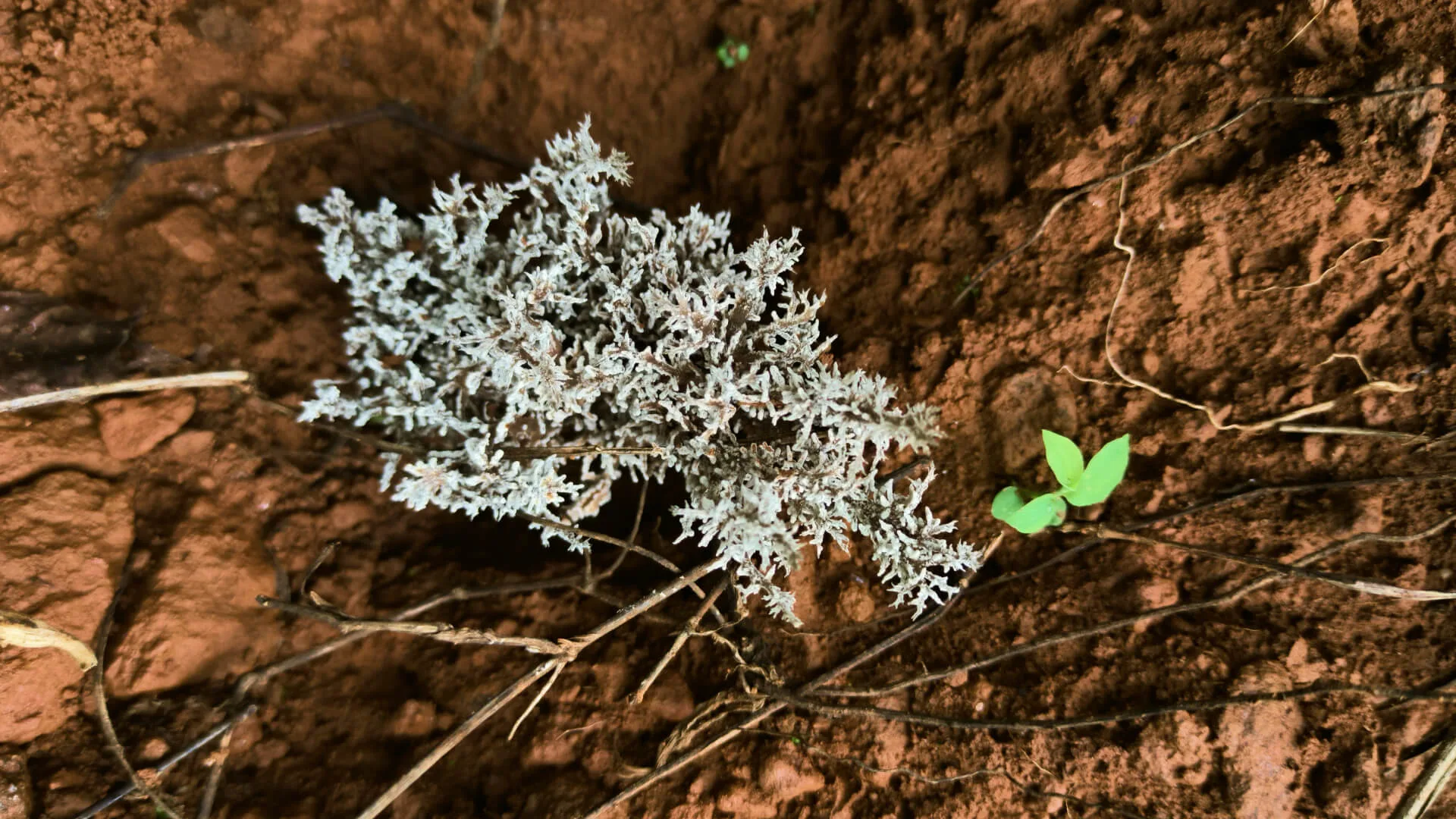
Lichen and a single seedling on open red laterite

Where invasives come out, natives go back in — an empty gap is an invitation

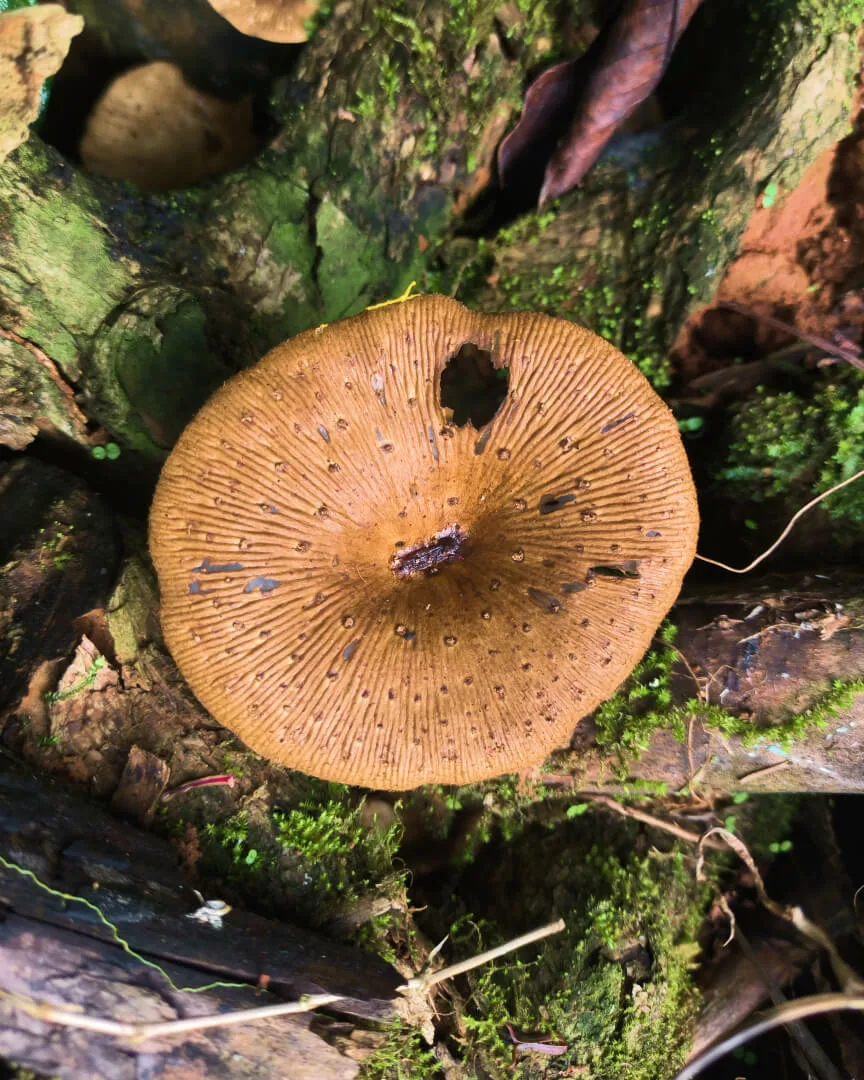
A broad mushroom cap on a mossy fallen log in the understorey
The layer six introduced plants are taking

What is being done about it.

Invasive plants at Aura grow among coffee, shade trees and native regeneration, which rules out blanket clearing. The approach is identification, gradual removal, protection of what is regenerating naturally, and ecological replacement.

Where invasives are taken out, native plants already present are kept. Suitable native herbs, grasses and shrubs are encouraged or introduced so the opened ground does not sit vacant — vacant ground is how a cleared site becomes an invaded site again.

Because most of these species regenerate readily from seed or surviving material, this is treated as ongoing management rather than an operation with an end date.

Two other things work in the pollinators’ favour. No synthetic pesticides go onto the 150 acres. And the Bug Hotels supply nesting cavities — solitary bees among the likely tenants — that a managed landscape tends not to provide on its own.

The survey is the next piece of work.

Everything above is habitat work — native herbs and shrubs into the opened ground, no synthetic pesticide on the 150 acres, nesting cavities in the bug hotels — and it is what the evidence says to do first.

A species list, a count and a season-by-season record of who visits what is what turns that work into a measured result, and it is the next thing to build. Until it exists this page describes the habitat rather than the response to it.

What would settle it is ordinary and unglamorous: fixed transects, walked on a schedule, counted by someone who can tell the insects apart, repeated for long enough to see past a good year. Until that exists, this is the thinnest record on the estate and the honest thing is to say so out loud.