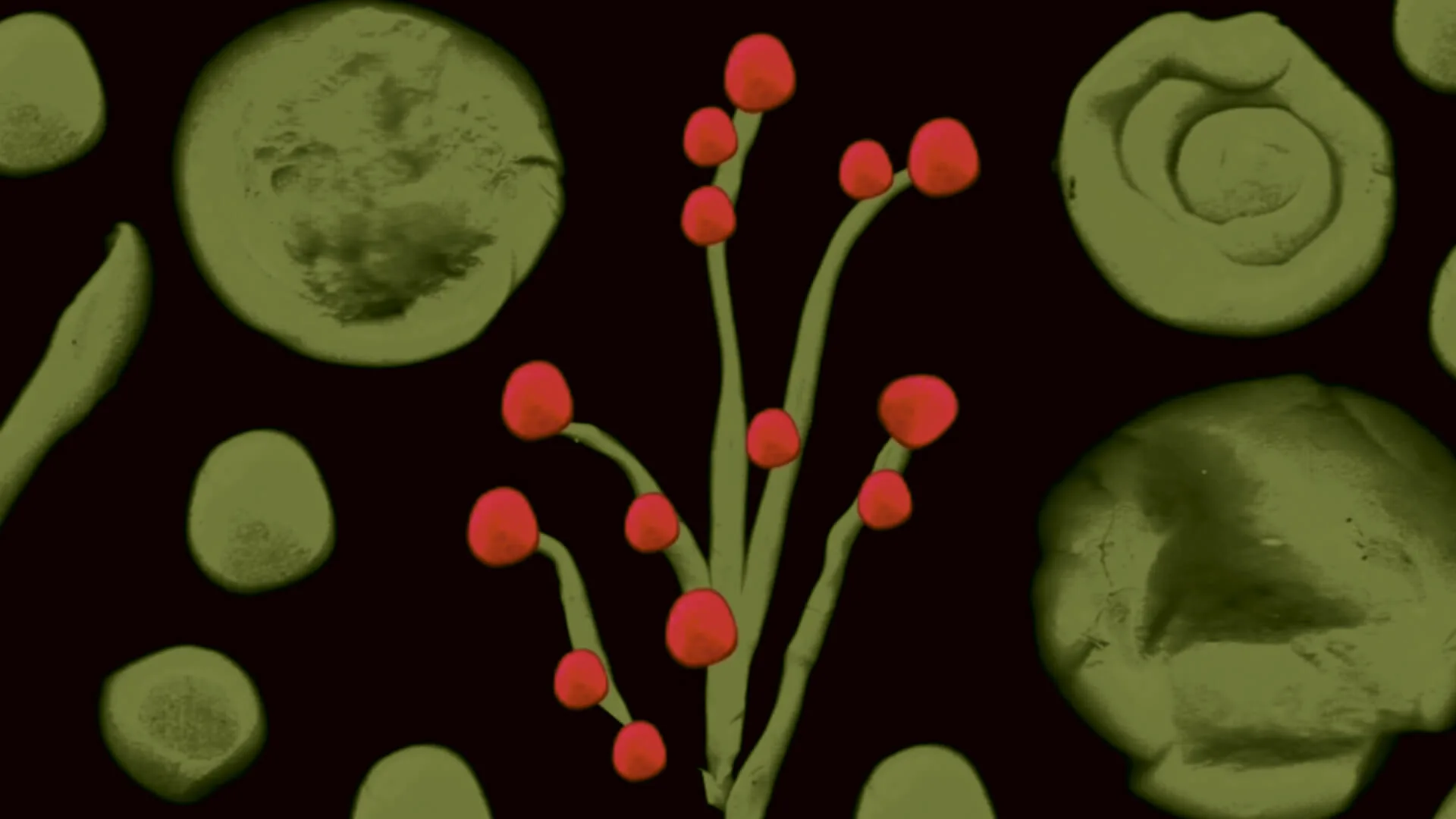
Culture plates from the estate lab

Cheap enough to leave outdoors through a monsoon

Aura Intelligence

Read the land first, then build.

Natural Intelligence is Aura’s way of working. A forest that has held a slope for a thousand years has solved a problem, and the work is to read that solution before proposing one of our own.

Nature is already wise. The gap is in our ability to observe what it does, remember it, learn from it and act at the right time — and closing that gap is the whole of the term.

In practice it means measuring first. A canopy is read in lux before anyone cuts it. A preparation is plated before it is spread. A ferment is stopped by its pH. The instinct comes second, and it is a better instinct for having numbers under it.
Three studios, one way of working.

It runs through three studios and the places they work in. Each takes the same posture into a different material.

What we measure

Streams, each on its own sampling rate
Nine
Domains the estate is described in, from crop to geology
Seven
Daily logs: everything seen, and everything done
Two
Every human event, at the point it happens
Signed
Export formats, so the record outlives the software
Open

Agroculture

Works it into 150 acres — canopy read in lux, fertility made on the estate, every event signed.

Hospitality

Builds the rooms where a person can meet it, and runs them on the same clock as the farm.

The Atelier

The taste layer: what is worth making at all, and what is good enough to leave here carrying the name.

Why this is possible now.

Three technologies converged: foundation models, robotics, and sensors cheap enough to leave outdoors through a monsoon. For the first time a landscape can be made machine-readable.

Machine intelligence sits inside that rather than above it. There is a living layer, a human layer, and a physical layer of sensors and machines; natural intelligence is all of them read together, which is a larger thing than any model sitting in the middle of it.

Three problems make it hard, and each one is worth stating clearly. A landscape is difficult to capture at scale. Fewer people each year want to work in agriculture. And listening is a skill, so the open question is how a system learns to do it well.

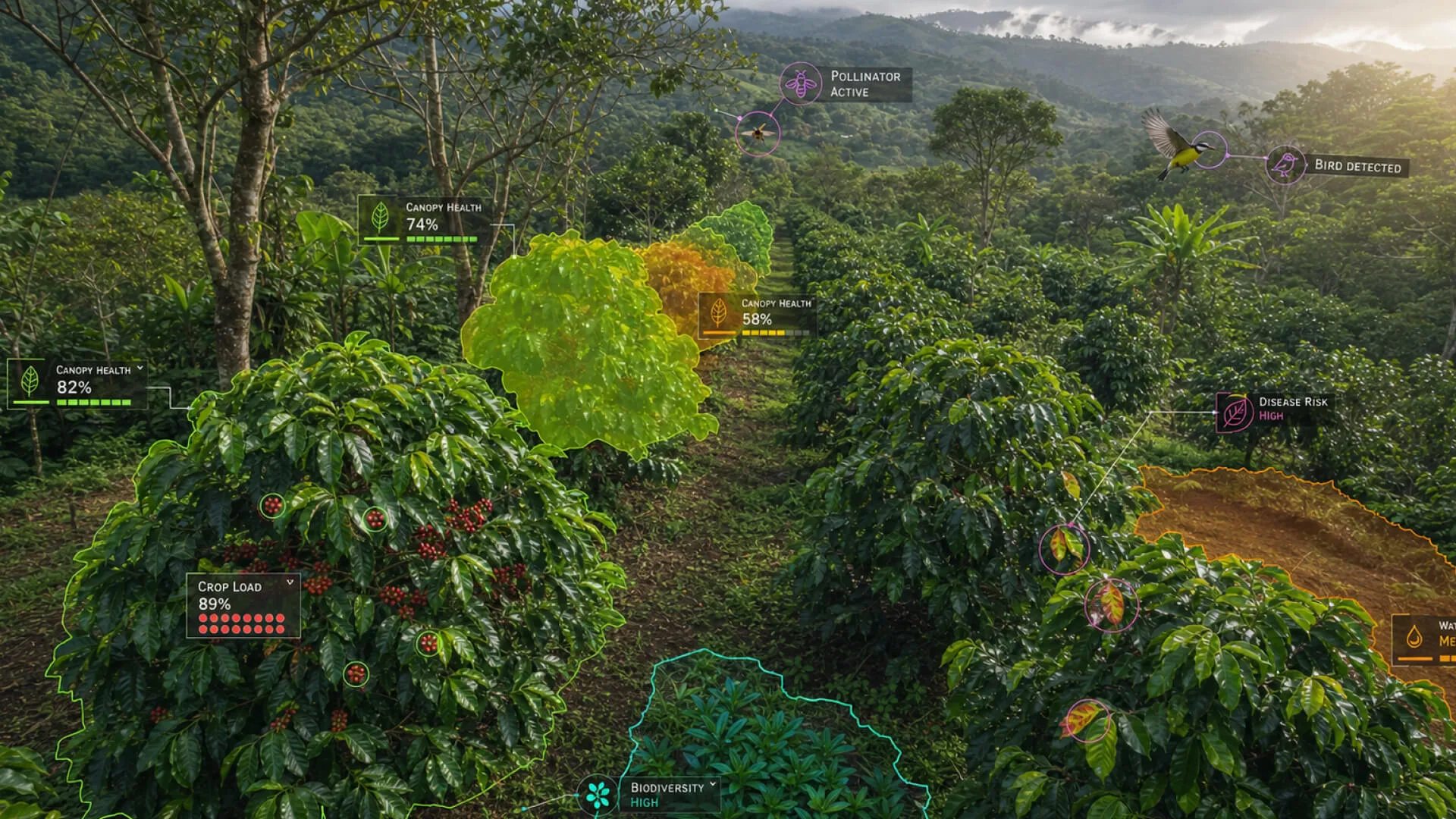
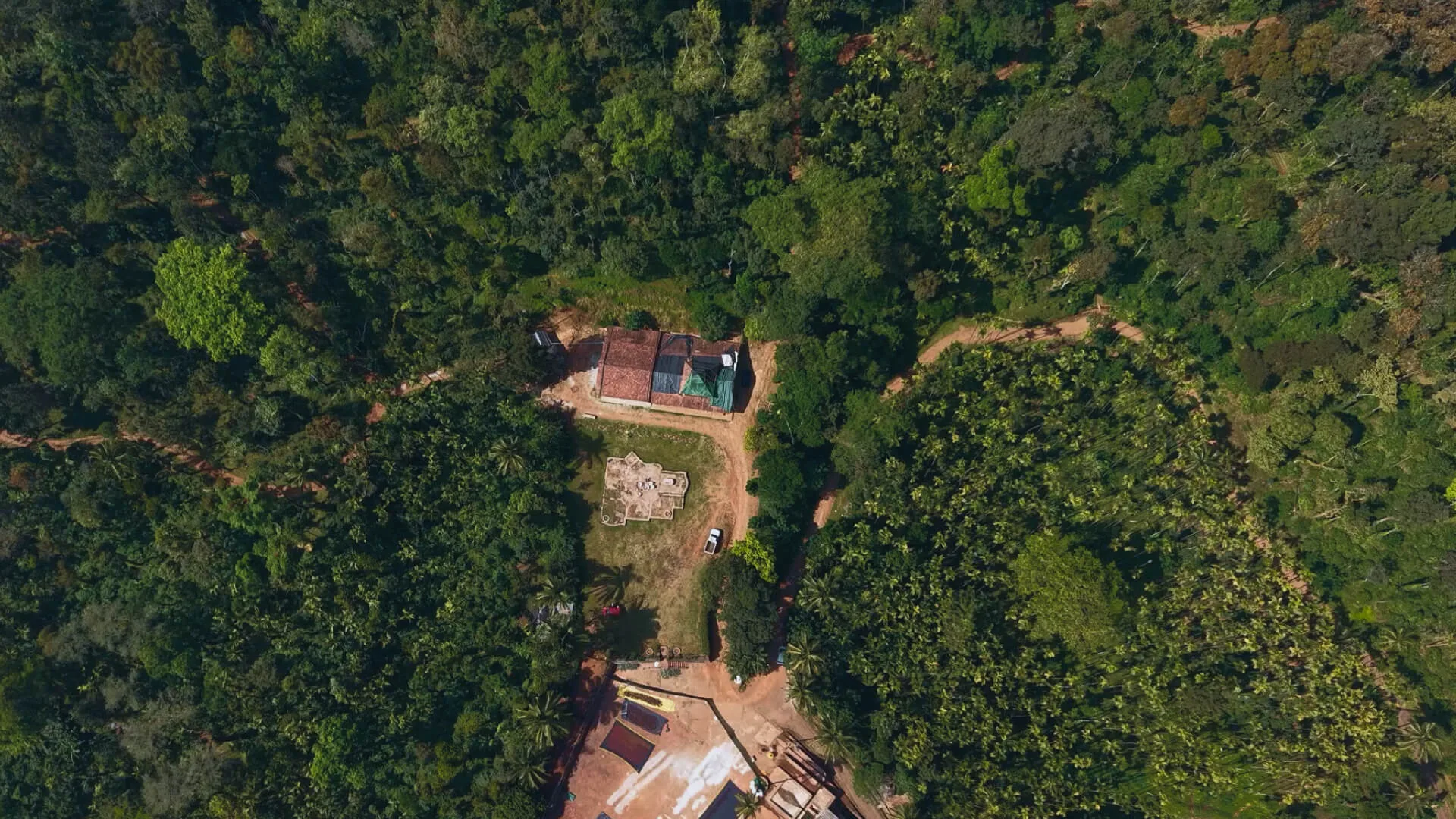
The estate from the air, a building among the canopy

The difference between them is what trains the model

What was lost, and what it costs to hold.

The knowledge itself is old. Growing in balance was worked out thousands of years ago, in the same traditions this estate still farms by. What never happened was industrialising it.

Agriculture was made simple by hiding its complexity. Fifty years ago the farmer was handed a box and told not to ask questions, and it worked until the land began to pay for it. Regeneration hands the complexity back, and something has to be able to hold it — Aura Intelligence is the machinery underneath.

Aura practises organic and biodynamic in full and publishes the record, which is the harder standard to hold and the one a reader can check for themselves. The 32-acre tea block is in organic transition, targeting 2027, and the loop that is closed is the fertility loop — fuel, tools, packaging and labour come from outside.

The horizon it is measured against.

Every decision is weighed against the year 3026, which changes what counts as a good one: the machine that listens beats the machine that acts, and the slow answer usually wins.

Aura runs two sanctuaries, and one place proves a practice where two test it. Aura Estate at Mudigere is 150 acres under crop; Ohara, north of Kyoto, farms nothing at all. A way of working that holds in both is worth more than one that holds in either.

The term is Aura’s own. It is defined here and then left alone, because it is meant to stay a way of working.

The land has been computing longer than any machine. We just stopped reading the output.

Ambient intelligence for a living system.

What is being built is an operating system for a living ecosystem: a layer that sits across soil, canopy, weather, herd and people, and holds the whole of it at once.

The direction the estate is walking is towards regeneration that can be proved at scale. Regenerative and organic are the starting point; the harder claim is abundance that somebody outside the farm can check.

A closed loop: observe, remember, learn, act.

Four moves, in that order, running continuously on a biodiversity plantation. Observe what is happening. Remember what was done. Learn from what followed. Act at the right time.

Everything below is machinery for those four, and the loop matters more than any single reading inside it.

A recovery, put back to work.

This is a recovery: remembering what was known, and putting it back to work with instruments behind it. Something has to be able to hold that complexity, and that is the whole of the problem this discipline exists to solve.

Every crown on a hundred and fifty acres, plotted

From an old estate to a regenerative one.

The shift happens in three stages, and the estate is somewhere inside them rather than at the end.

Observe

The land is read continuously — today by people in the field, and by a weather station and lab; drones and a wider sensor network are the design rather than the present.

Plan

Every reading meets a knowledge base built for regeneration, so a number arrives with what is known about numbers like it.

Continuous ops

A digital twin runs the estate day after day, season after season. A limited pilot is in build.

Listen. Decide. Regenerate.

Listening turns scattered signals into a living picture of a place, and turns what one person knows into something the estate keeps. The knowledge held by somebody who has read this valley for thirty years leaves when they do, and writing it down is the part of this work with a clock on it.

Deciding turns that picture into an interpretation — what is happening, what may be causing it, what remains uncertain — with the evidence and the reasoning visible behind it.

Regenerating turns a decision into coordinated action, and then measures what the action did. Listen, decide, regenerate, measure, prove, learn, listen again.

How the land is read.

Capture happens where the work already happens. Field teams log through WhatsApp workflows — field work, fertiliser work, cow work, estate walks — as formatted text, photographs and voice, so the record gets built without asking anybody to work differently.

A weather station at 3,600 ft and the estate lab are the other two live sources. Drones, a plant-sensor network and satellite are in the design and not yet running, and this page will say so until they are.

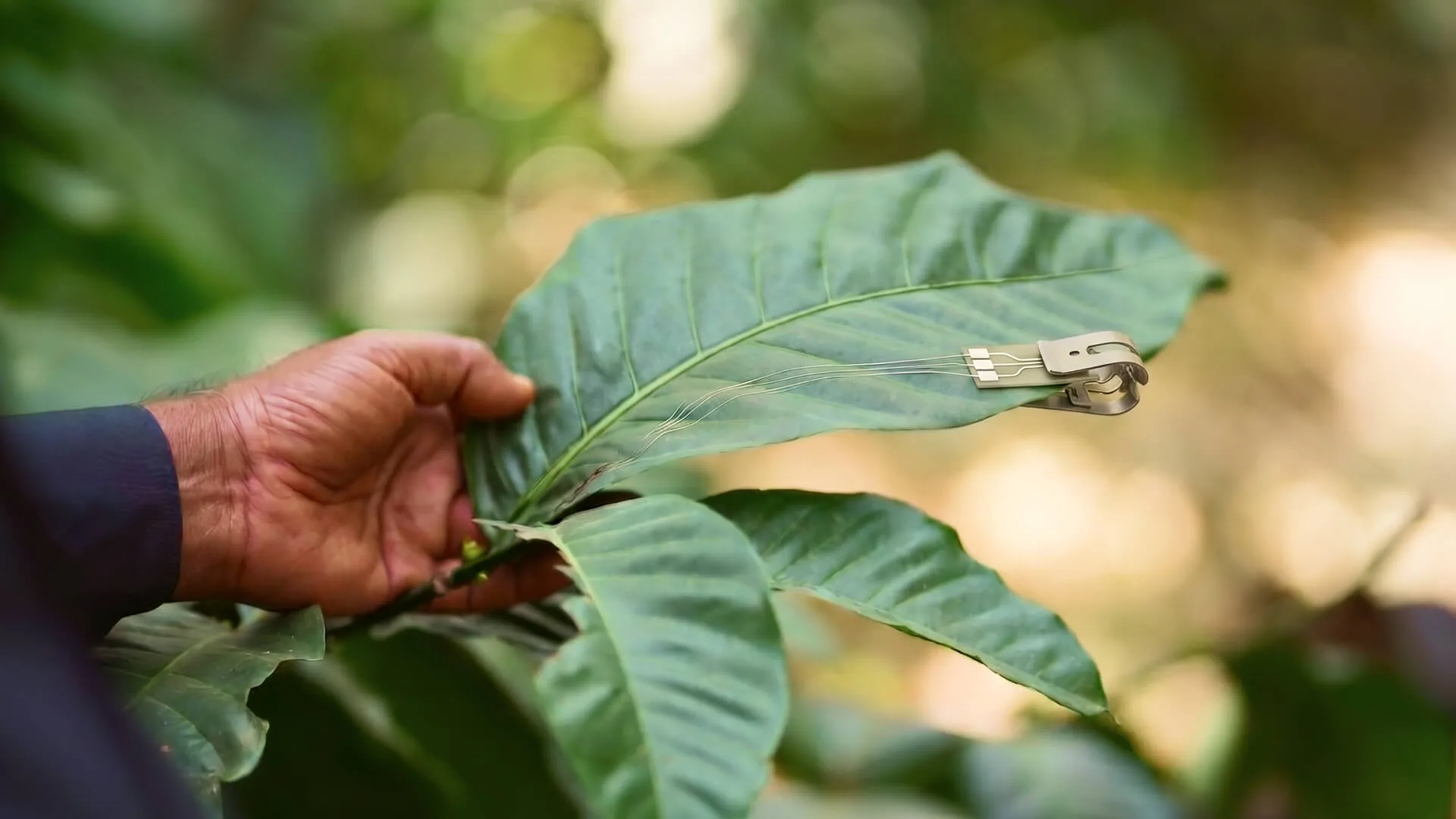
A hand turning a coffee leaf to look at it

Formatted text, photographs and voice — without changing how anybody works

Every tree. Every cow. Every season.

Base data is the ground of it: every tree, plant and animal labelled and identified, with an ID, a photograph and a zone on the estate map. A reading is worth very little until it is attached to the thing it was taken from.

The estate is described across seven domains — crop, weather, fauna, flora, soil, the fungal network, and the geological foundation under all of it.

Every tree. Every leaf. Every cow. Every bee. Every rainfall. Every compost batch. Every intervention. Every mistake. Every season.

The farm brain.

Two logs run daily. An observation log holds everything seen or measured; an intervention log holds every action taken. Planning reads from both, which is what keeps a plan answerable to the ground.

Above them sits memory: base data, observations, interventions and outside knowledge in one governed system, sliced so a question about husbandry meets what the estate already knows about husbandry. That layer is in build now.

Nine streams feed it, each sampling at its own interval, because soil moves in seasons and a ferment moves in minutes. Every human event is signed by the person who did it: BD 501, Block 07, 06:14, waning moon, humidity 78%, by Rao, dung batch G-03.

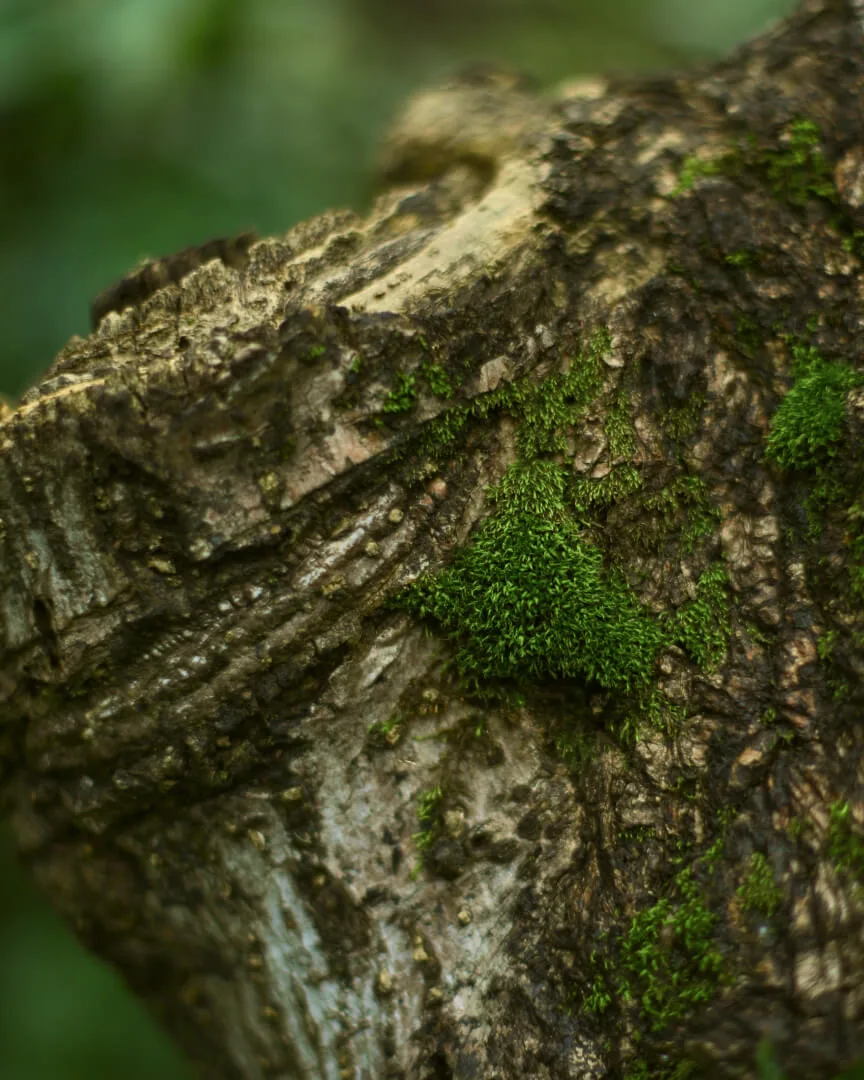
Moss and epiphytes established on a trunk
It worked until the land began to pay for it

Building the world model.

The chain is curated estate data, then field context, then a model conditioned on both, then a prediction, then a recommended intervention, then validation against what actually happened.

Every outcome is checked against what was predicted, and the gap between them is what trains the model. Better memory, better predictions, better decisions, season after season.

What a twin is for.

The questions it exists to answer are ordinary ones: what is here and where, and what condition is it in. What is happening today and what needs attention. What has happened before under conditions like these. What is likely next, and what would happen if something changed.

A limited pilot is being built. Predictions are validated against sensor readings, field observations and intervention outcomes, and fed back into the estate model.

The planted slopes running away into the hills

Mudigere in the Western Ghats, Ohara north of Kyoto

The next right step, in the hands of the person on the ground.

The point of all of it is one instruction to one person in one block, at the moment it is useful, with the reason attached.

The person stays responsible. Consequential decisions are approved by a human, and any move towards machines acting on their own is bounded by conditions written down in advance — a commitment rather than a limitation of the technology.

The same data makes the estate a living laboratory: experiments that only this record makes possible, run on ground that is being farmed anyway.

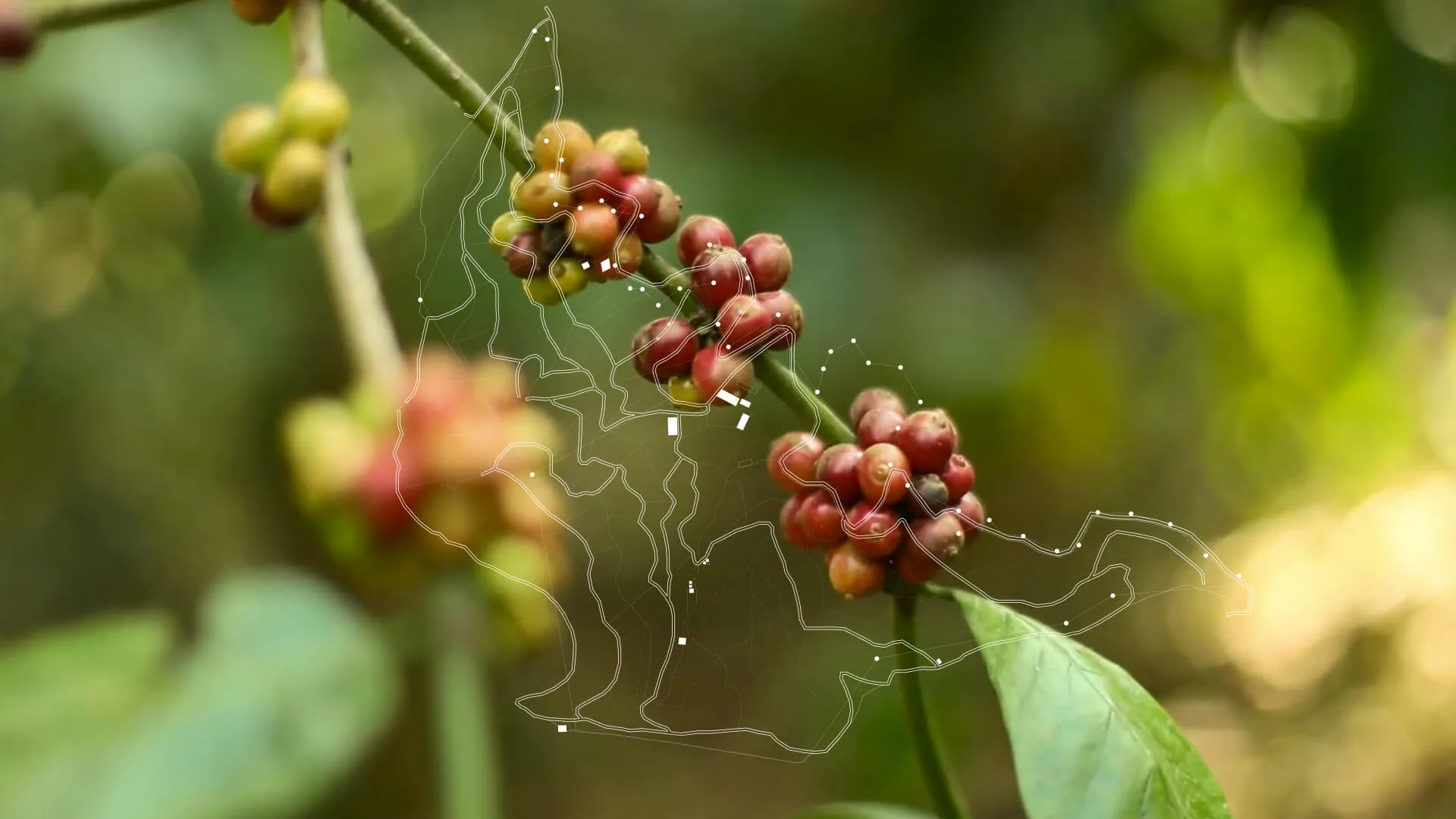
Coffee cherries ripening along the branch

One chain, and every link of it logged

Animal, preparation, soil, cherry, cup.

The chain worth keeping runs from the animal through the preparation, into the soil, into the cherry, into the cup — and alongside it, observation, recommendation, approval, action, measured outcome. Holding all of it together is what would let somebody audit a claim instead of being asked to trust it.

Everything exports in open formats, because software gets replaced and a hundred-year claim needs a record that outlives the company keeping it. Writing milestones to a public chain is an intention and is not built.

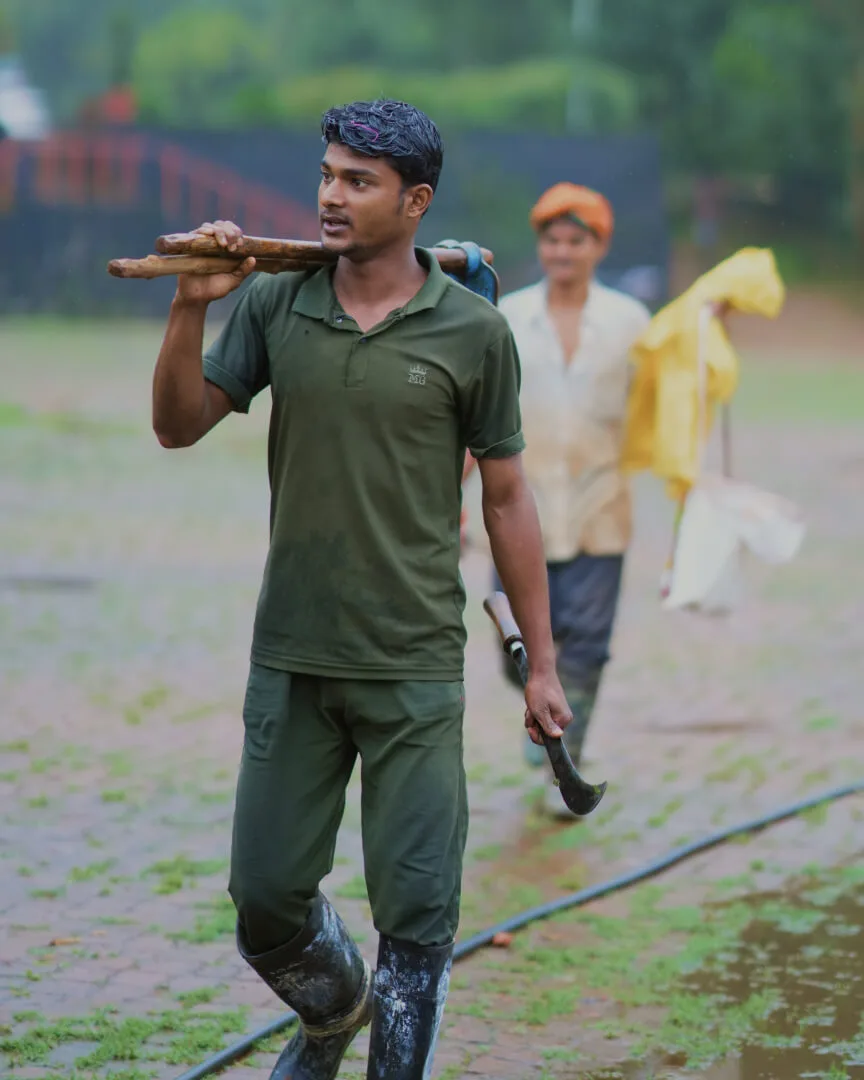
An estate worker crossing a block, tool in hand
The reading goes to whoever is standing there

One estate, then a network.

Mudigere is the first, and one place is a sample of one. Ohara — the second sanctuary, north of Kyoto — tests whether a way of working that held in the Western Ghats holds in a valley with a different climate, a different soil and no crop on it.

What passes between them is the point. A reading confirmed in two valleys is worth more than one confirmed in one, and the same record is what makes robotics, universities, hospitality and agriculture able to build on it. Signing each event where it happens is how a single event becomes a record.

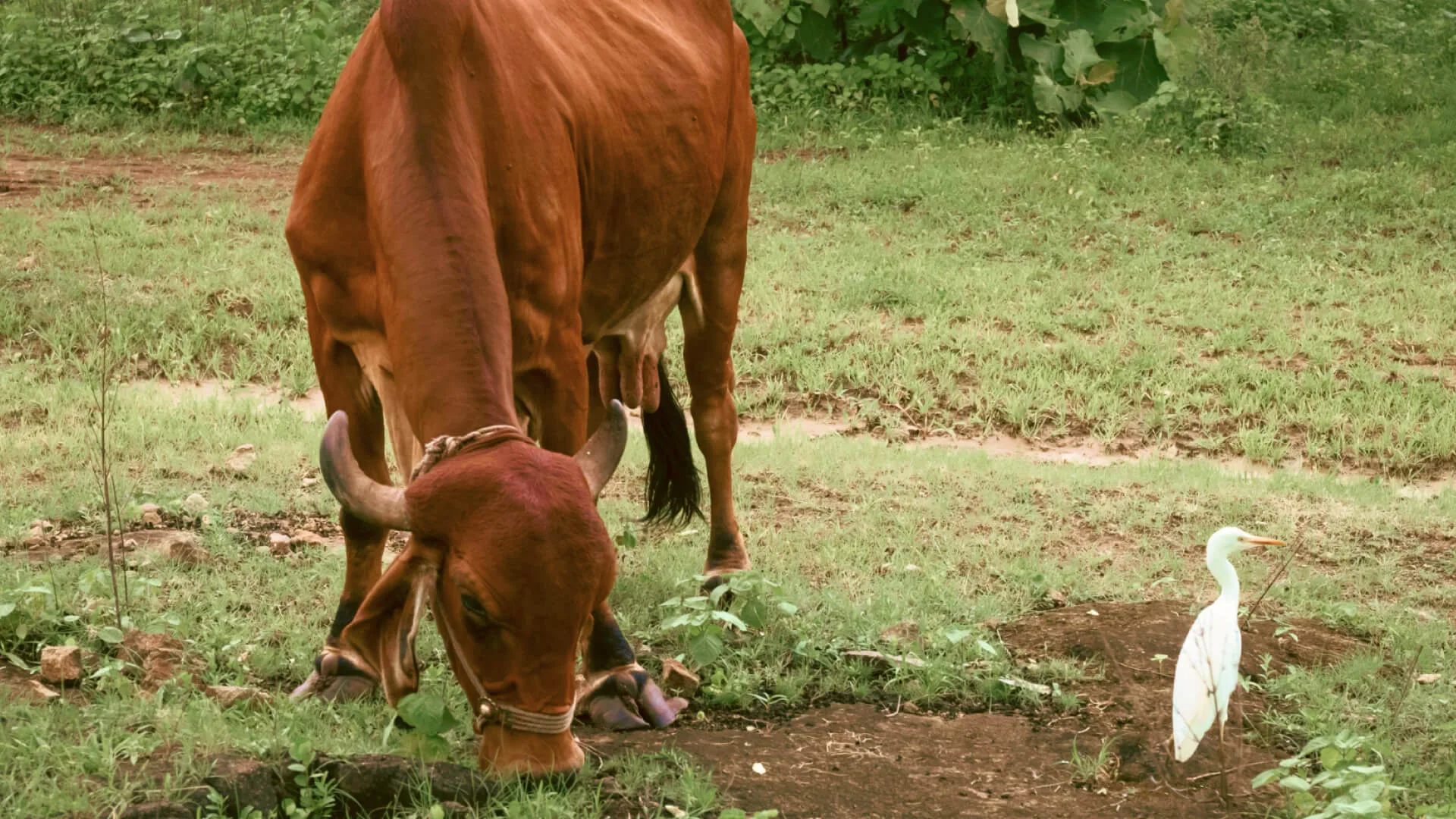
A cow grazing with an egret walking beside her
A block, a batch, a lot and a date, all addressable

A ledger cannot forget, and it cannot flatter.