A hand, a mouthful of green, a calf leaning in. Fifty-two Malnad Gidda — the estate's engine — grazed on pesticide-free ground, tended by name, and read animal by animal.

Ecosystem Engineers

The herd is the estate's engine.

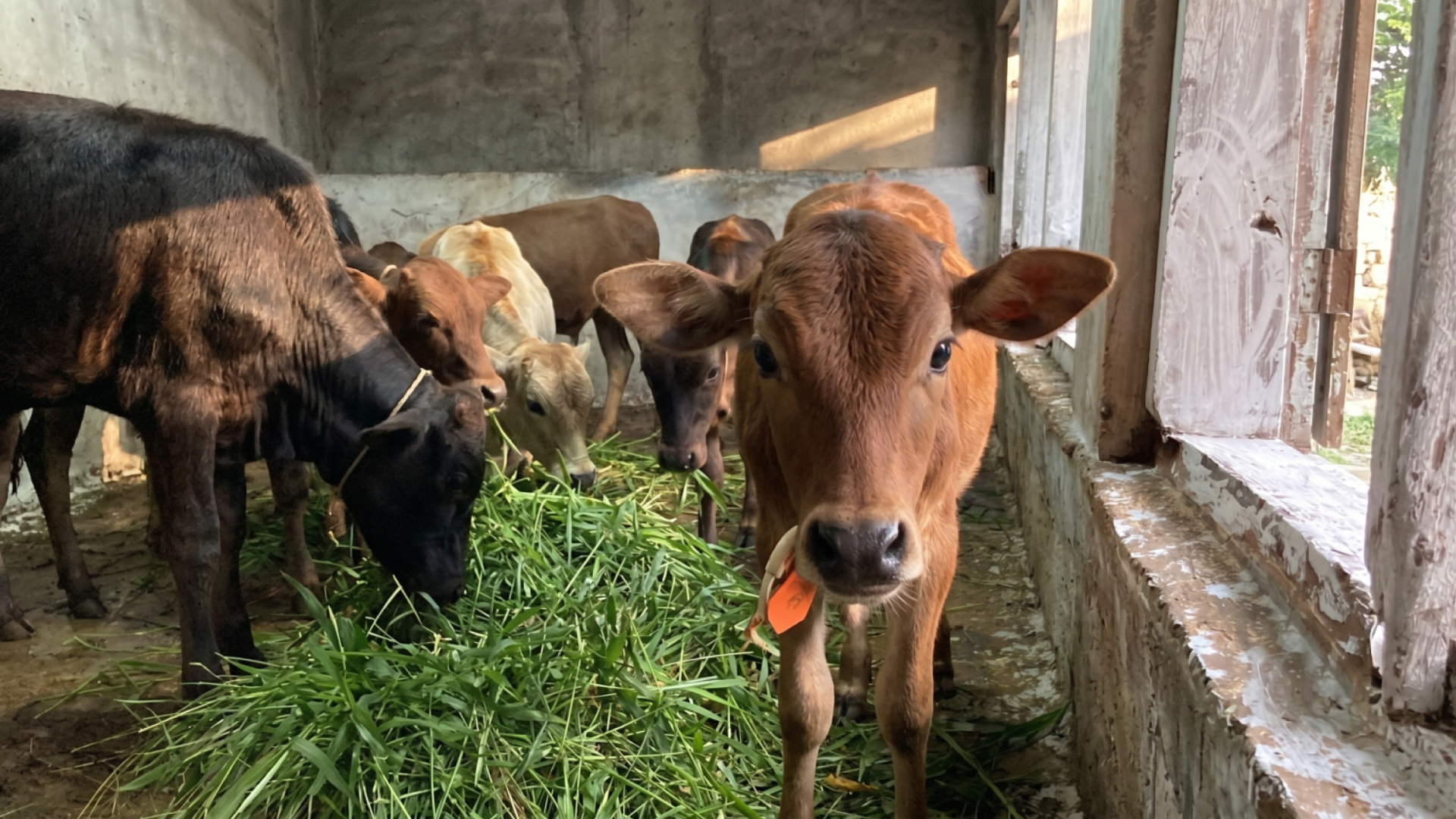
Fifty-two Malnad Gidda live and graze at Mudigere, and almost everything the soil is fed begins in their bodies. The compost, the pit, the microbial brew, the sprays that go out over the coffee — trace any of them back and you arrive at dung, urine, or milk from these animals. The herd is the engine the farm runs on — its source, not its sideline.

A cow walked across the land on a plan is an ecosystem engineer — she reshapes the ground she works and sets the terms for everything that grows there. So Aura reads the herd the way it reads the coffee: each animal a working part of the system, its health a daily signal, everything it gives back a measured input.
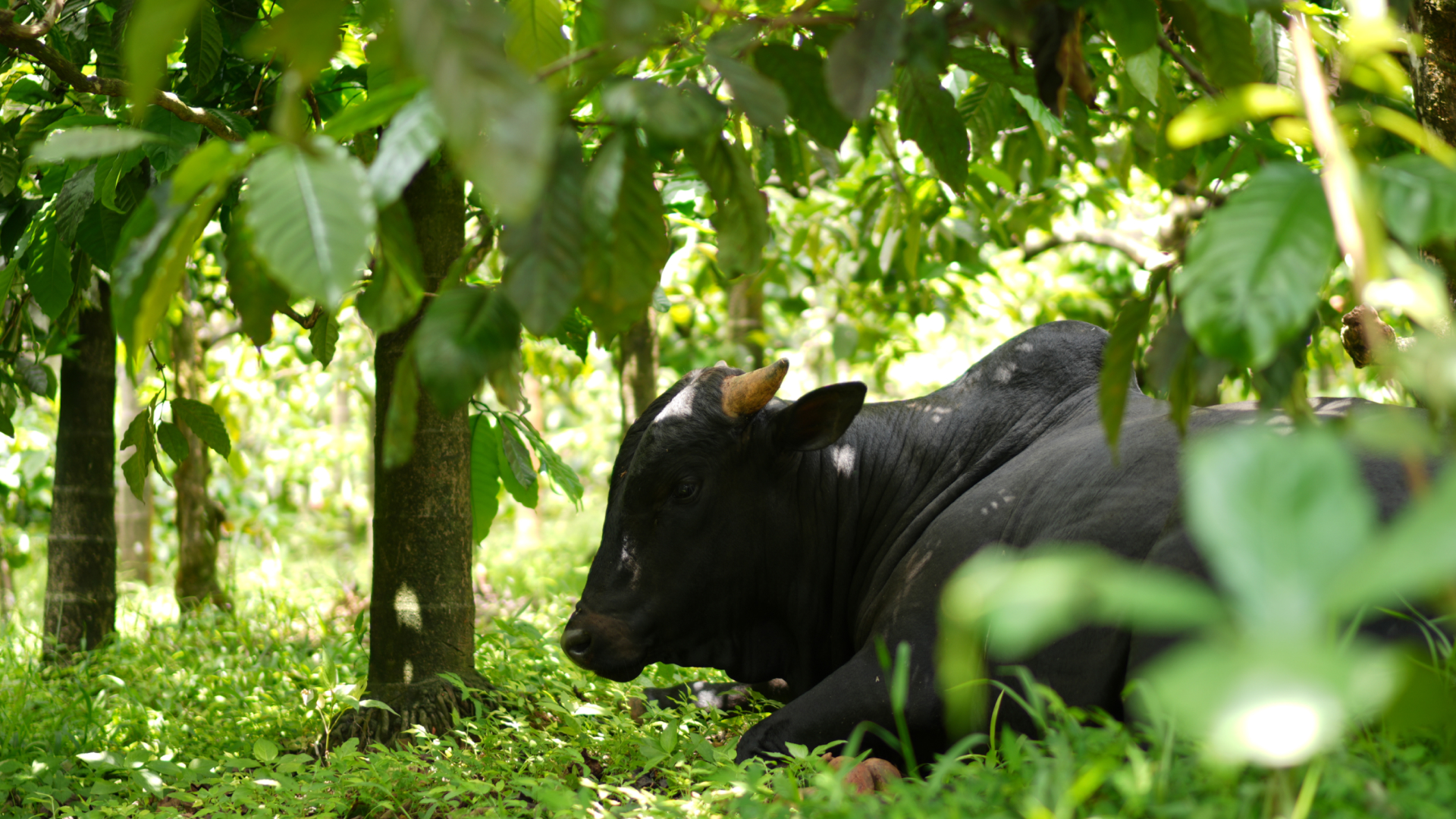
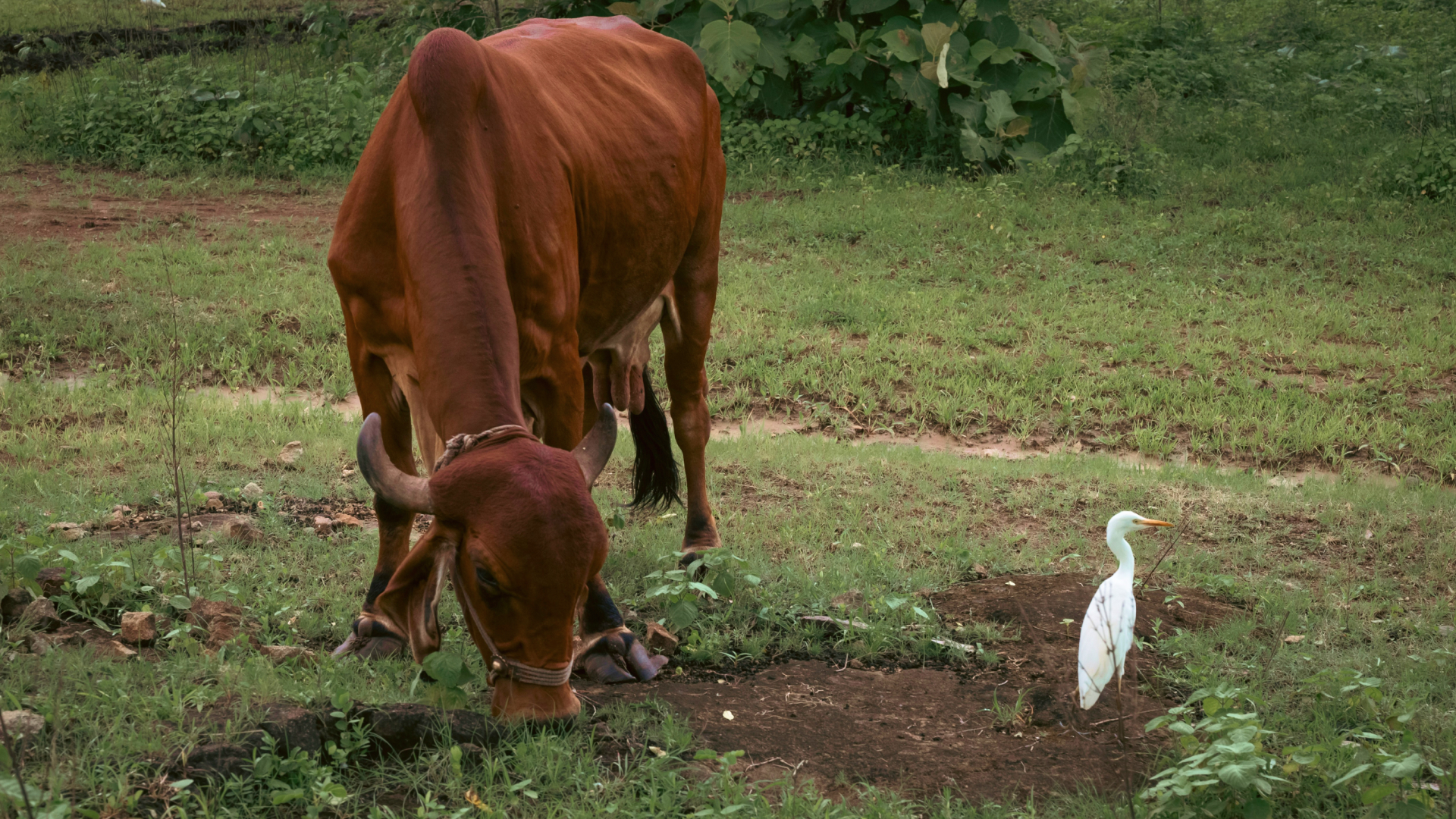
The Malnad Gidda herd grazing under the coffee canopy at Mudigere

Fifty-two, on their own ground

Same land, same system.

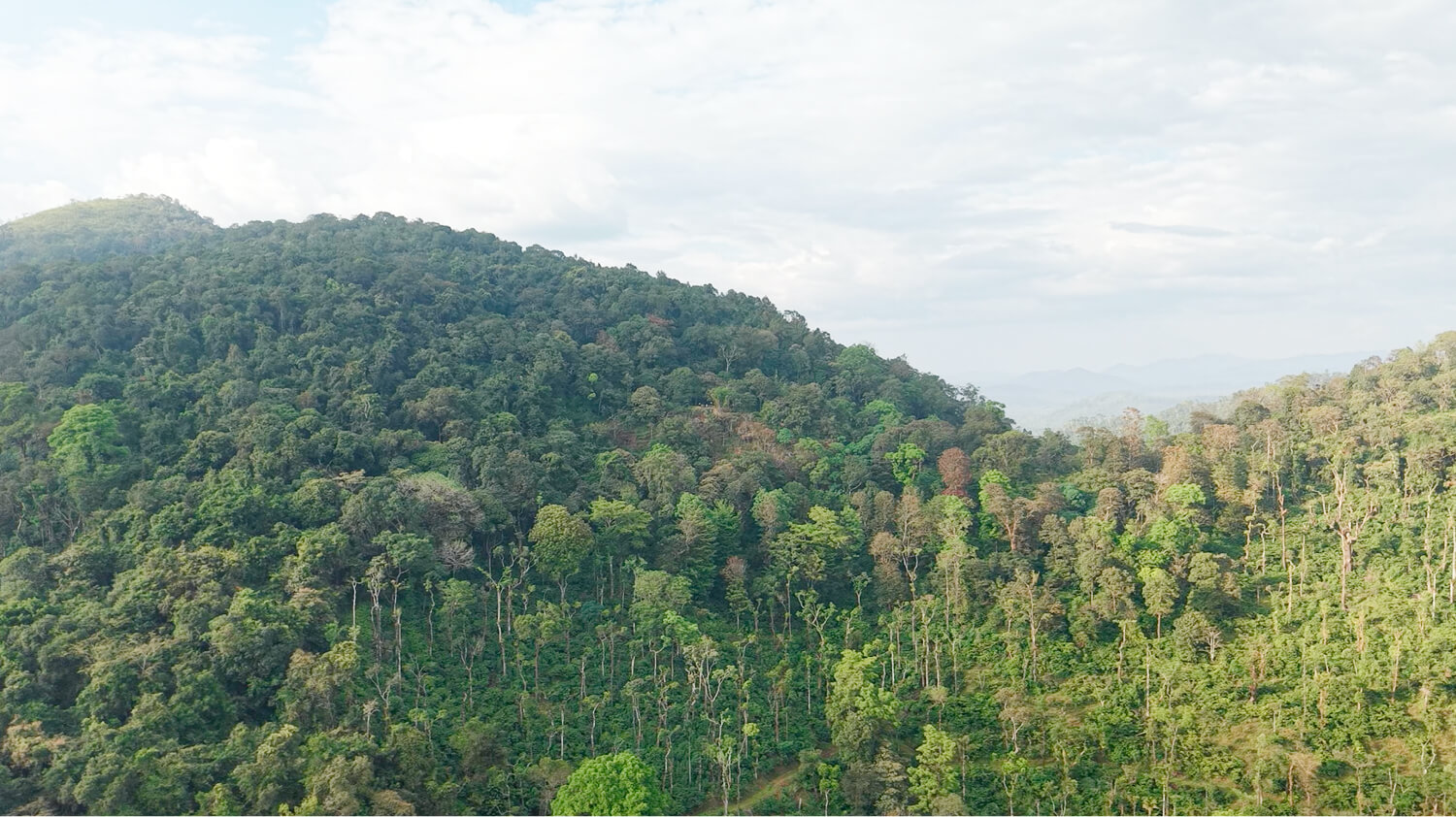
The cattle graze the same 150 acres that grow the coffee, the pepper, and the cardamom — ground kept pesticide-free and chemical-free — and they eat what that ground makes: the native grasses, the understory, the cover crops between the coffee rows. Whatever a cow chews here grew from the soil she will feed.

Then it comes back around. What she takes from a block she returns as dung and urine, carrying the live microbes of a gut shaped by that exact ground. Nothing is bought in, nothing trucked away: grass off the soil, herd off the grass, fertility off the herd, grass again. The cow eats the land, and the land is fed back the cow — a loop with no beginning.

Grass and grazer at Mudigere — each other's gift

Grass and grazer — each other's gift

Cared for by hand.

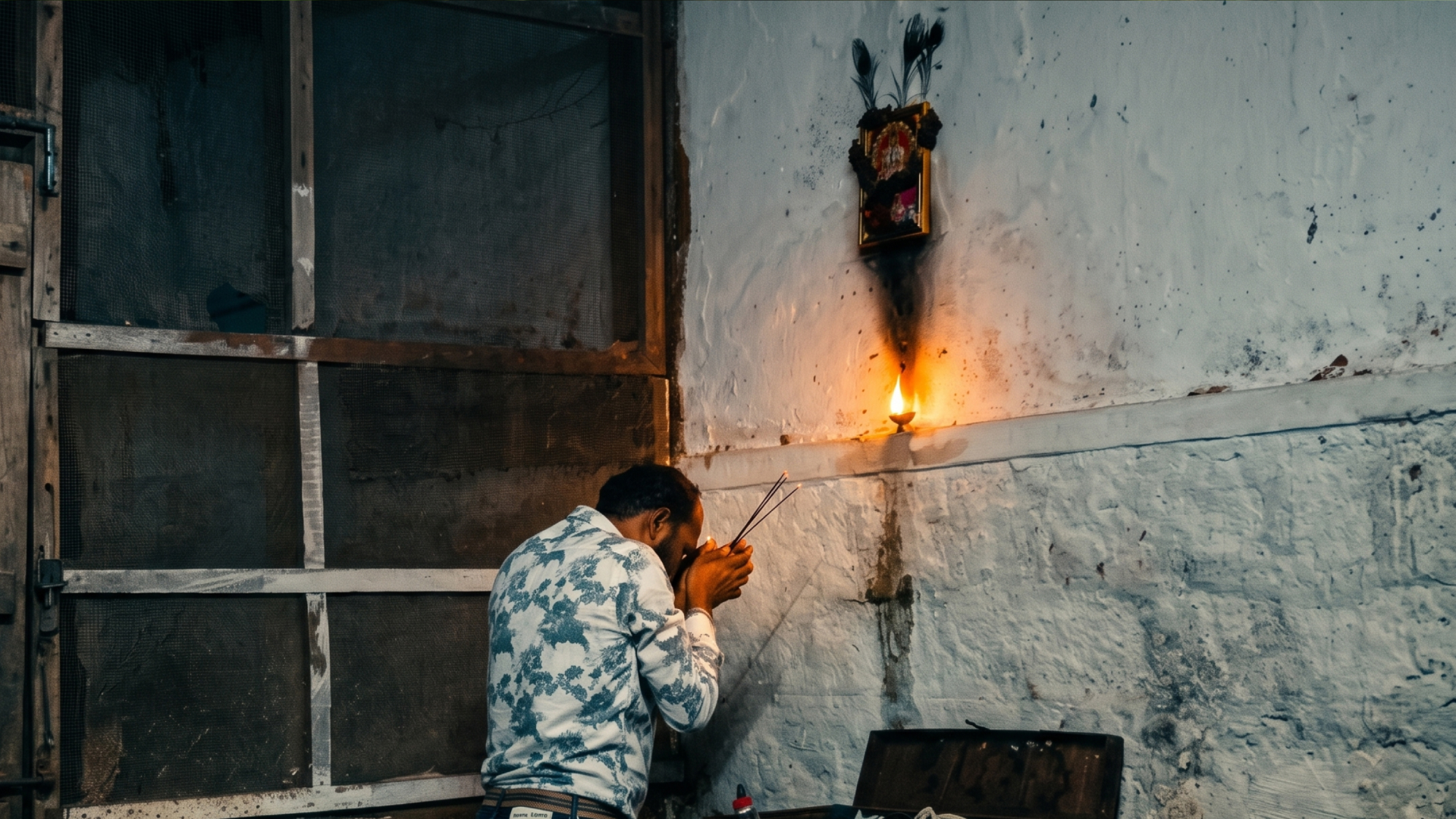
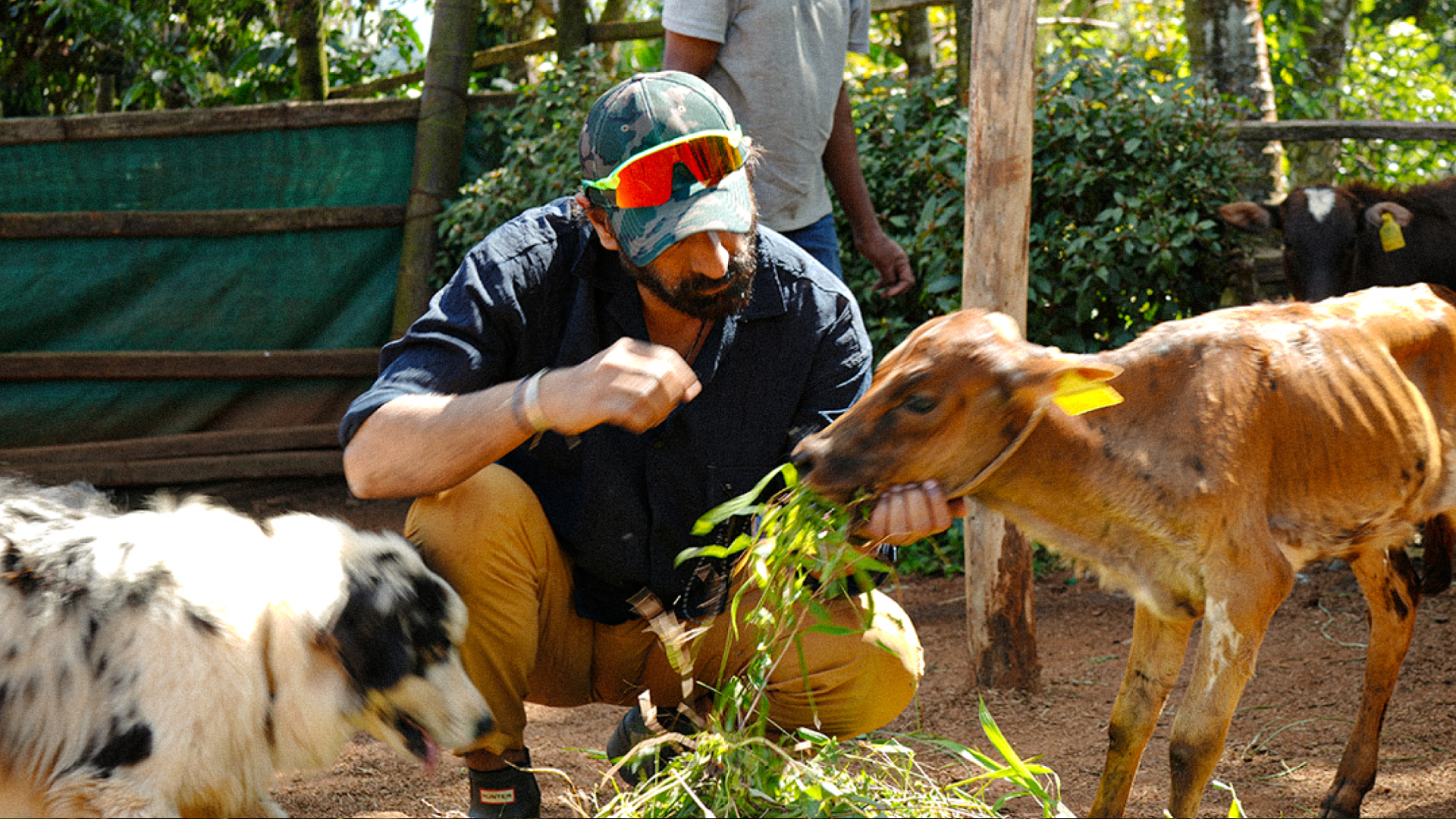
A herd on the fields every day is tended every day — washed and bathed, looked over, dosed when it needs it, treated with organic sprays before reaching for a chemical. What touches an animal that grazes a pesticide-free block has to answer to the same rule as the block. And it is a whole household, not a headcount: cows, chickens, and the estate dogs now, goats to come, each known by the people who keep them.

The closeness earns its keep. A caretaker washing a cow at dawn reads a limp, an off feed, a dull coat before any spreadsheet would — and these are working animals in a wild place. One of the herd was set on by a leopard inside the farm, fought it off, and walked back alive. They live a real life on this ground, and the hands around them carry it.

The estate team with the herd at Mudigere

The hands that tend the herd

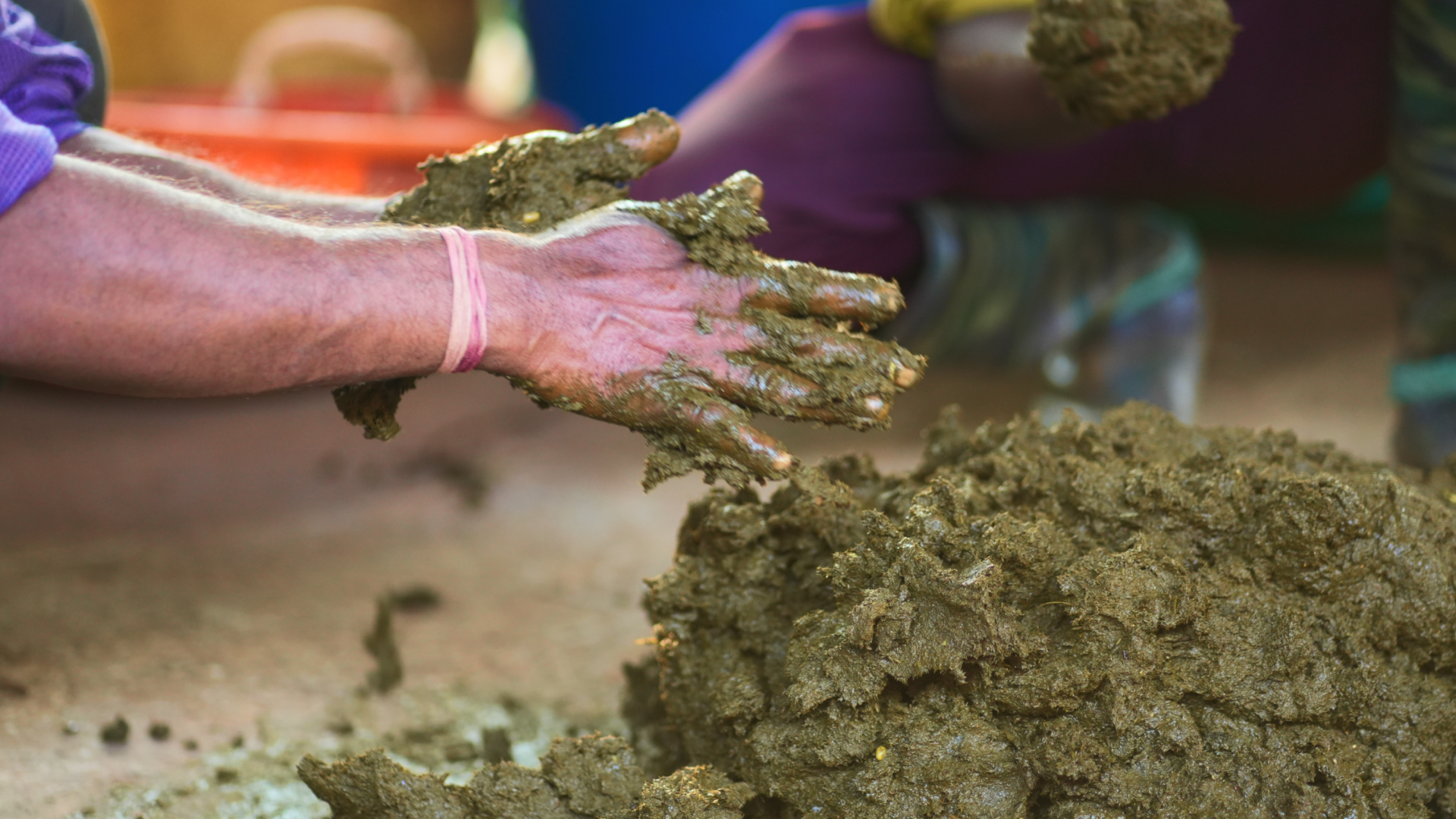
Fresh dung collected at dawn — the estate's raw material

Collected fresh at dawn

Provenance begins with a COW standing in the same FIELD as the COFFEE.

Every animal, a passport.

The yellow tag in a cow's ear is the visible end of a living passport. Behind it, Aura keeps her health day by day, the milk she gives, the urine collected from her, and, across the herd, the dung produced each morning. It is dense enough to run ahead of trouble — a predictive read on each animal and on the whole herd's management. GPS tags, ordered and on their way, will add where and how each cow grazes to the same file.

That record is what makes the estate traceable end to end. A batch of Jeevamrit is tagged to the animals that fed it; the application is tagged to the block; the block's soil is retested ninety days on. When a lot of coffee is sold, it traces back through soil and preparation to the animals that grazed that ground — animal to preparation to soil to cherry to cup, every link documented.

The passport, per animal

Ear tag
Yellow ID, one per animal
Health
Logged day by day
Milk
Per cow, daily
Urine
Collected & measured
Dung
Logged per herd, each morning
GPS grazing
Tags ordered — where & how each grazes
Traceability
Animal → preparation → soil → cherry → cup
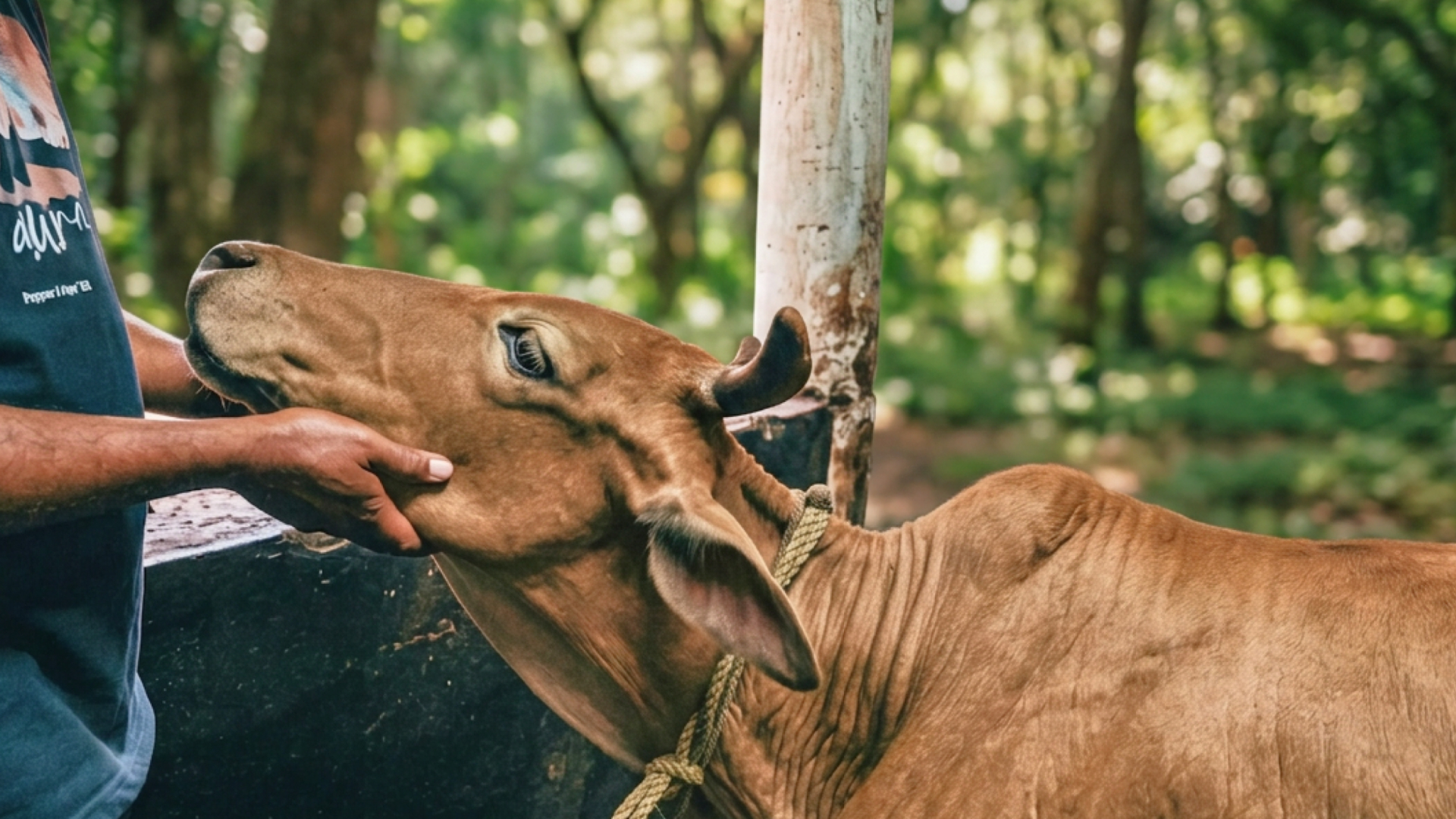
A caretaker with an animal at Mudigere — the people who know the herd

The people who know them

Nothing wasted, everything measured.

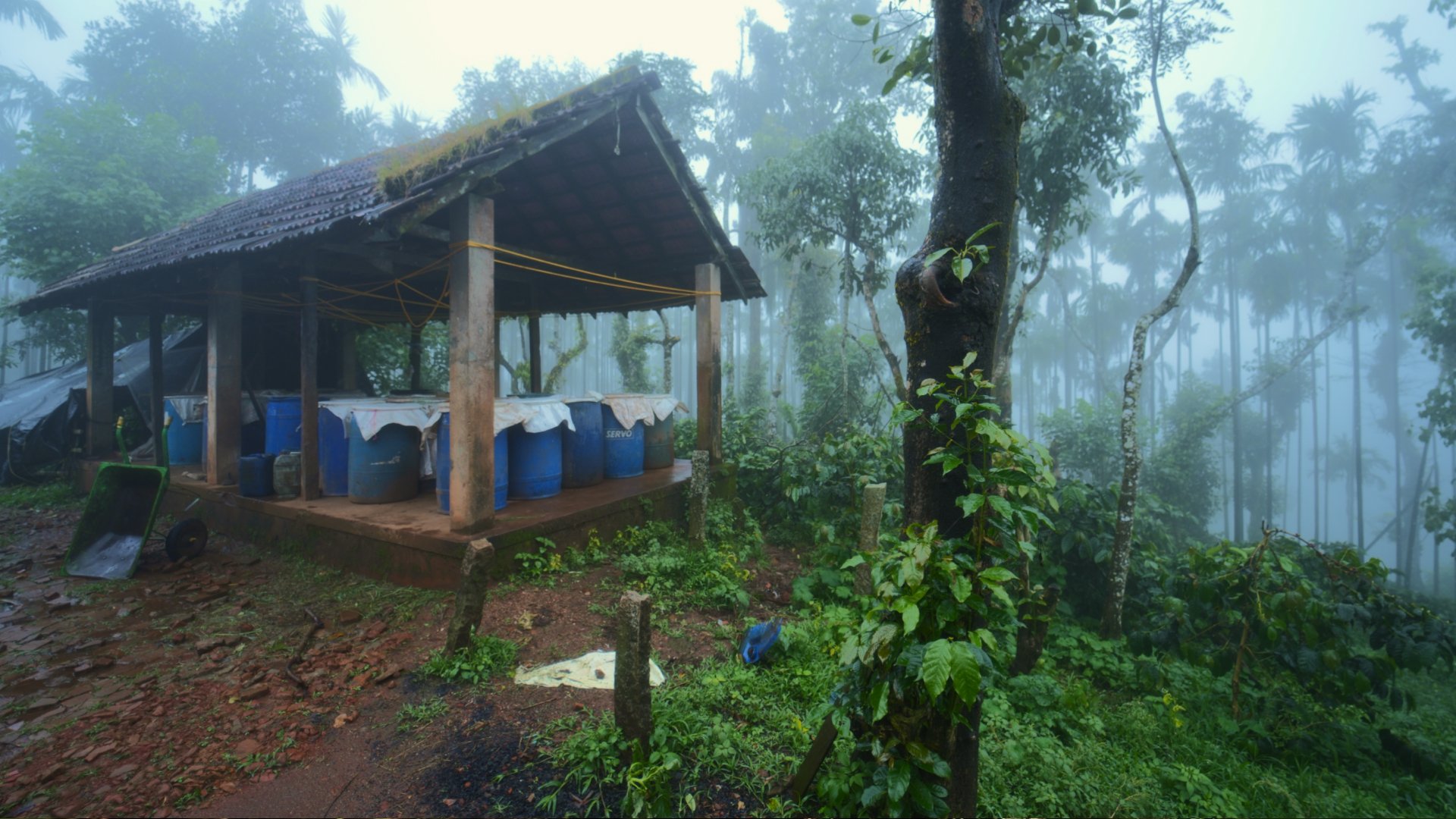
Every output of the herd is caught and put to work — dung, urine, horns, milk, ghee. From them the estate makes its whole pharmacy of soil biology: Jeevamrit, CPP (Cow Pat Pit), biodynamic compost, buttermilk sprays, and BD 500. Nothing leaves as waste; it leaves as a measured input.

And measured is the operative word. Every one of those preparations is tested in the estate's own lab — microbial counts and a full set of parameters — before a drop of it reaches the soil. What the animal produces, the lab reads; what the lab clears, the ground receives. The full making, testing, and correcting of those preparations is its own story — Circular Intelligence.

Why Malnad Gidda.

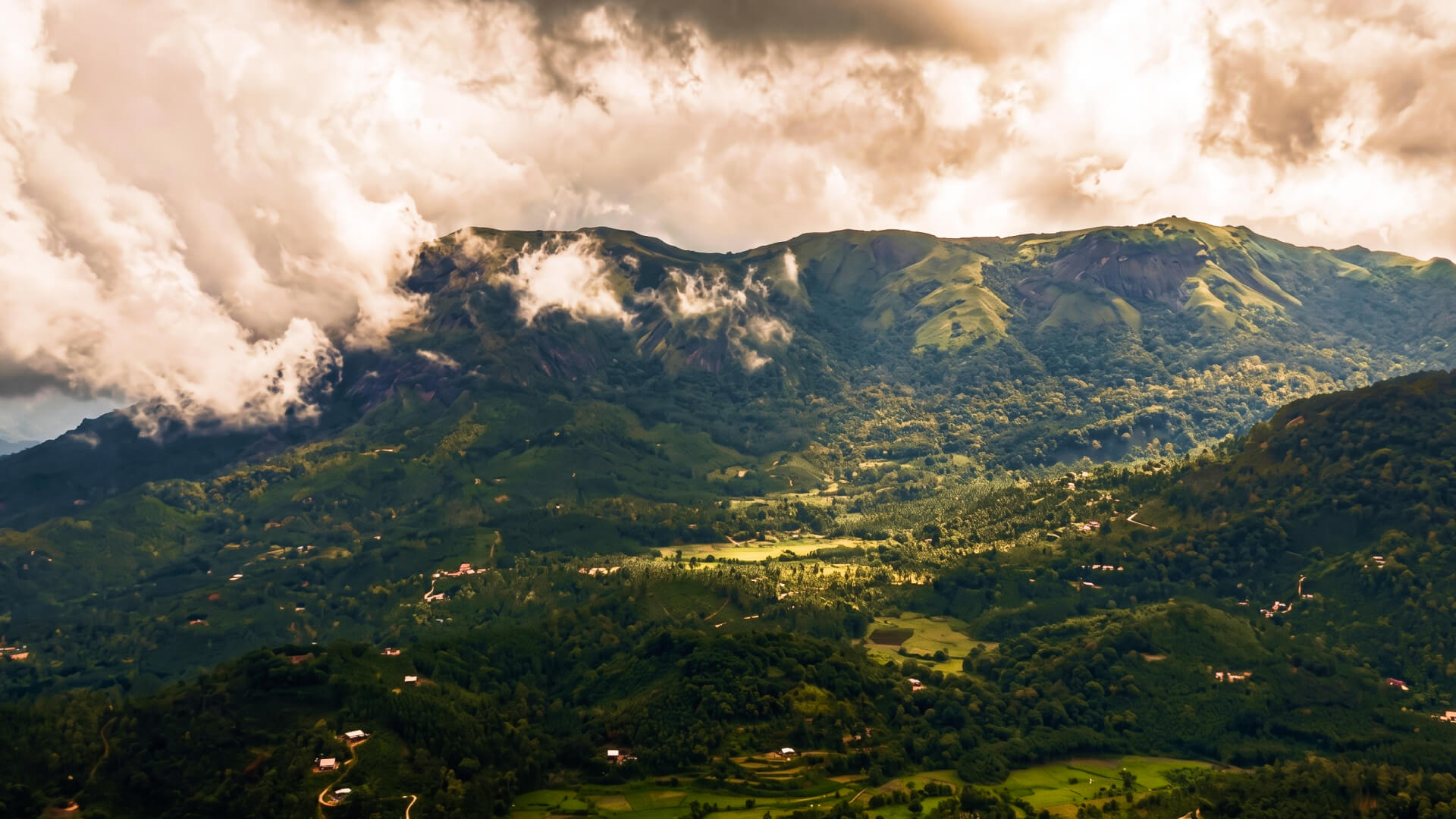
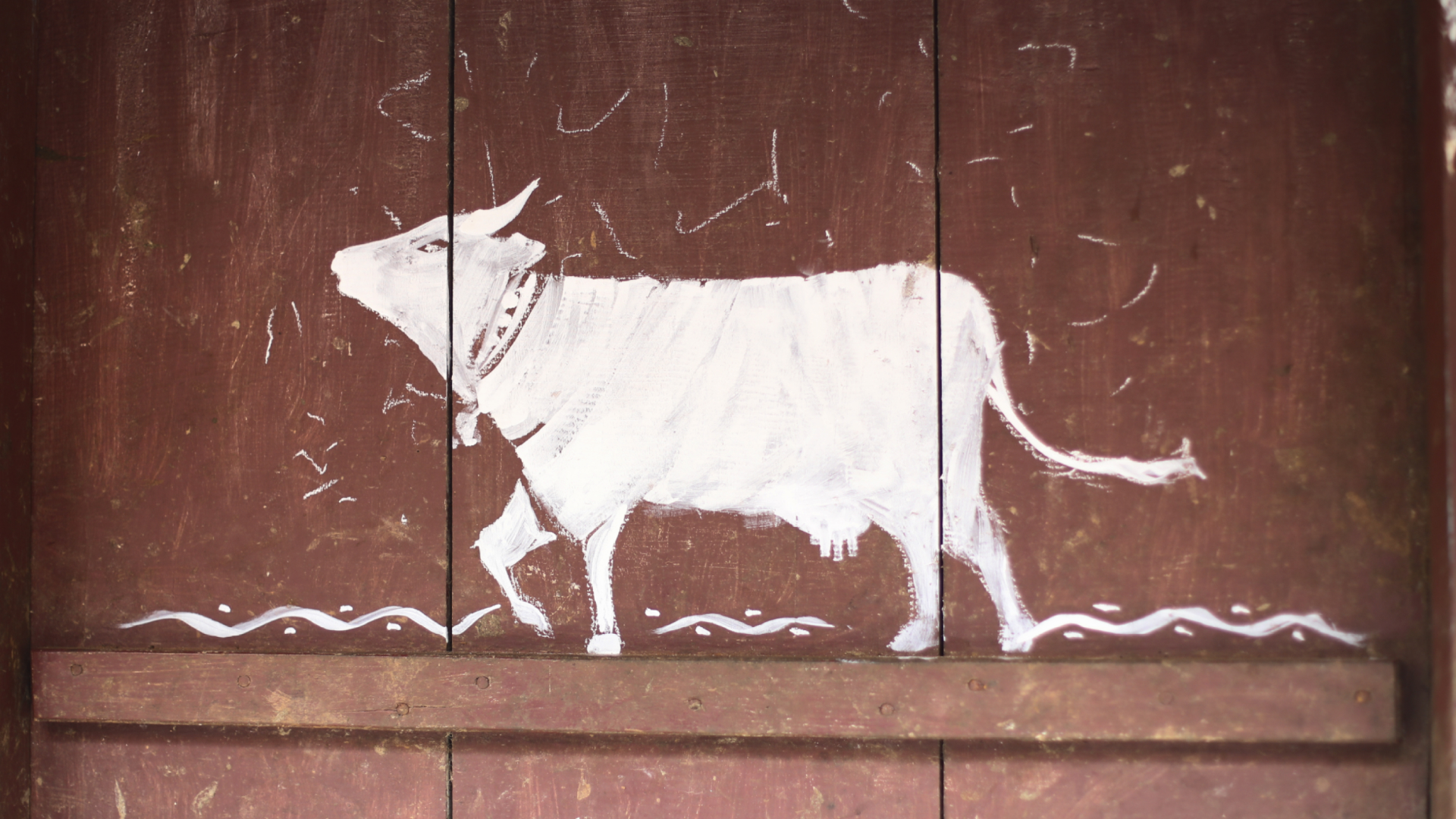
The Malnad Gidda is an indigenous Karnataka breed that has grazed these hills for centuries — small-framed, hardy, heat-tolerant, and adapted to the altitude, the monsoon, and the specific grasses of the Western Ghats. Its gut microbiome is shaped by this landscape, not a generic one.

That is why the breed matters: the dung carries the microbiome. Malnad Gidda dung has a microbial composition suited to this soil, co-evolved with it over generations, and a commercial dairy breed cannot replicate it. Aura keeps the line pure and estate-bred, documented in each passport — the herd is a genetic resource as much as an engine, an indigenous breed grown rare in modern Karnataka, kept alive here because the soil asks for it.

The herd

Head
52 Malnad Gidda
Breed
Indigenous Karnataka, altitude-adapted
Frame
Small, hardy, heat-tolerant
Microbiome
Co-evolved with this soil
Line
Estate-bred, kept pure
Grazing
The same 150 acres they feed

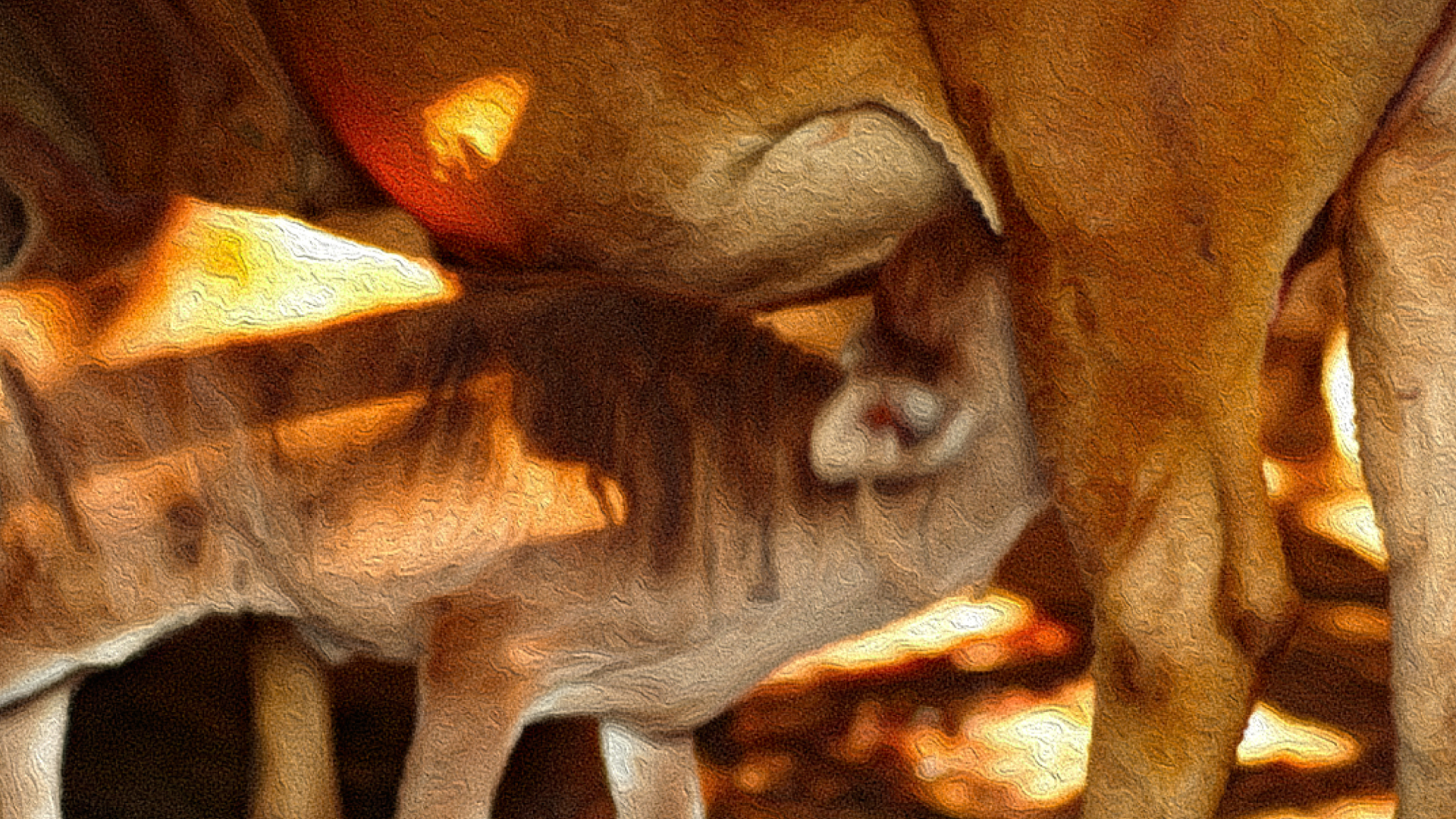
The next generation, estate-bred

A Malnad Gidda calf — the indigenous line kept pure

An indigenous line, kept pure

Every animal, a passport.Every litre and kilogram, measured.Every batch, tested before the soil.The herd feeds the land it grazes.The loop has no beginning.

52

52

Malnad Gidda at Mudigere — an indigenous breed, and the estate's biological engine.
Daily

Daily

Health, milk, and urine logged per cow; dung logged per herd — a living record for every animal.
Lab-tested

Lab-tested

Every preparation the herd feeds — Jeevamrit, CPP, BD 500, compost — read in the estate's own lab before the soil.

The engine is a generational asset.

The herd is the instrument that powers the estate's most durable asset — living soil, built on what the animals return. And it is held together by hands: the person who bathes a cow at dawn is the one who reads her record, collects her dung, and stirs it into the brew that evening. When the herd is well the preparations are strong, and when the preparations are strong the soil is alive. Aura keeps an indigenous breed on its own ground, cares for it one animal at a time, measures everything it produces, and builds the estate on the fertility it makes — one animal, one season, at a time.