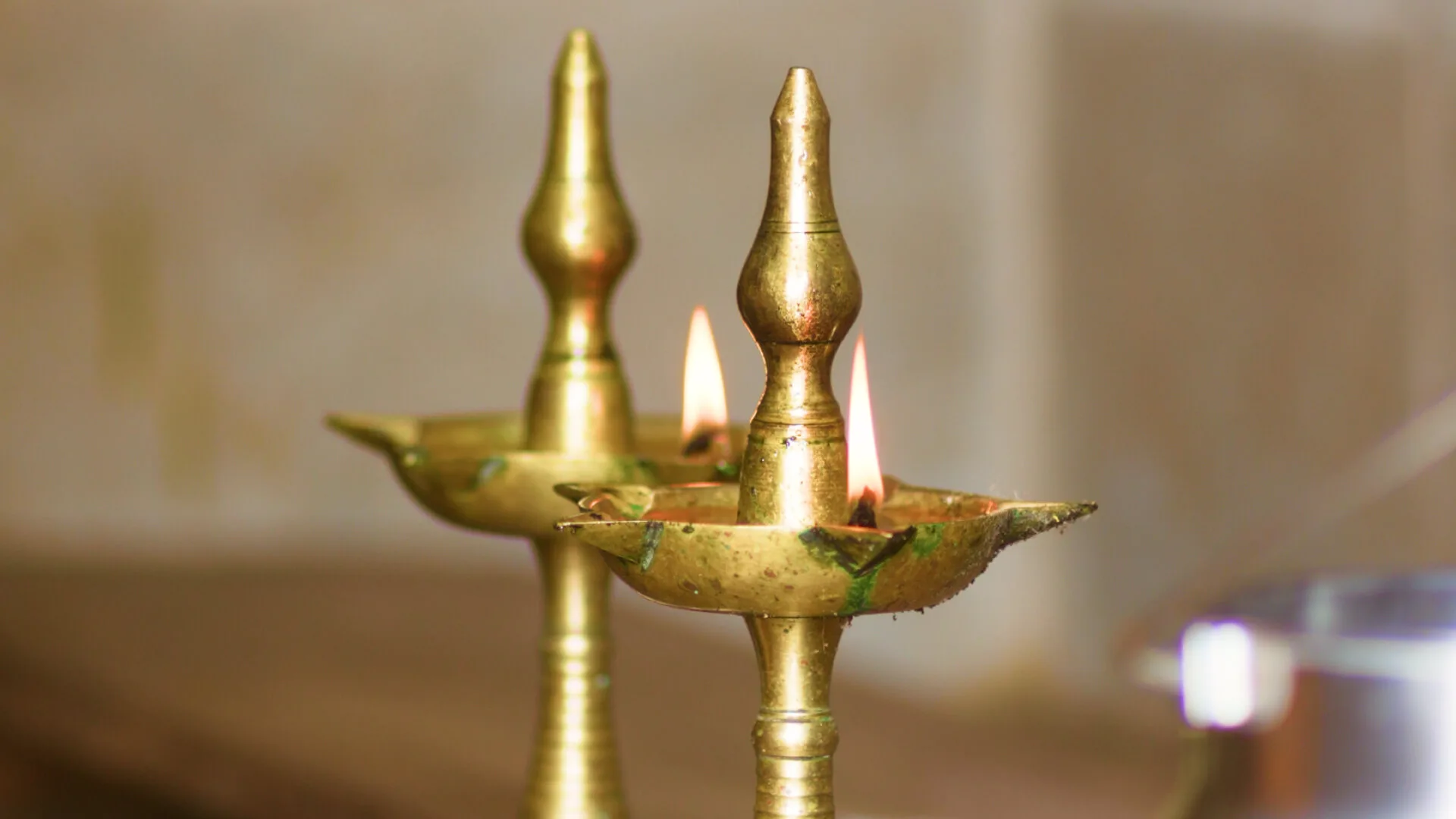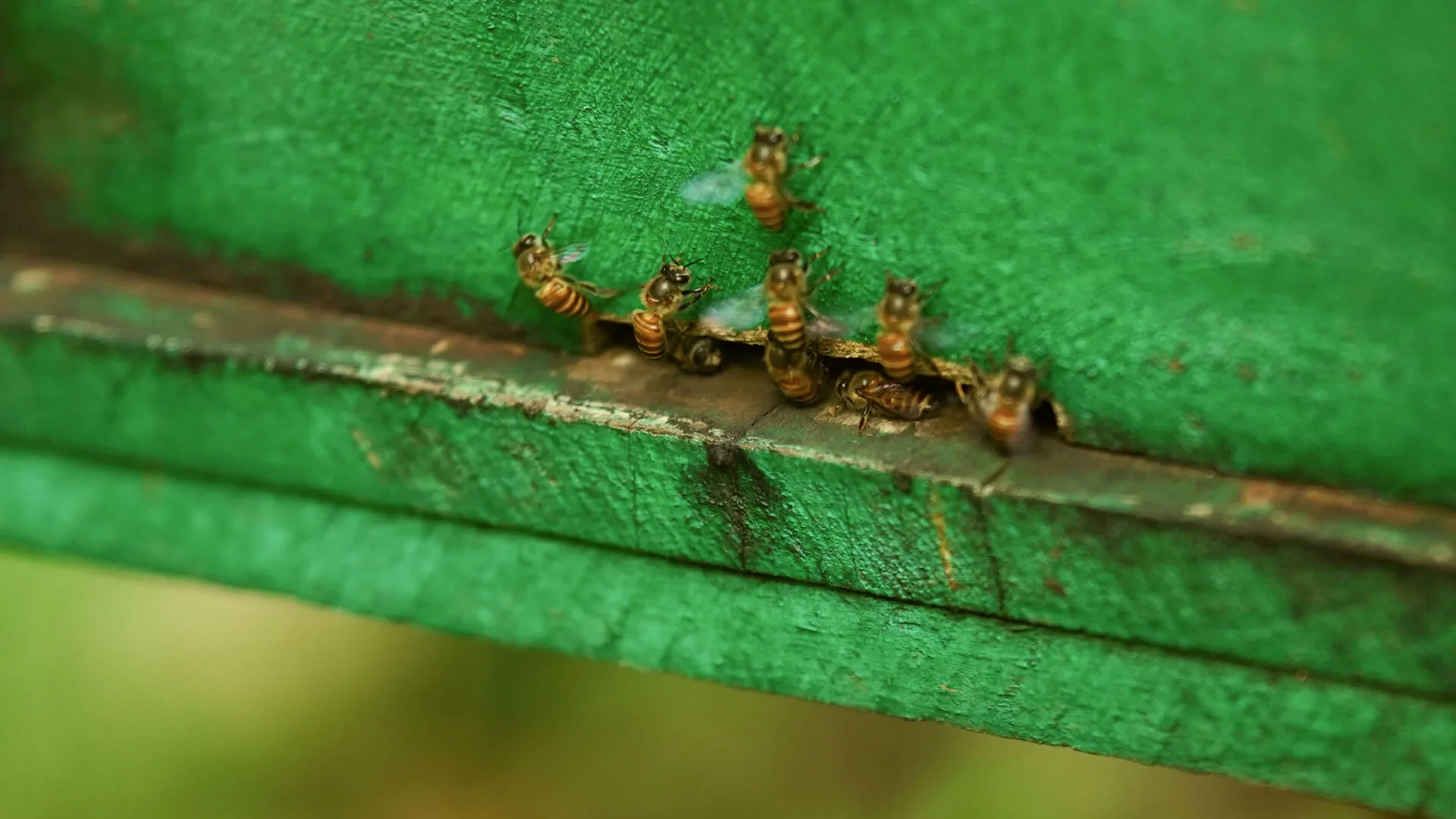
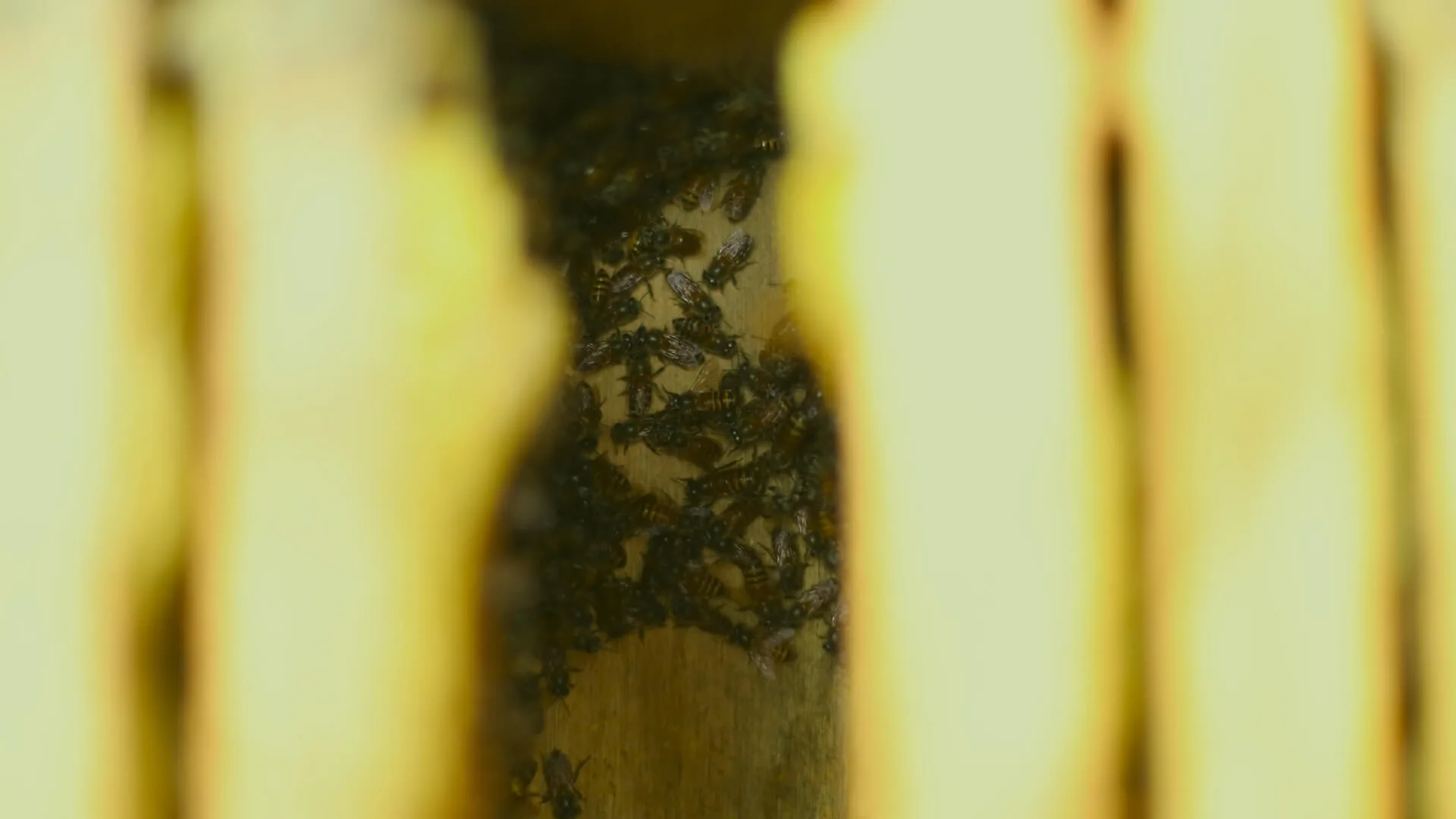
Bees crowding the entrance slot of a hive box in the block

Occupied — Aura Estate, Mudigere

Bug Hotels

A plantation can be full of plants and short of homes.

Walk a well-shaded coffee estate and it looks like habitat. Four storeys of canopy, green in every direction, more standing biomass than most farmland will ever carry.

What a managed landscape tends to lack is the small stuff: dead wood left where it fell, cavities, hollow stems, the accumulated damage that a forest produces simply by being old. A great many insects need exactly that, and abundant vegetation does not supply it.

A Bug Hotel is a deliberate answer to that shortage. It supplies the holes.
What one is

At Aura a Bug Hotel is made of wooden logs, drilled with holes of several different sizes. The variation is the design: different bores suit different bodies, so one structure offers a range of microhabitats rather than a single kind of room.

Nothing is introduced. No insects are bought, bred or released. The structure is put up and whatever already lives on the estate either uses it or does not — which is also what makes it worth watching.

Bees packed along a bamboo tube inside the hotel

Different bore sizes suit different bodies — the variation is the design

Nothing is introduced. The structure goes up, and the estate answers.

A shelter that is also an instrument.

The value of a Bug Hotel is that the count can be taken at all. Most of the invertebrate life on a plantation is impossible to survey without enormous effort; a fixed structure in a known place makes a small part of it legible.

Over seasons, four things can be recorded: which organisms use the structures, which materials they prefer, how occupancy changes through the year, and how any of that relates to the vegetation around a particular hotel.

Solitary bees, wasps, beetles and spiders are the likely tenants, depending on materials, siting and what surrounds them. Aura is not yet publishing who has actually moved in, because the record is young.

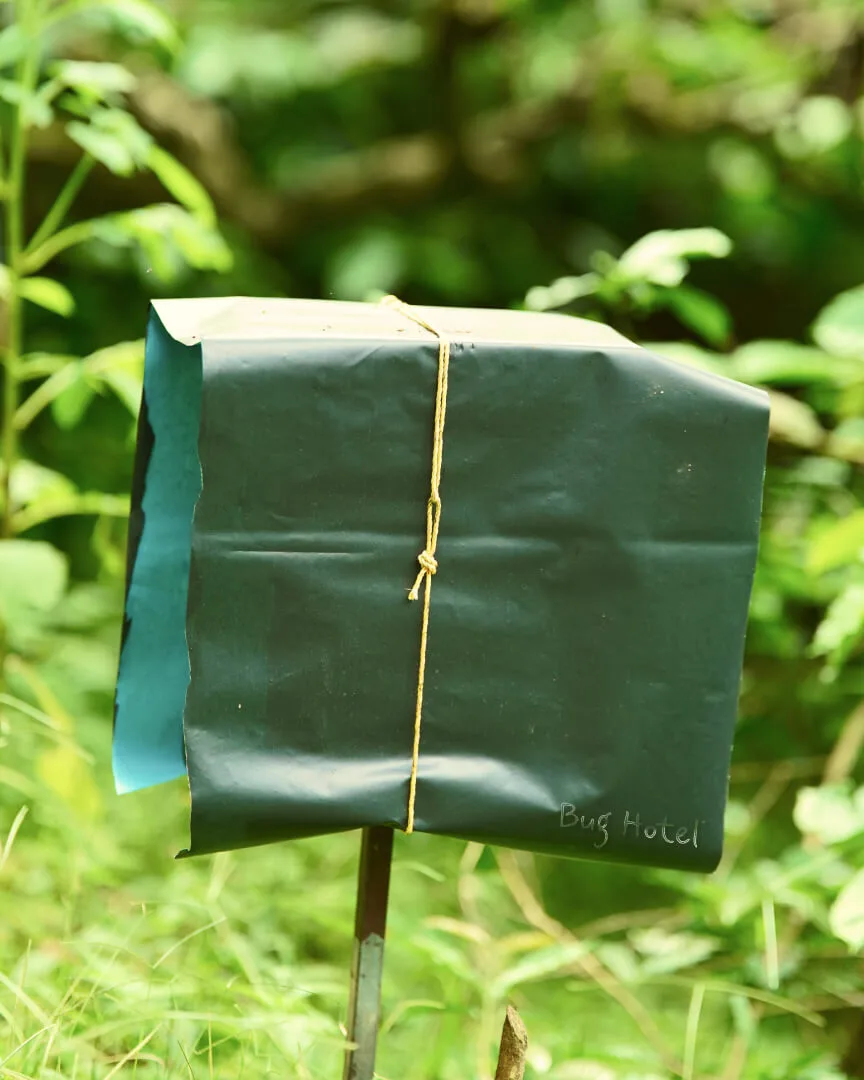
A bug hotel on a stake in the undergrowth, wrapped against the rain and labelled in chalk
Wrapped against the monsoon, labelled by hand, and then left alone

Four things worth writing down.

Because a hotel is a fixed structure in a known place, the same four questions can be asked of it season after season, and the answers can be compared rather than remembered.

Who

Which organisms use the structures at all, and which return.

Which materials

Whether one bore size or one timber is preferred over another, given the choice.

When

How occupancy moves through the year — nesting, resting, overwintering.

Where

How any of it relates to the vegetation immediately around a particular hotel.

None of that requires an entomologist standing in the block every week. It requires the structure to stay where it is and somebody to look at it on a schedule, which is a far more realistic thing to ask of a working estate.

Make room for the small lives that keep the large system alive.

One layer among several.

The hotels sit alongside the Forest Islands, the native vegetation being encouraged back into the understorey, the deadwood that now stays in the block it came from, and the leaf litter that is no longer tidied.

Each of those adds a kind of structural complexity that a working coffee landscape loses by being worked. Together they are an attempt to build a plantation that supports the crop and also supports the organisms the crop quietly depends on — predators that keep pests in proportion, decomposers that keep the ground fed.

The aim is simple: make room for the small lives that keep the large system running.

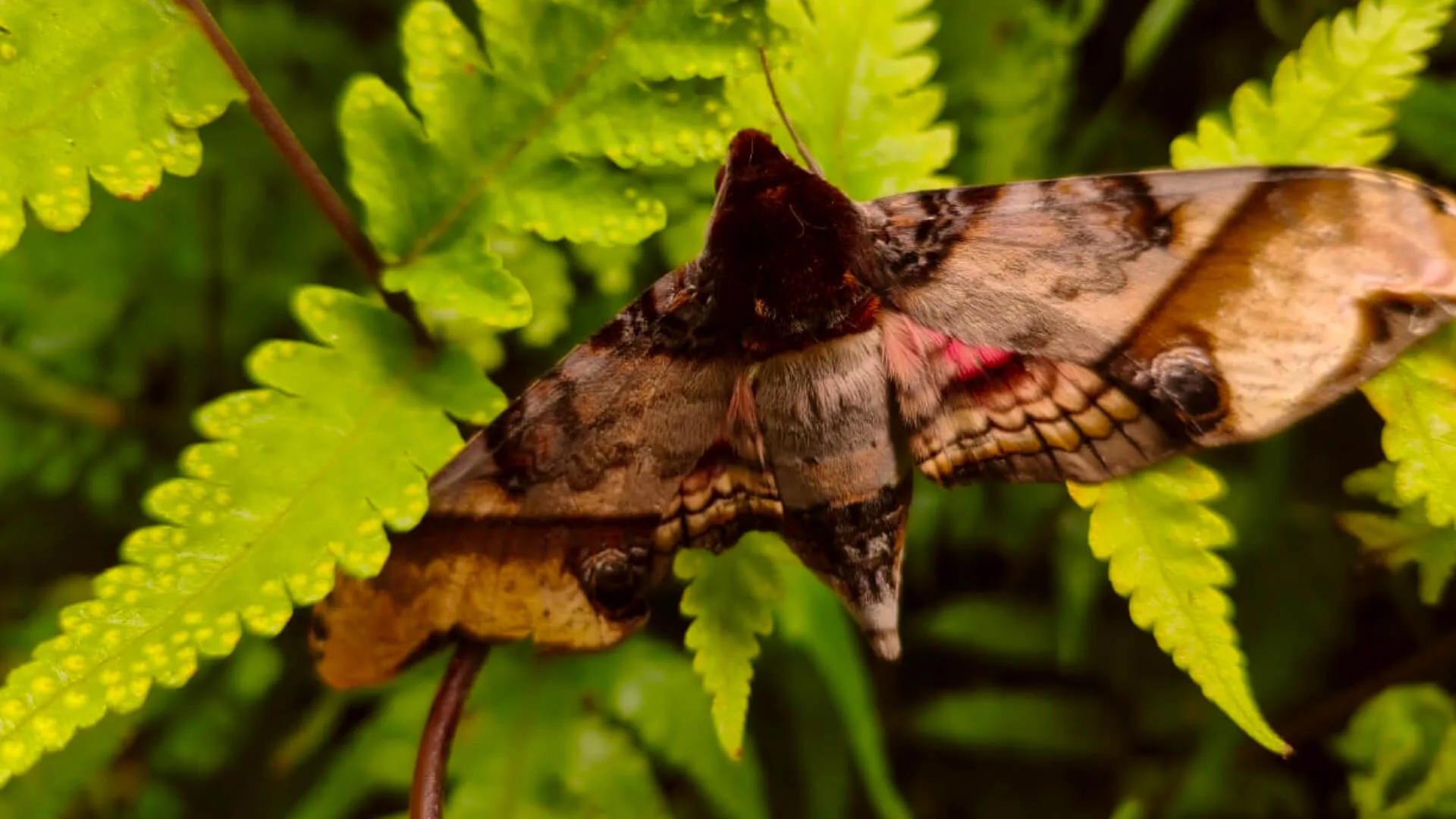
A large moth at rest on ferns in the understorey

The small lives that keep the large system running