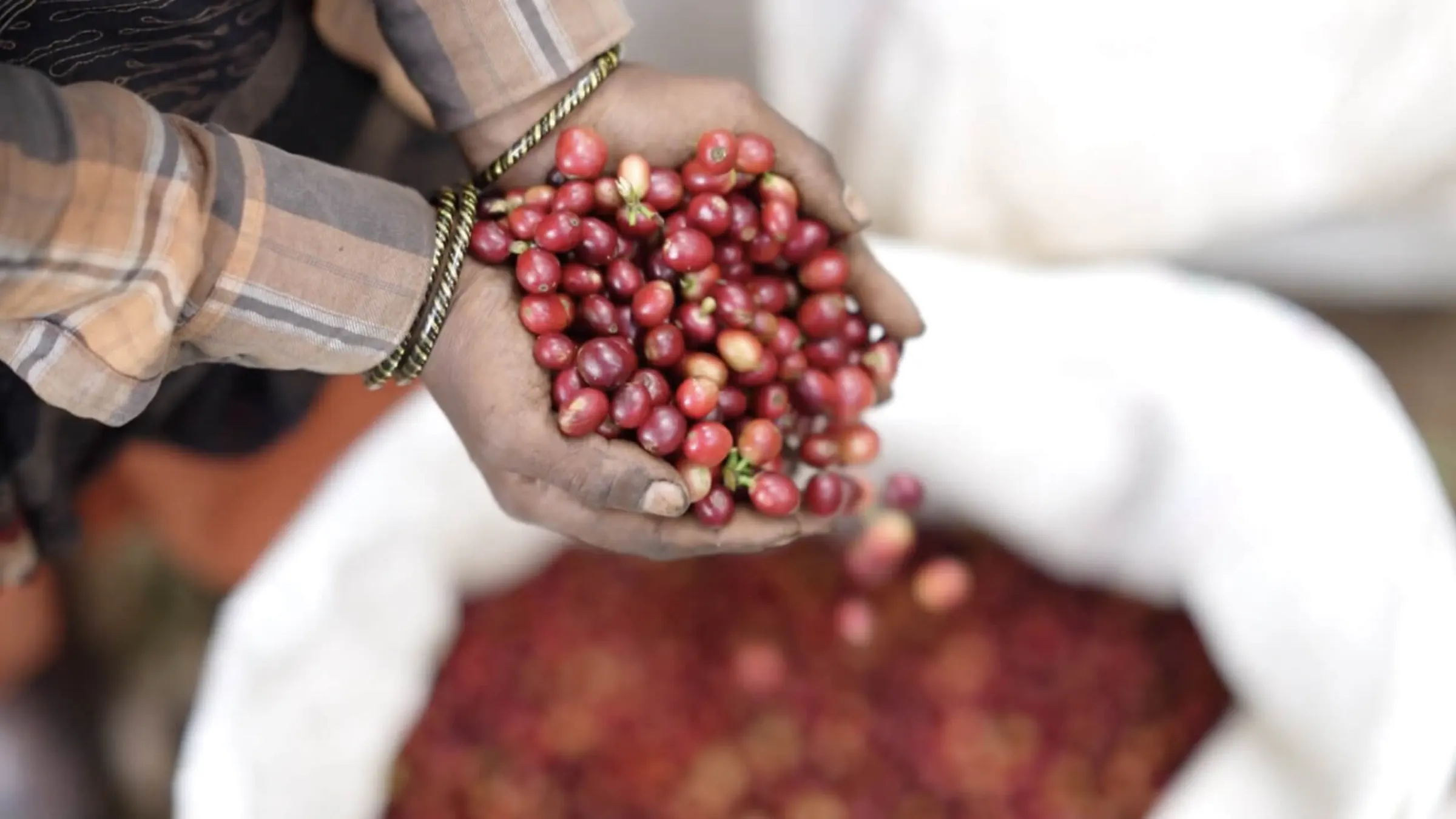
Grown in a closed loop.
No fertiliser is bought in, and no waste is trucked out. The herd, the soil and the trees feed each other, and the estate’s job is to keep the loop turning.
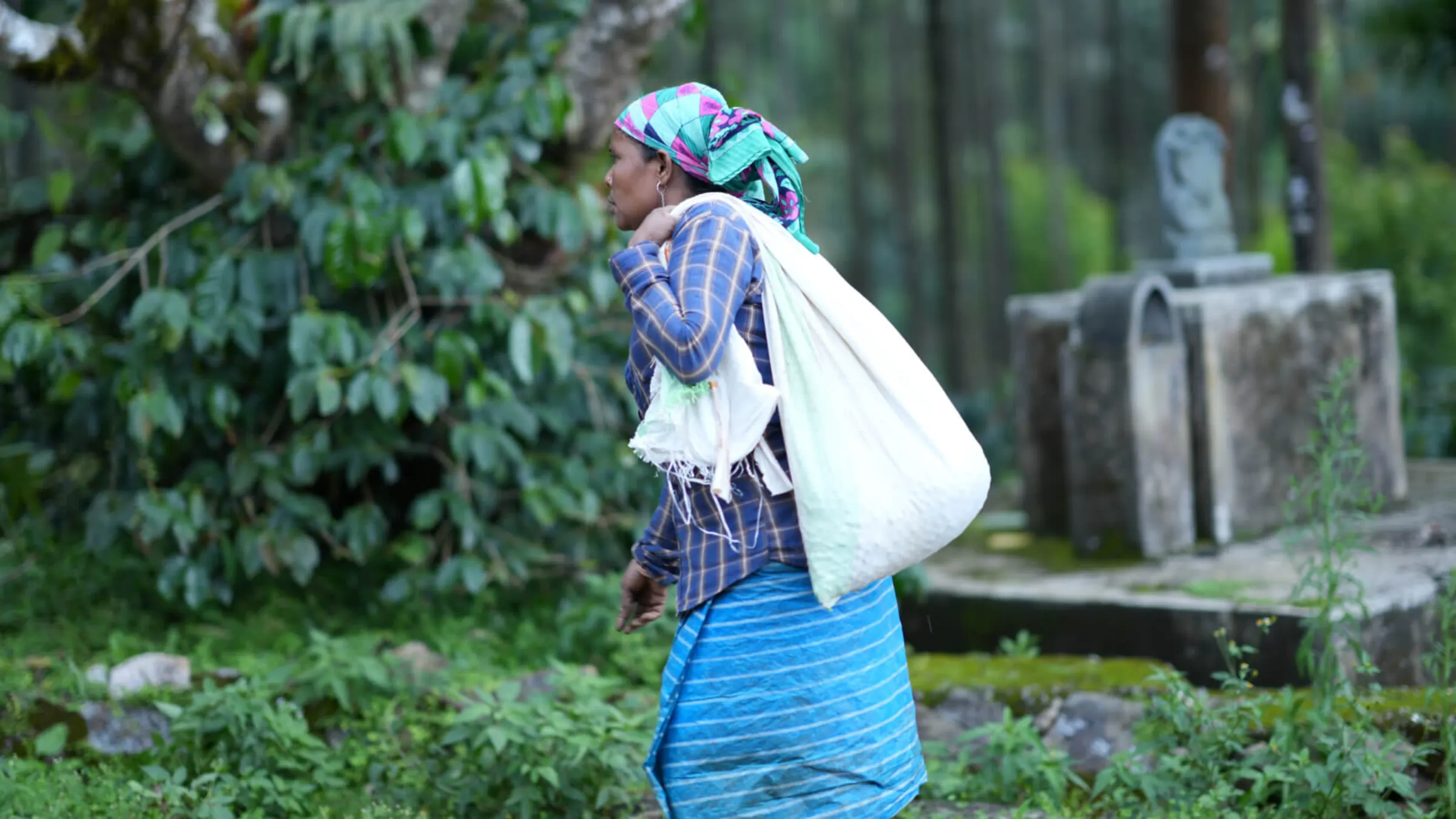
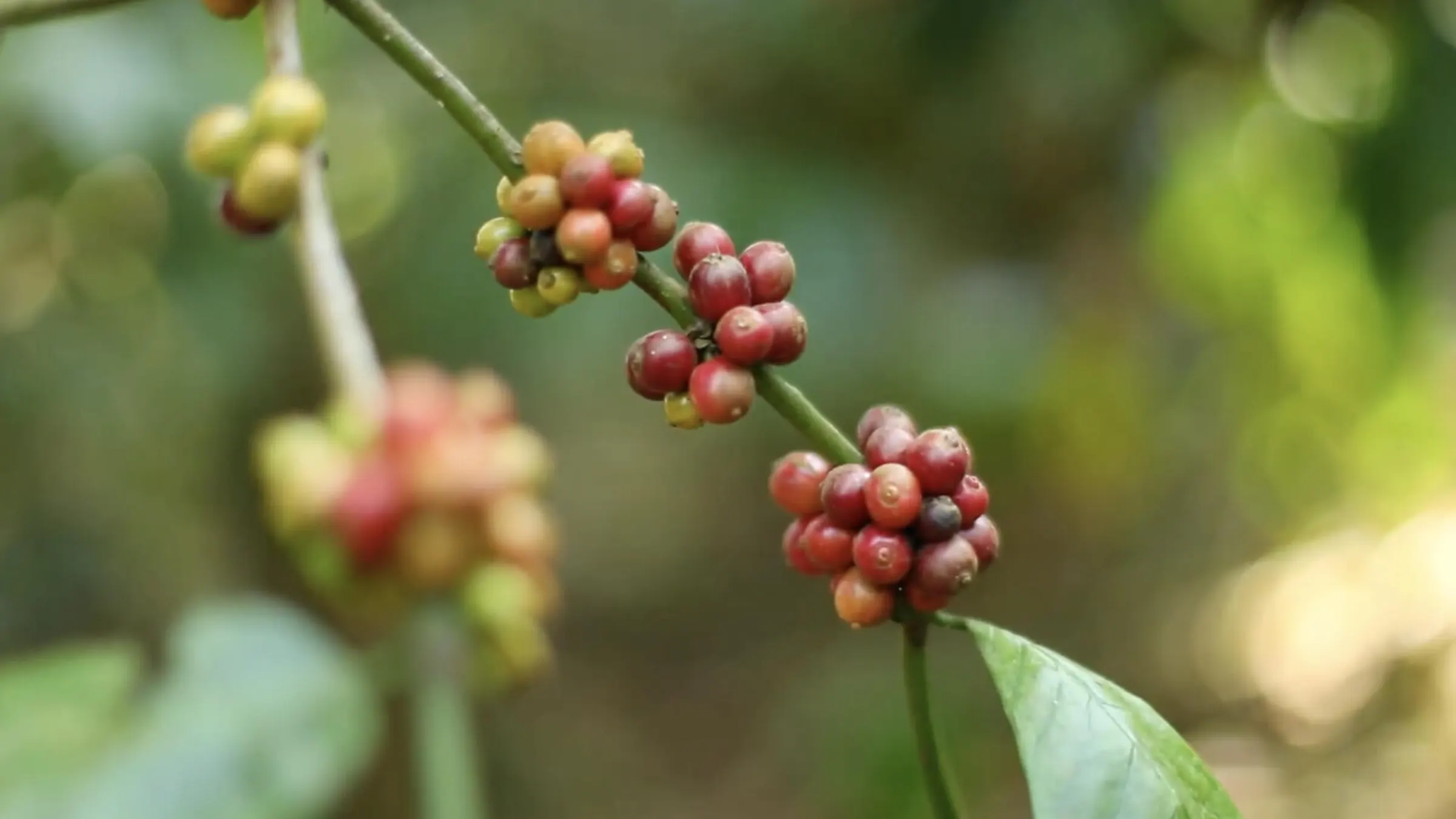
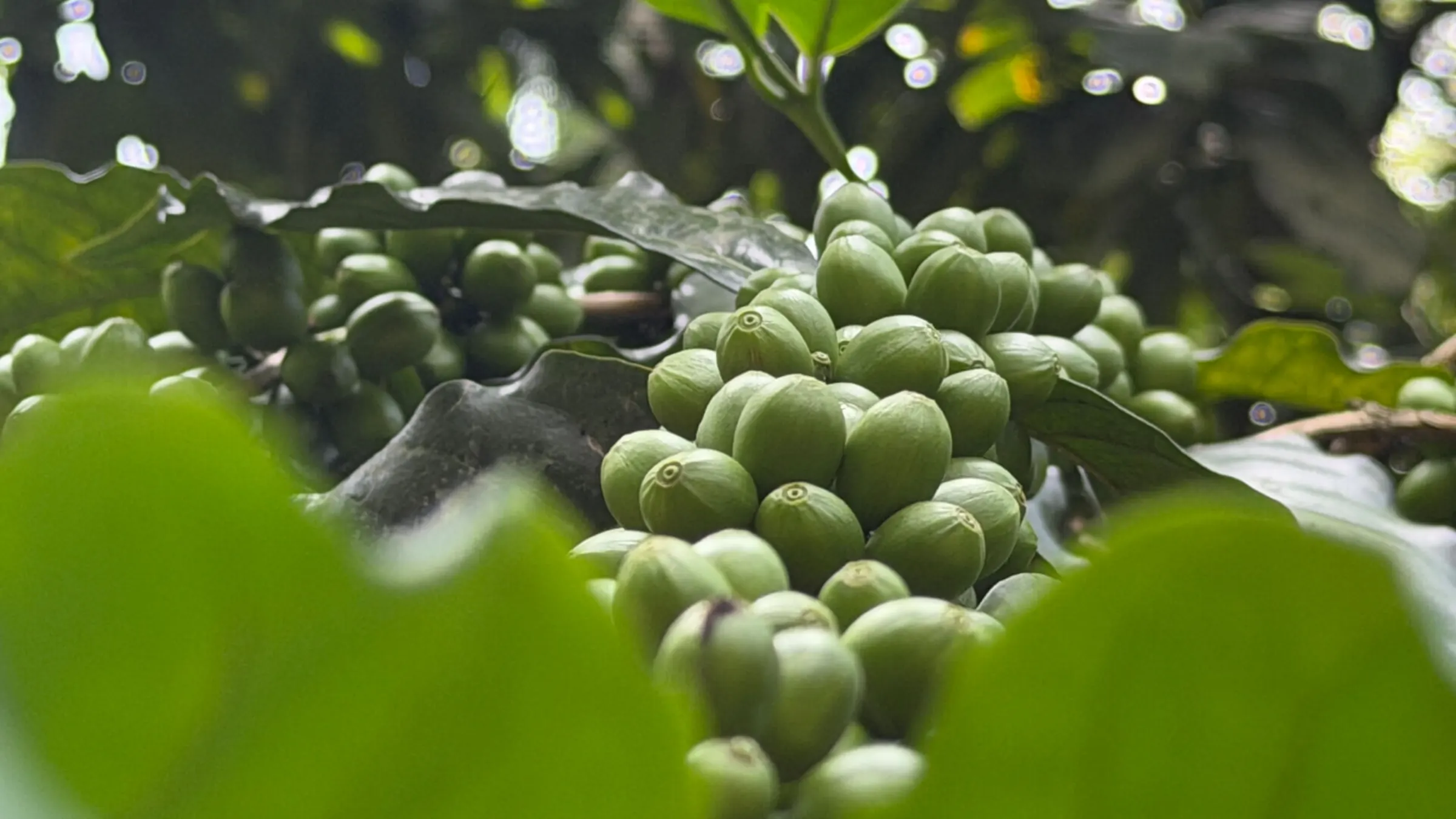
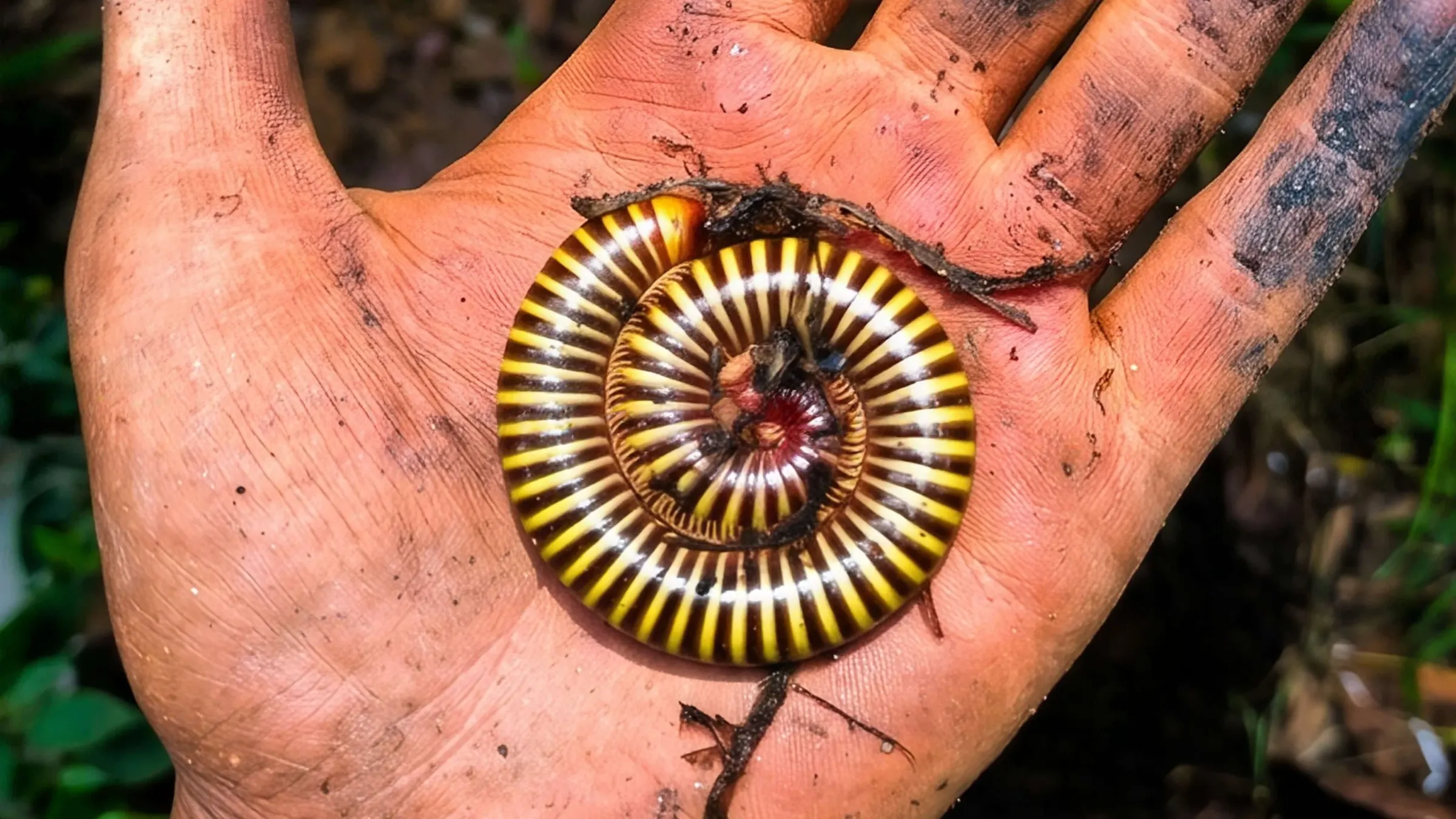
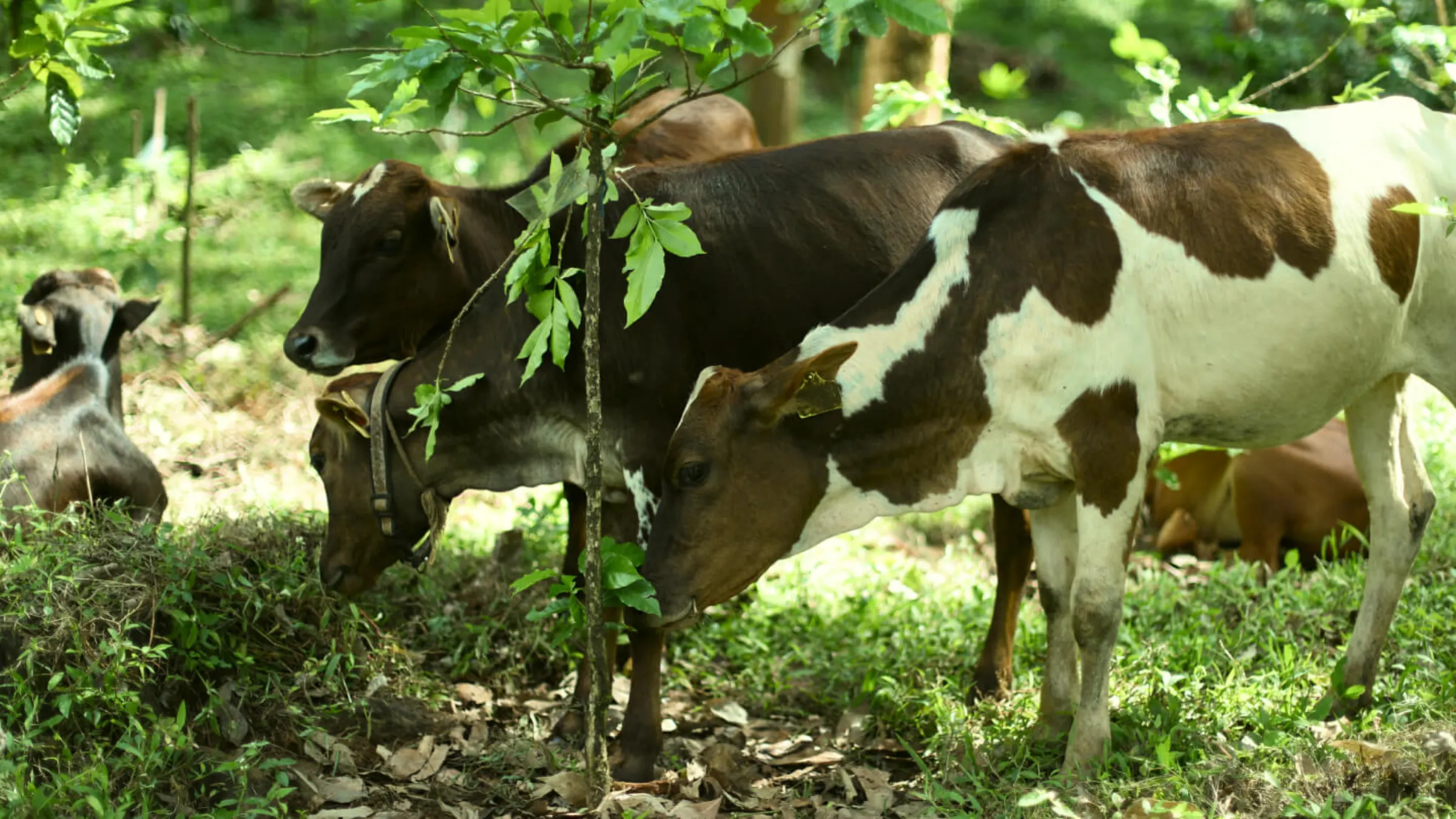
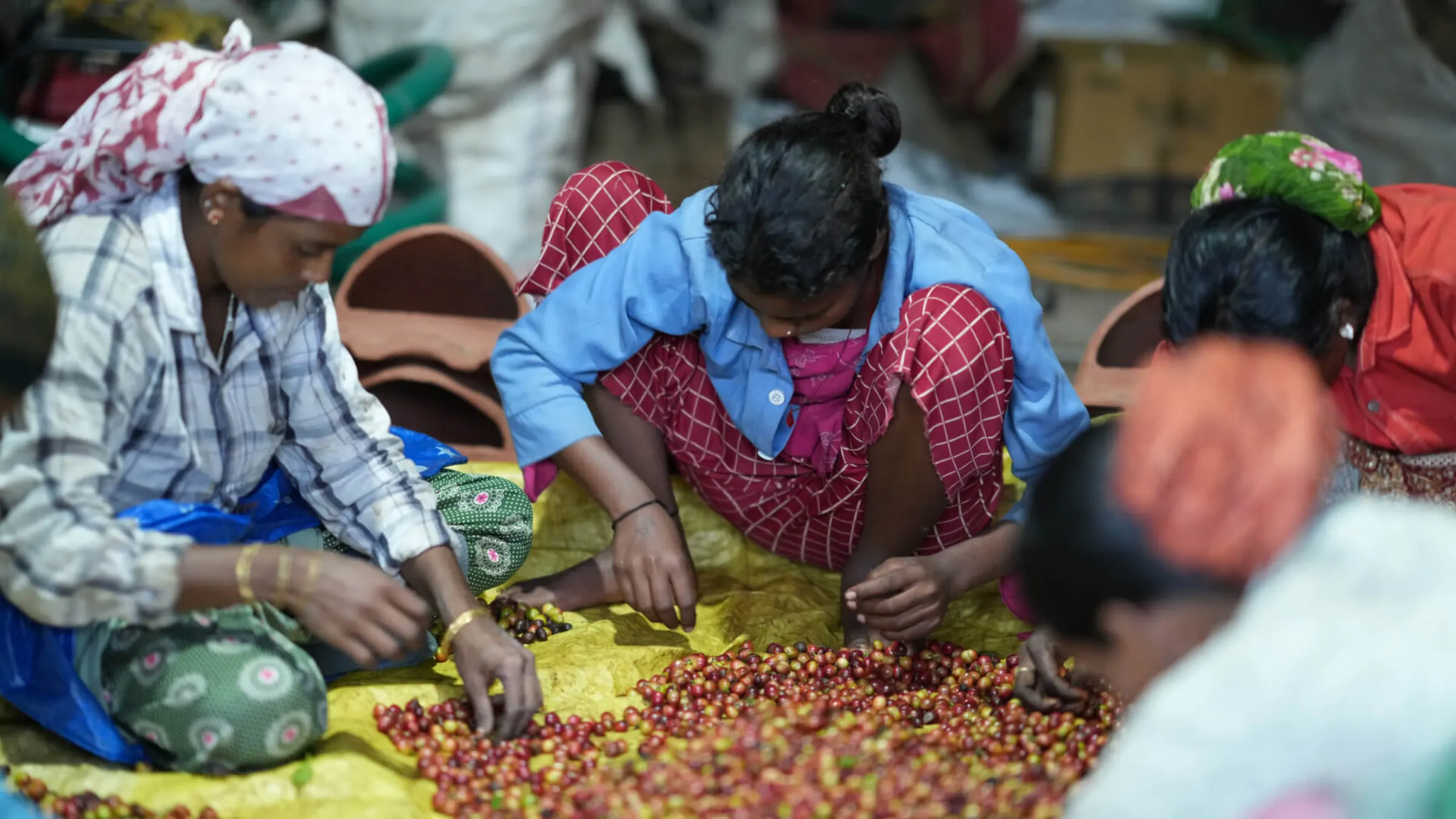
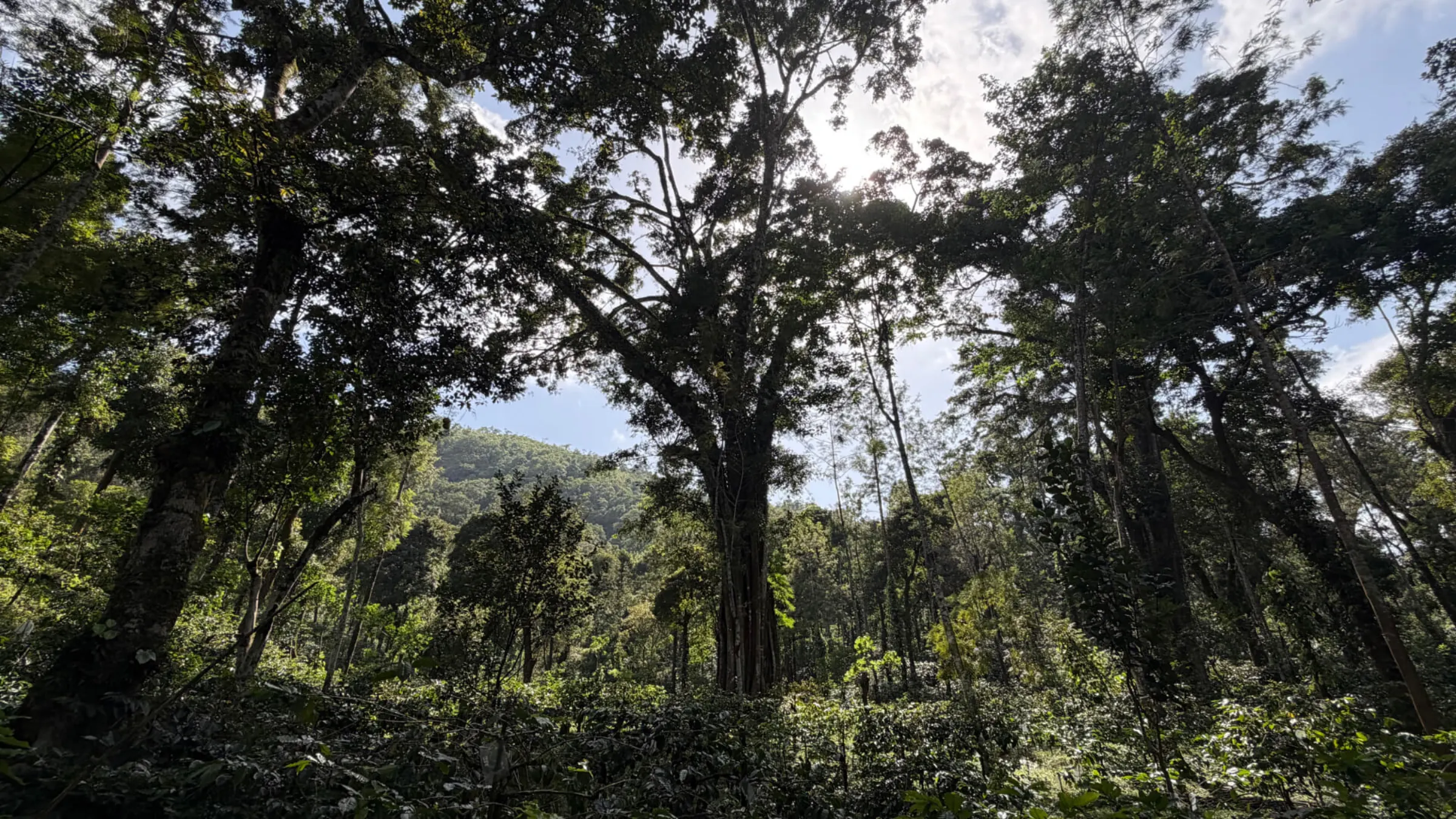
Coffee does not begin with coffee. It begins with an animal, a metre of soil, and somebody awake before the light. A hundred and fifty acres at 3,600 feet, in the Western Ghats above Mudigere, under four storeys of shade — pepper and silver oak, then jackfruit, then coffee, then the ground. From the air it reads as forest. It happens to make coffee.
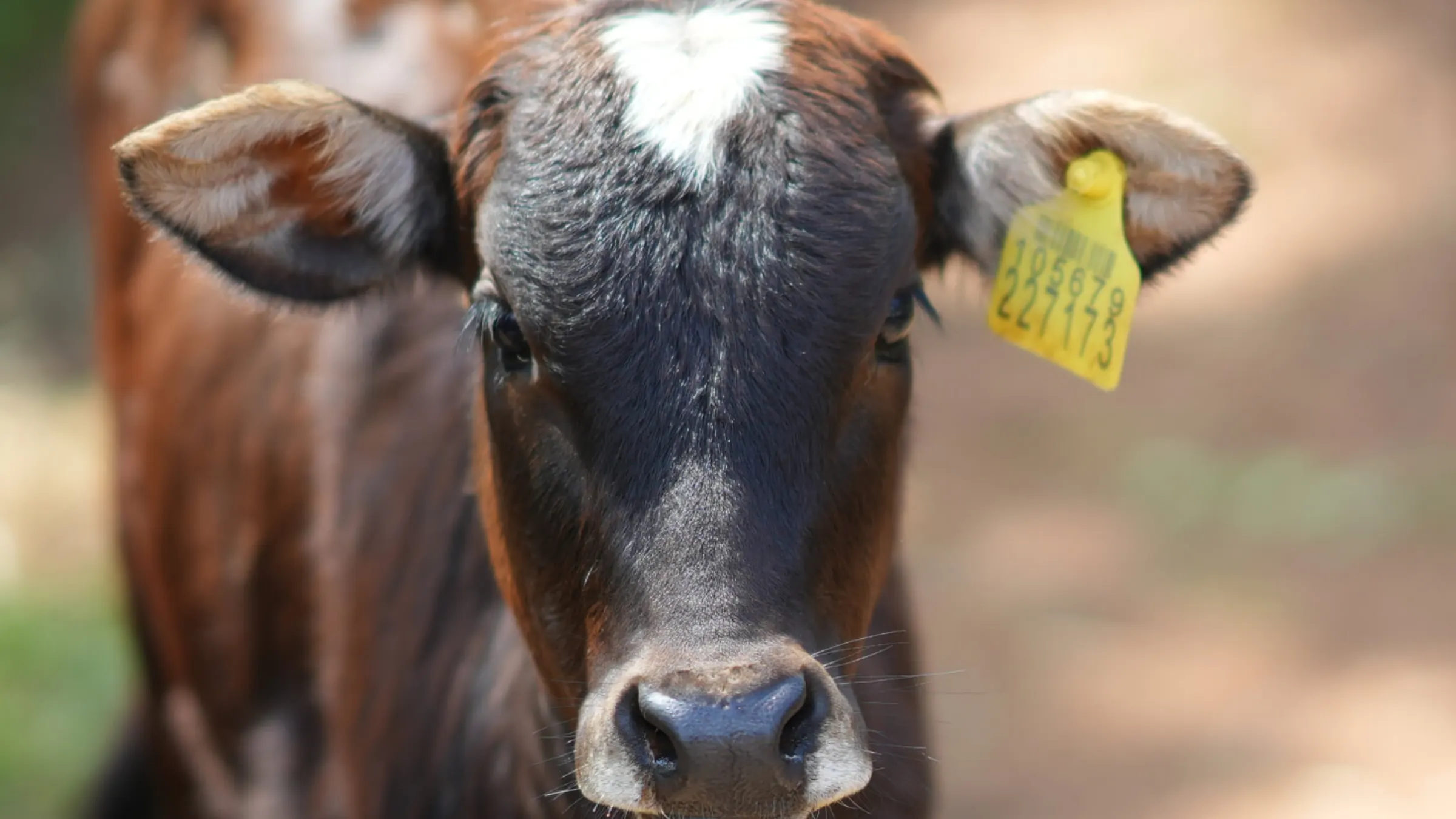
Our best farmers have four legs.
About fifty Malnad Gidda. Small, hardy, native to these hills, and grazing them for centuries before anybody thought to write it down. The herd is also the whole fertiliser supply — everything this soil is ever given comes out of them, which is why nothing has been sprayed on the grass they eat. What goes into the animal comes back out into the ground the coffee is standing in.
The day starts at twenty to six, with a bucket.
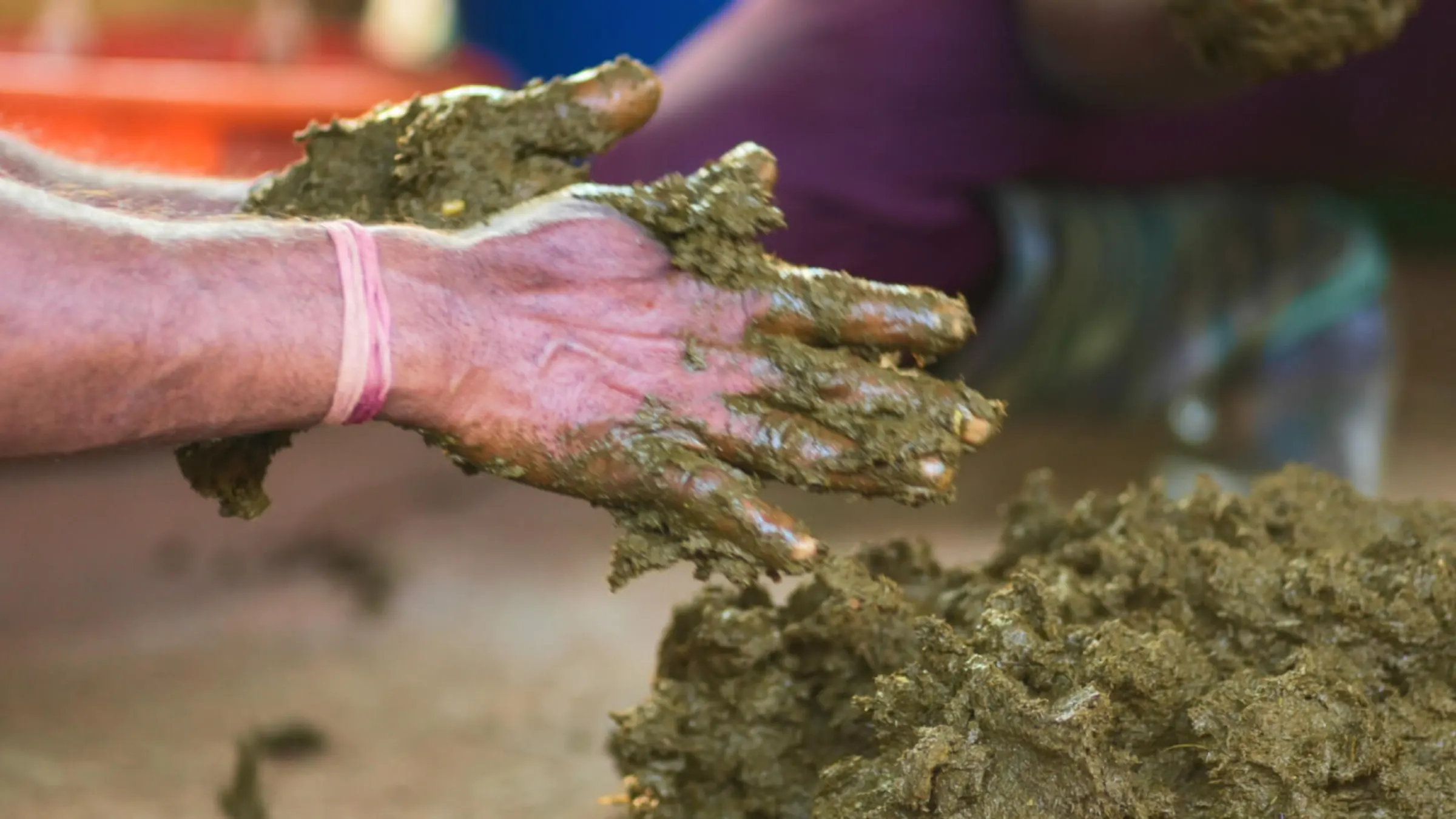
What the herd left overnight is gathered while it is still warm, weighed, written down, and split three ways — into the compost pits, into the Jeevamrit brews, and into the horns for BD 500. It is the most valuable raw material on the estate, and it is collected by hand, every morning, before anything else happens.
We do not buy fertility. We make it.
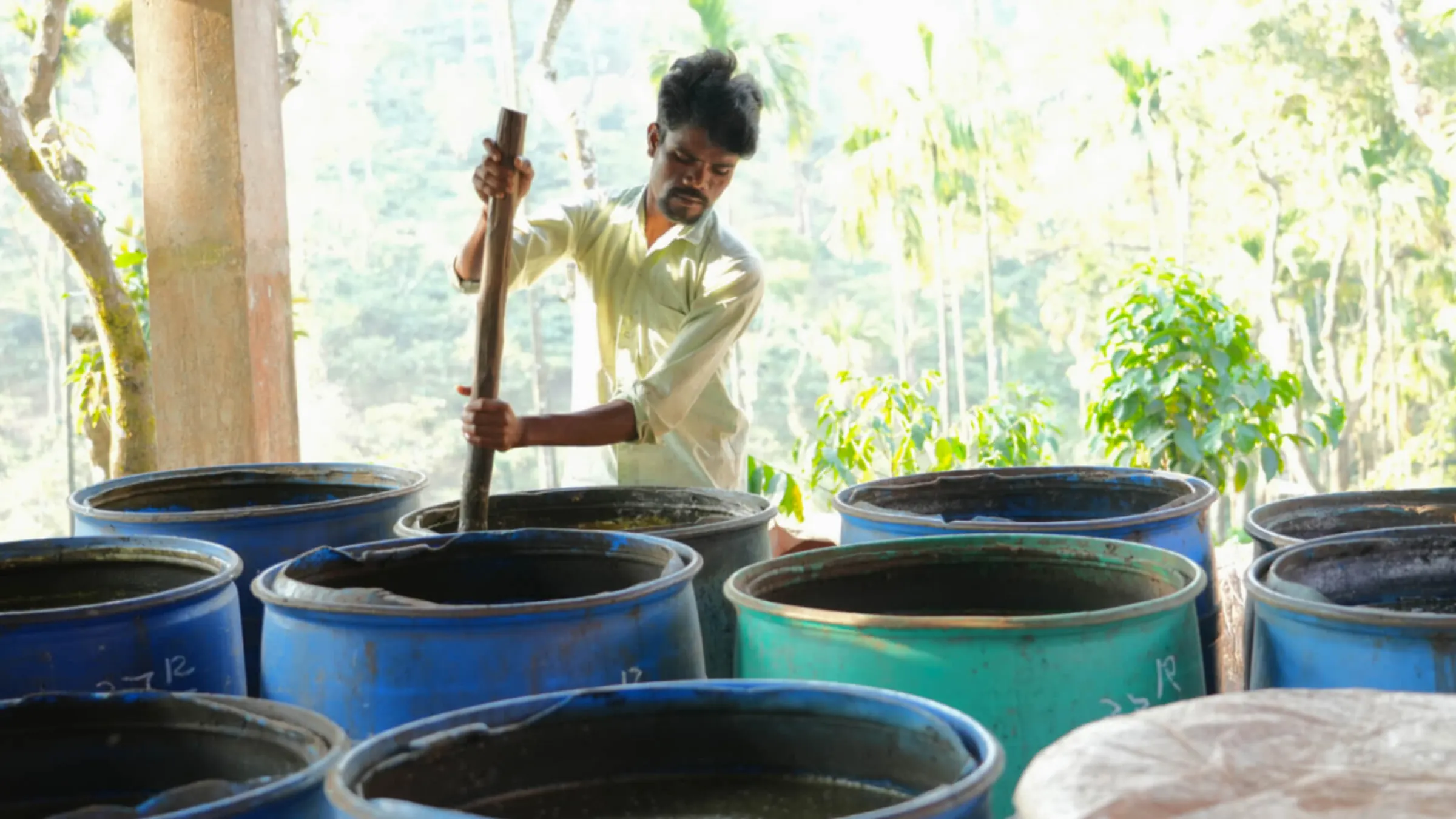
154,000 litres of Jeevamrit a year. Every barrel stirred by hand for forty-five minutes: build the vortex, break it, turn it back the other way. Forty-five minutes is a long time to stir anything. That is rather the point.
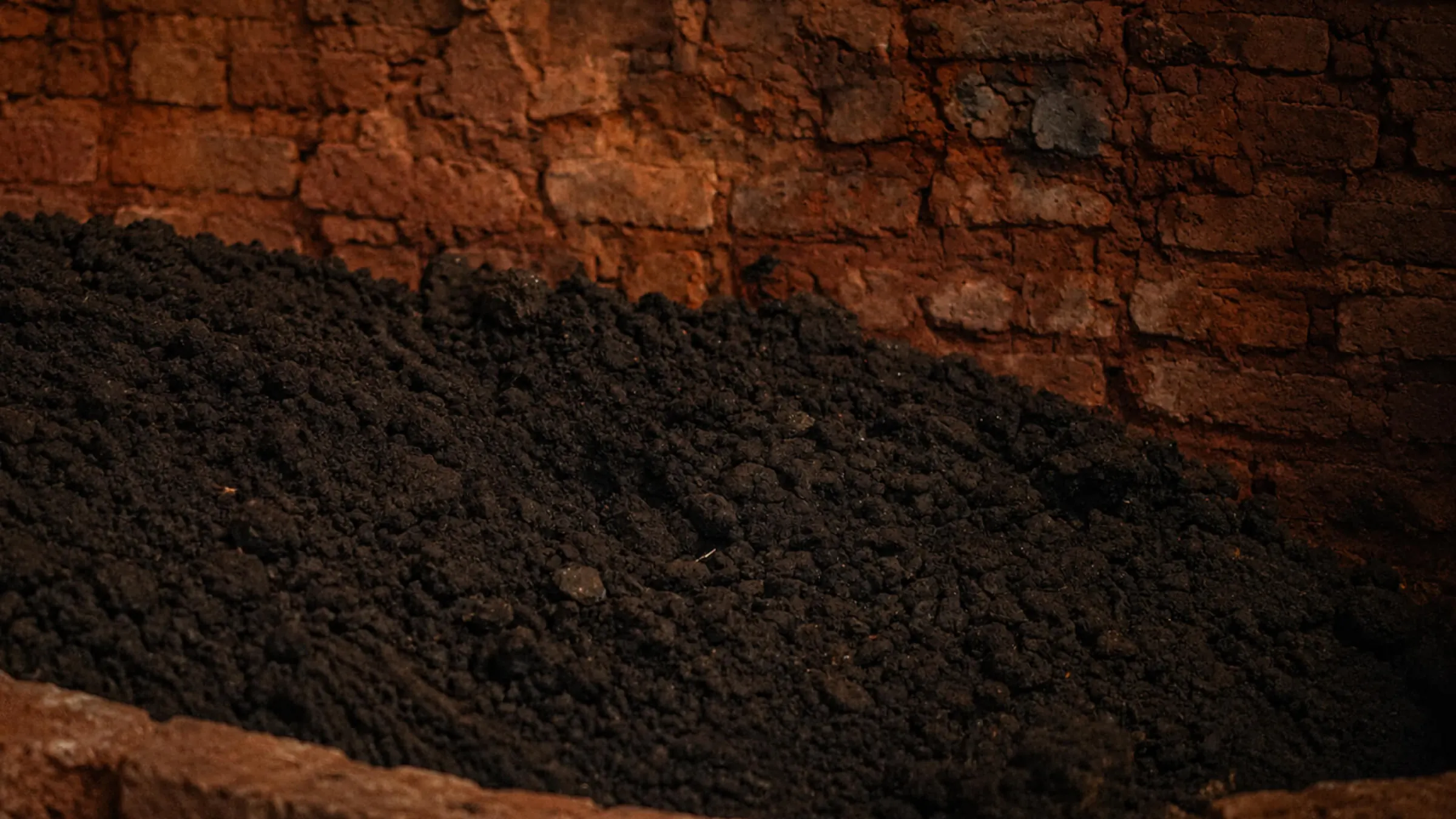
Fourteen compost pits, ninety days apiece.
Horn manure is buried through the cool months and sprayed at dusk; ground quartz is buried through the summer and misted over the canopy at first light. Yarrow, chamomile, nettle, oak bark, dandelion and valerian go into a heap the size of a room, in doses measured in grams rather than sacks. All of it is made here. None of it arrives on a lorry.
Then we stopped guessing.
Shade has been judged by eye here for three hundred years.
A contractor stands under a tree, decides it is too dark, and directs the cut. That works until it doesn’t, and a tree cut on a hunch is still the wrong shape fifty years later. So in 2026 we walked Block 3 with a lux meter, fifty readings to the acre.
The block turned out to be three blocks: one at 33,000 lux with two-thirds of the light gone, one at 62,000, one at 82,000 and wide open. Arabica wants 50,000 to 70,000. One zone in three was where we had assumed the whole block was.
So we cut to the number instead.
Every wound was dressed with cow dung and turmeric, every cut was logged against the tree it came off, and the whole block was read again with the meter ninety days later to find out whether we had been right. Recording what you did is the easy half.
Nothing comes in. Nothing leaves.
Grass feeds the herd. The herd feeds the preparations. The preparations feed the soil. The soil grows the grass.