Desired microbial activity, held to a number

Food & Fermentation

Three disciplines, one process.

Coffee, pepper and cow dung. Each takes a raw material and lets microbial activity turn it into something the estate could not have made directly.

Stripped to its definition, fermentation is only this: desired microbial activity, held long enough and stopped at the right point. What changes between the three is what "desired" means.
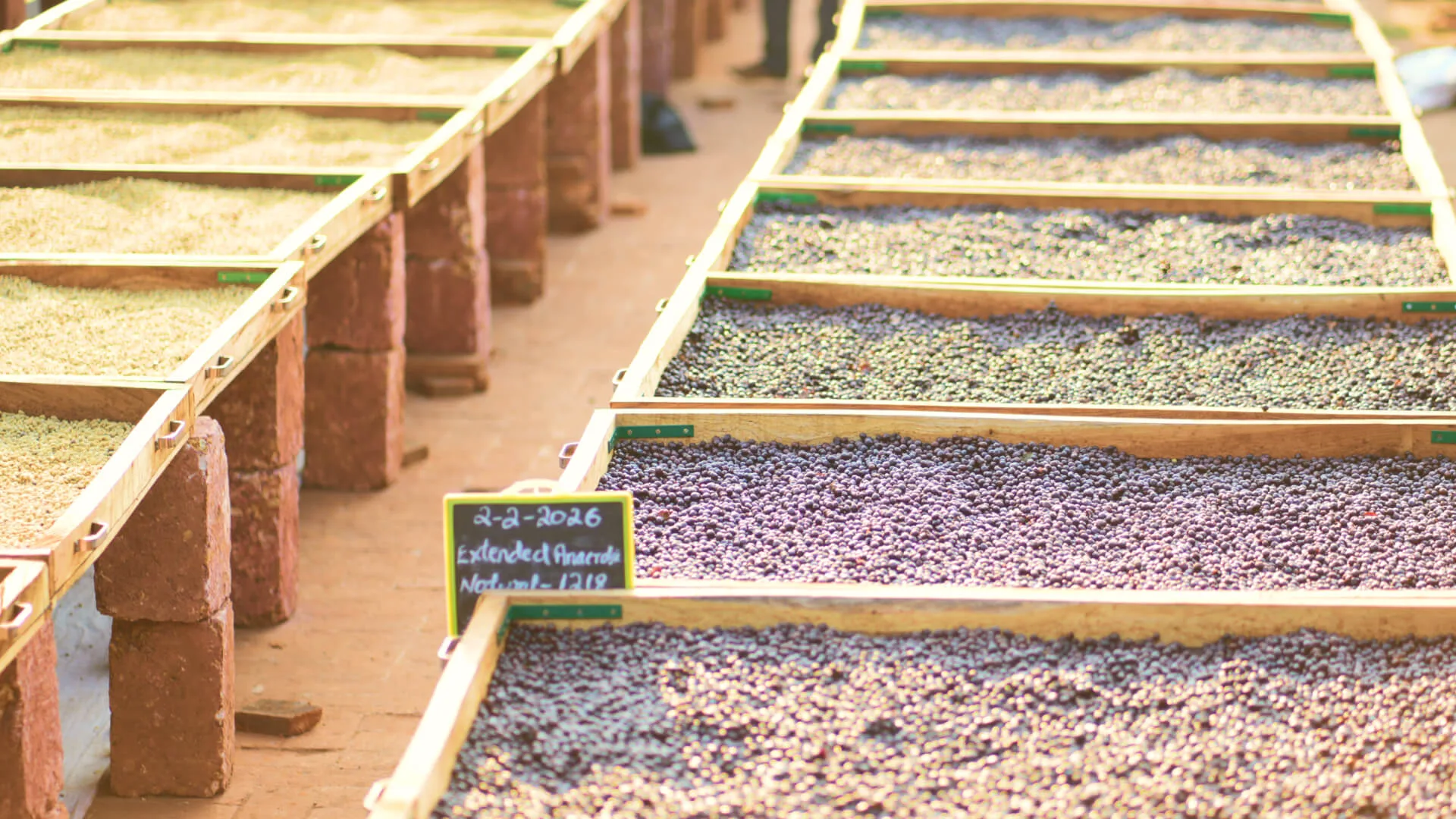
Six methods, one Arabica.

Six distinct methods are applied to the same cherry, which is what makes the differences between the lots legible: the variety is held constant and the process is the variable.

Red Honey is dried to 45% moisture first, then fermented 48 hours. The 25-day natural runs mucilage-on, five days thick drying then twenty-five thin, and the oxidation is what turns it. The Solera Maceration is multi-cycle carry-forward — the microbial culture of one batch seeds the next.

What we measure

between pH readings through a ferment
15 min
where a ferment is stopped
pH 4.2
temperature readings through a ferment
3× daily
minimum drying
25 days
methods applied to the same Arabica
Six
Drying beds side by side, each labelled with its date and method

The variety held constant, the process the variable

Every lot is tracked.

pH every fifteen minutes, temperature three times a day, and a minimum of twenty-five days of drying. Each lot finds its own clock inside those rules.

The third discipline is the one nobody drinks: the preparations. Cow pat pits are a controlled ferment too, and the same principle governs them — nothing untested goes out.

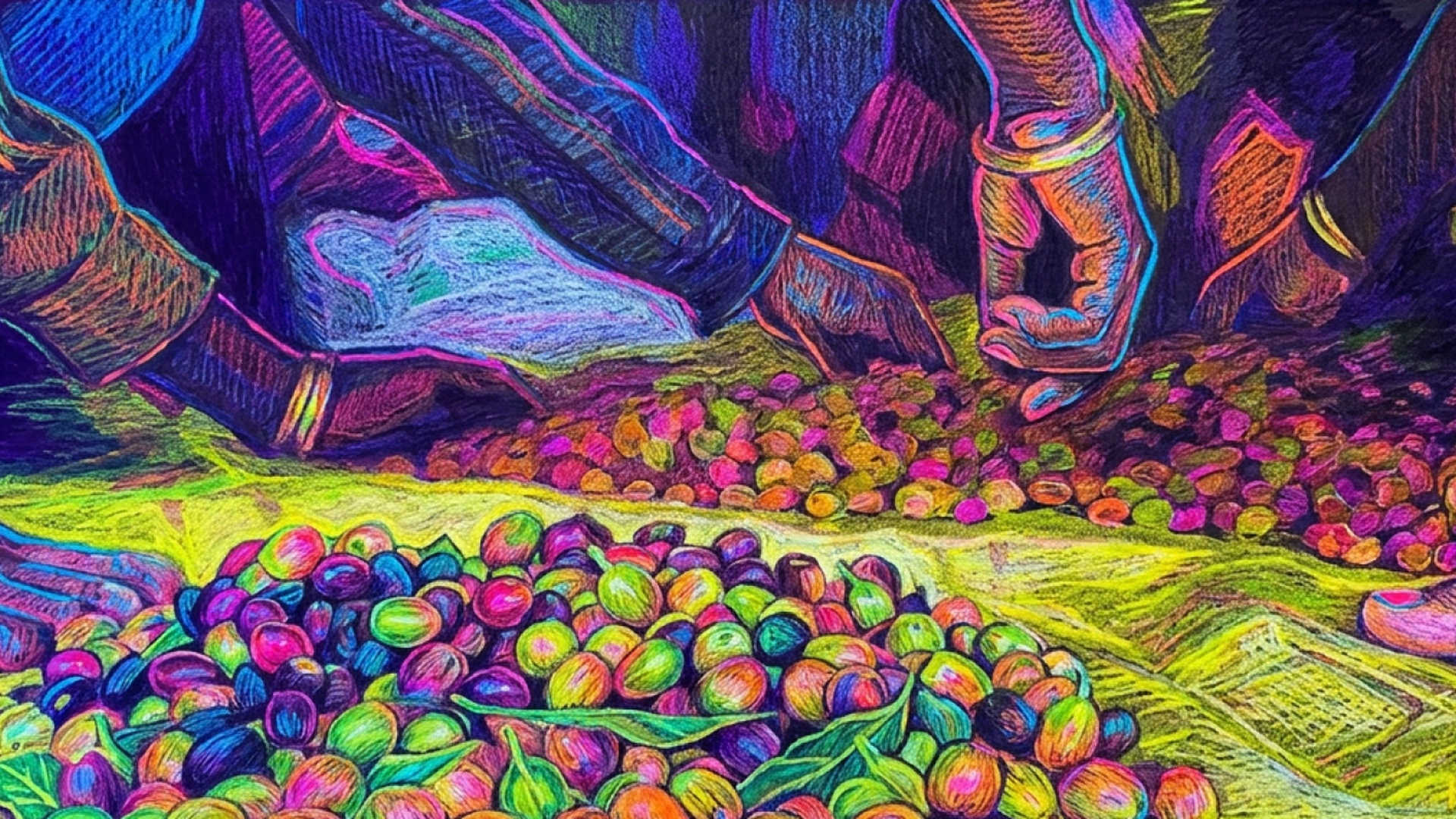
Cherry drying in raised beds under shade
Every lot, its own bed and its own file

A number ends the ferment. It stops at pH 4.2, whatever the clock says.