Back

TheLand

The Land

Land sets the brief. We answer.

Land is ancestry.

Sampigelkhan Estate sits in the Western Ghats of Karnataka — red laterite soil, monsoon rhythm, and a four-story canopy older than any of us.

We are stewards of a hundred-year arc. The numbers below describe what is here today; what matters is what we leave for the next gardener.

This is the land. Everything follows from it.

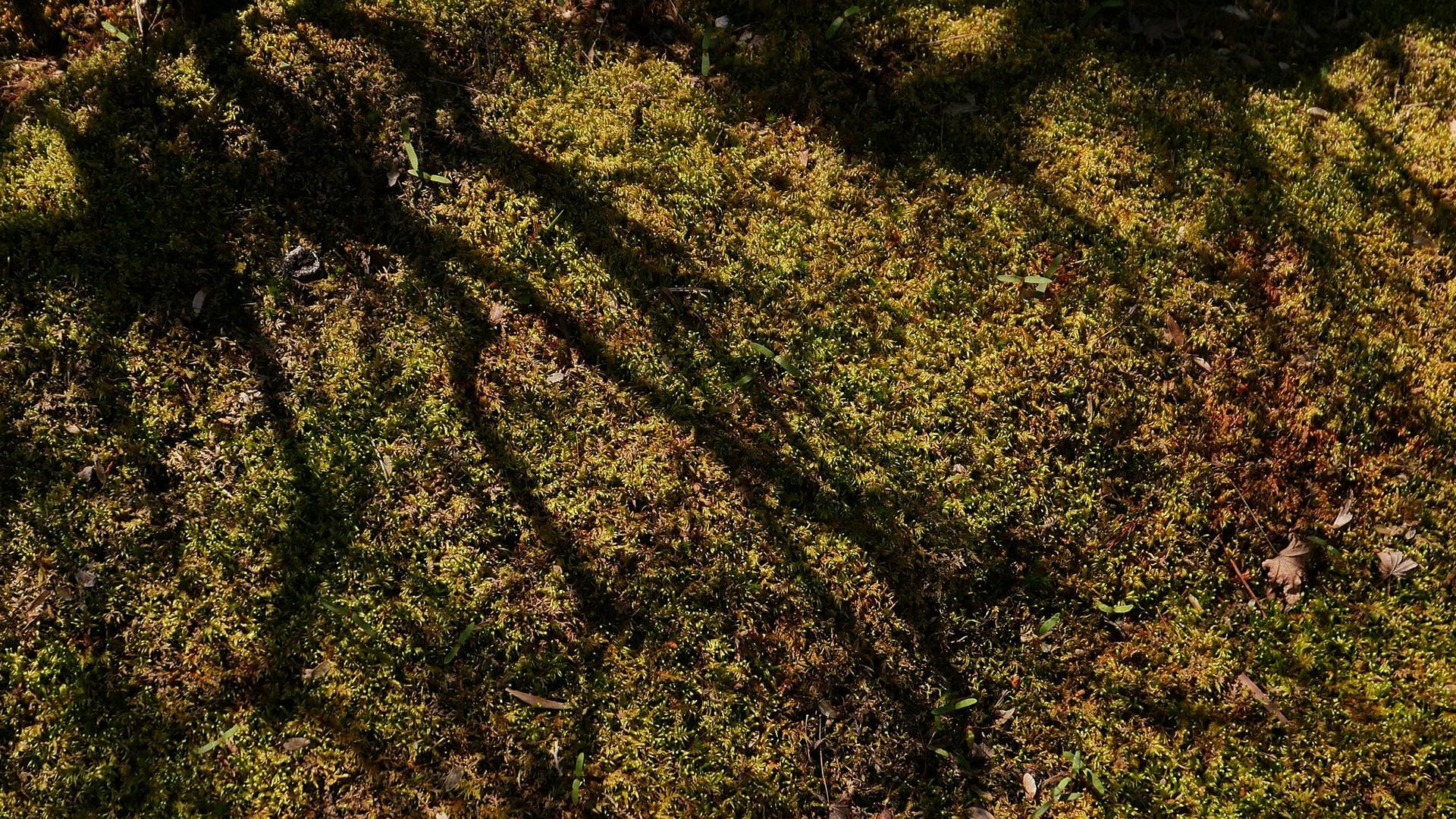
Light filtering through the four-story canopy at noon — Sampigelkhan Estate

The land — 150 acres, one organism

Sampigelkhan.

13.1365°N, 75.6403°E

Coordinates.

3,600 ft

Altitude.

Laterite

Soil — red, volcanic, pH 6.0–6.5.

40–100 in / yr

Rainfall, monsoon-driven.

14 – 30 °C

Temperature range.

58%

Humidity.

UNESCO

Biodiversity zone.

150

Acres.

35,000

Trees.

Four-story canopy — Sampigelkhan Estate

What grows here.

One hundred acres of shade-grown coffee — Arabica Sln.9 and Sln.795, planted beneath a four-story canopy of silver oak, Albizzia, jackfruit, and native fig. Thirty-five acres of tea, in organic transition targeting 2027.

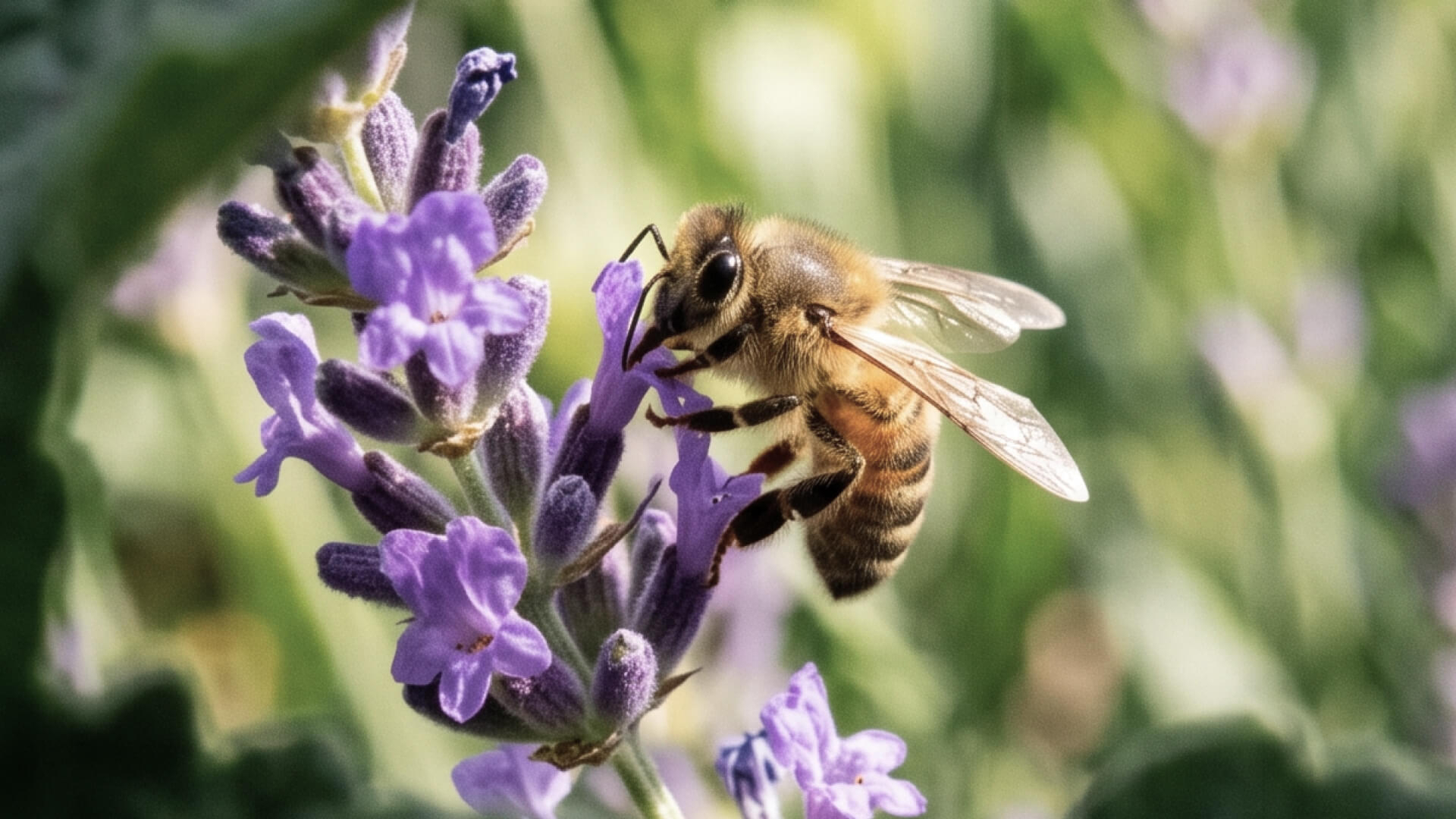
Black pepper climbing areca palms. Cardamom in the lower shade. Cacao, avocado, and cover crops on the forest floor. Beehives marking the flowering seasons. 35,000 individual trees across the estate.

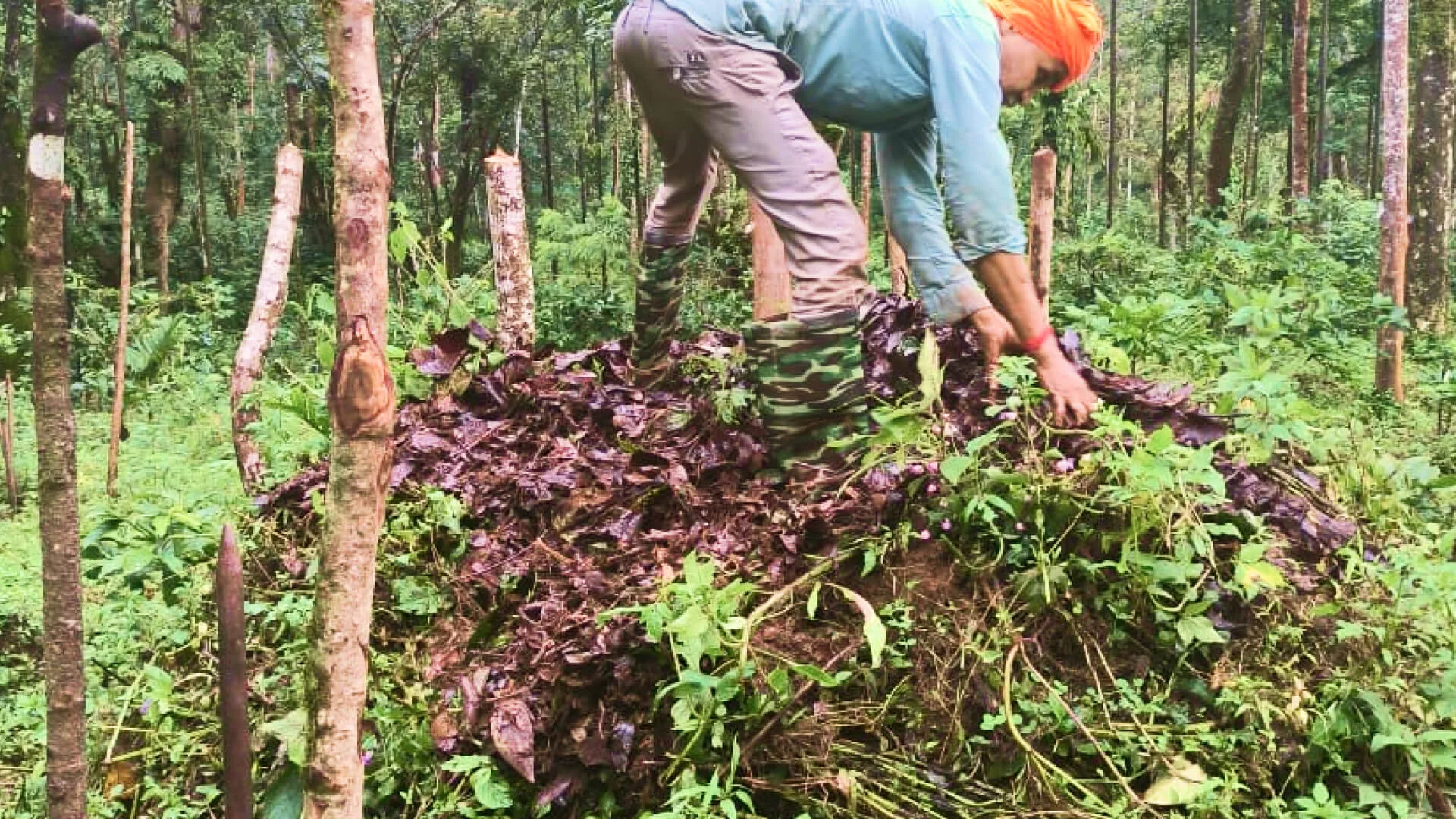
And 52 Malnad Gidda cattle — an indigenous breed native to this altitude, rotating through blocks timed to cherry development stages. Their dung drives the biodynamic programme. Their presence shapes the soil biology season by season.

The FOREST is not adjacent to the FARM. The FOREST is the FARM.

How we work this land.

The progression is deliberate, and it does not skip steps. There is no phase where we arrive and declare the work done. The land is always in transition. The question is whether the trajectory points toward regeneration or extraction. Ours points toward regeneration.

01 — Stabilise and maintain.

Understand what the land is doing before changing anything.

02 — Discipline and observation.

Report what was done, where, why, what was observed.

03 — Organic transition.

Each block at its own pace, logged against the certification clock.

04 — Biodynamic maturation.

BD 500–508, CPP, Jeevamrit, Panchgavya, Beejamrit.

05 — Ecological products.

Output diversifies as the system deepens.

Mudigere and Ohara.

Aura is not one estate. It is two. The second sits in Ohara, Kyoto — two properties totalling roughly 1,200 tsubo, with seven existing buildings, a teahouse with a hearth, a thirty-year-old Japanese garden, and a cafe overlooking a river.

Mudigere and Ohara form an East-East axis. Two agrarian cultures — Vedic and Zen — in dialogue. Neither apologises to a Western sustainability narrative. Both operate from Ṛta: right time, right action, natural order.

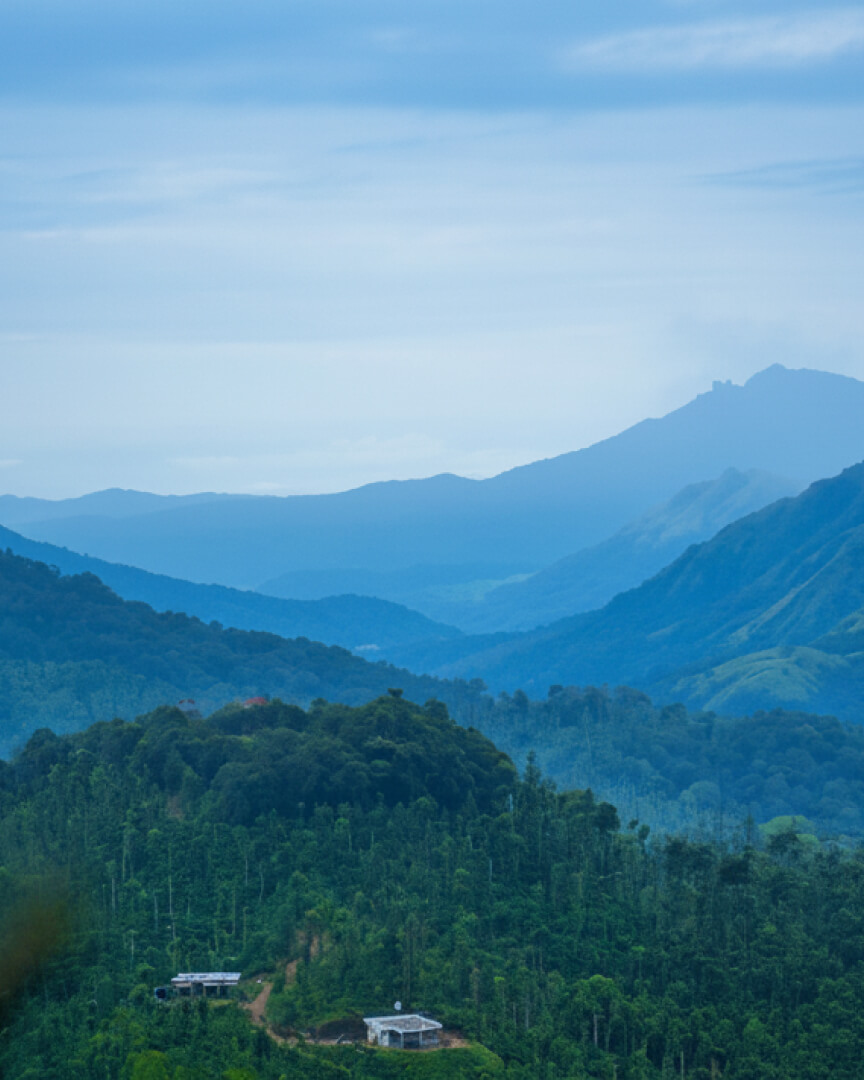
Mudigere mountains rising over the Western Ghats — the valley that holds Sampigelkhan Estate

Mudigere · Karnataka.

150 acres, 3,600 ft, laterite soil, UNESCO biodiversity zone. Four- story polyculture. 52 Malnad Gidda cattle. The agricultural engine.
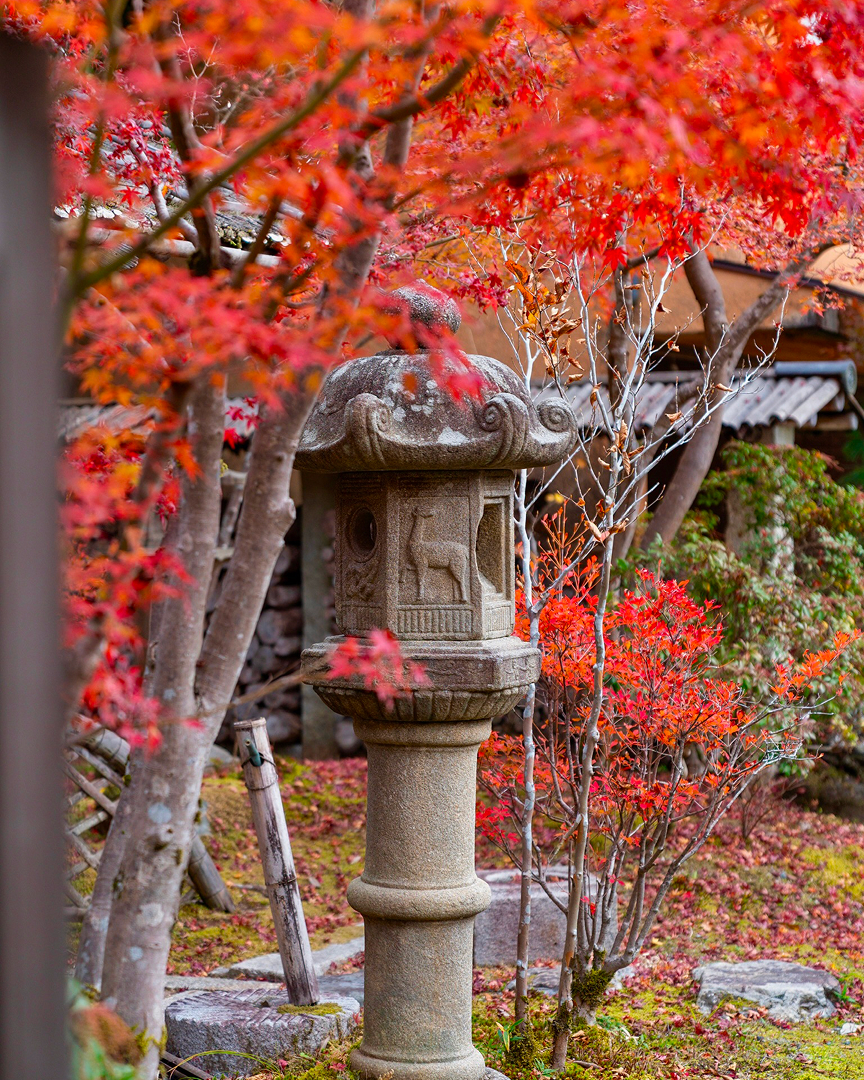
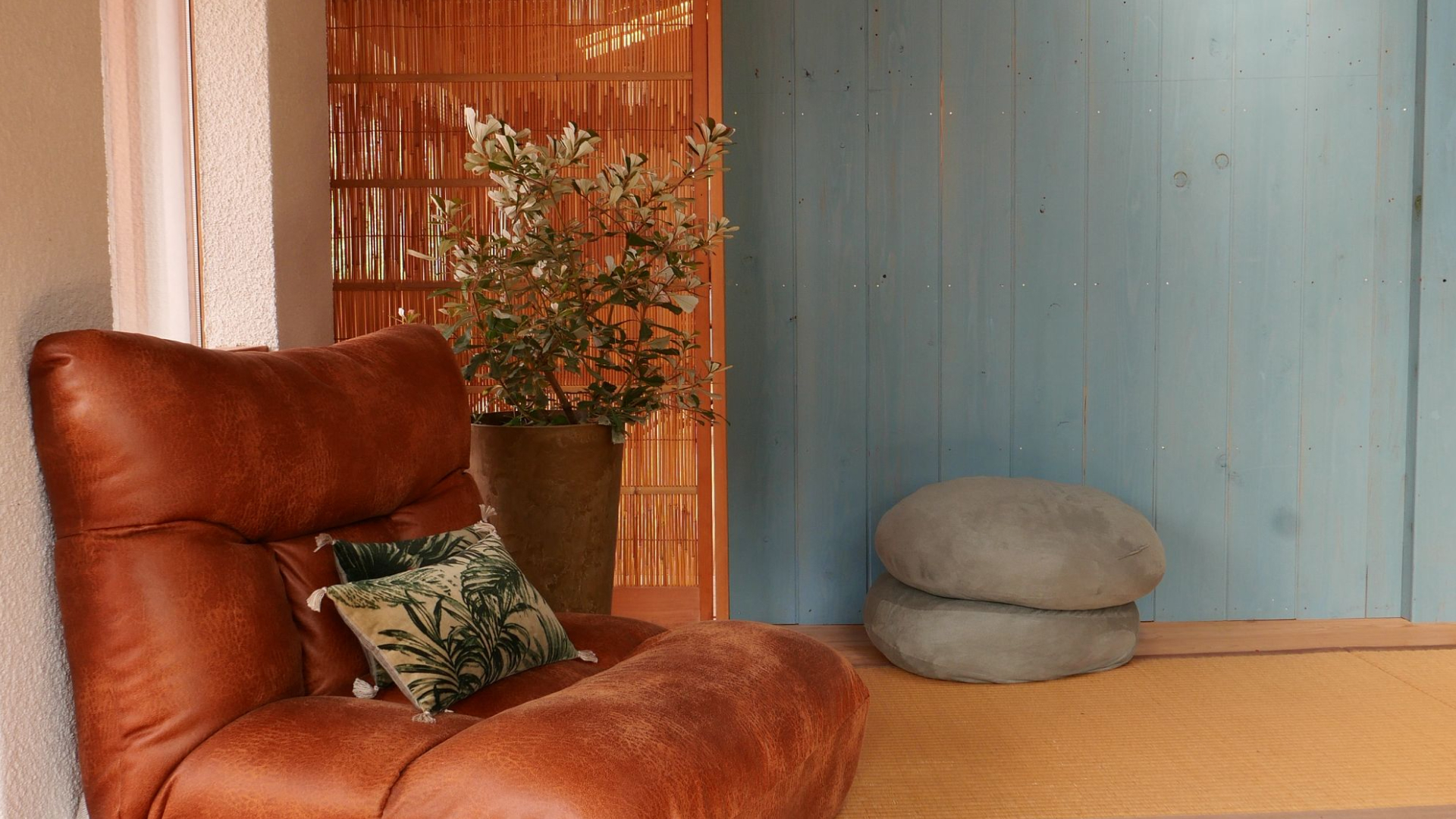
Restored Japanese house in Ohara, Kyoto — autumn maple over a thirty-year-old zen garden

Ohara · Kyoto.

~1,200 tsubo, 1,099 ft, 7 °C – 28 °C. Seven buildings. A thirty-year-old garden. A teahouse with a hearth. The sanctuary counterpart.

What the land produces.

Beyond coffee and pepper and tea: carbon. The four-story shade-grown polyculture sequesters an estimated three to five times more carbon per acre than monoculture coffee. With the biodynamic programme building soil carbon, the estimate rises to four to five times baseline.

4–5×

Carbon vs monoculture coffee.

500–1,000 t

CO₂ credit potential per year.

100 acres

Shade-grown coffee.

35 acres

Tea, organic transition 2027.

35,000

Trees on chain over time.

The land is a carbon asset, a biodiversity corridor, a water system, a cultural record, and the primary dataset of everything Aura builds.

PROVENANCE is the EVIDENCE of relationship.

Land is ancestry.I am the first gardener.There will be a next.Provenance is evidence of relationship.

The unit of record is the land.

We do not farm for yield. We farm for the next hundred years. Hornbills nest in the fig hollows. Macaques move through the canopy. Fig wasps pollinate the keystone trees. Civets feed on the pepper and the cherry.

The forest is the farm.