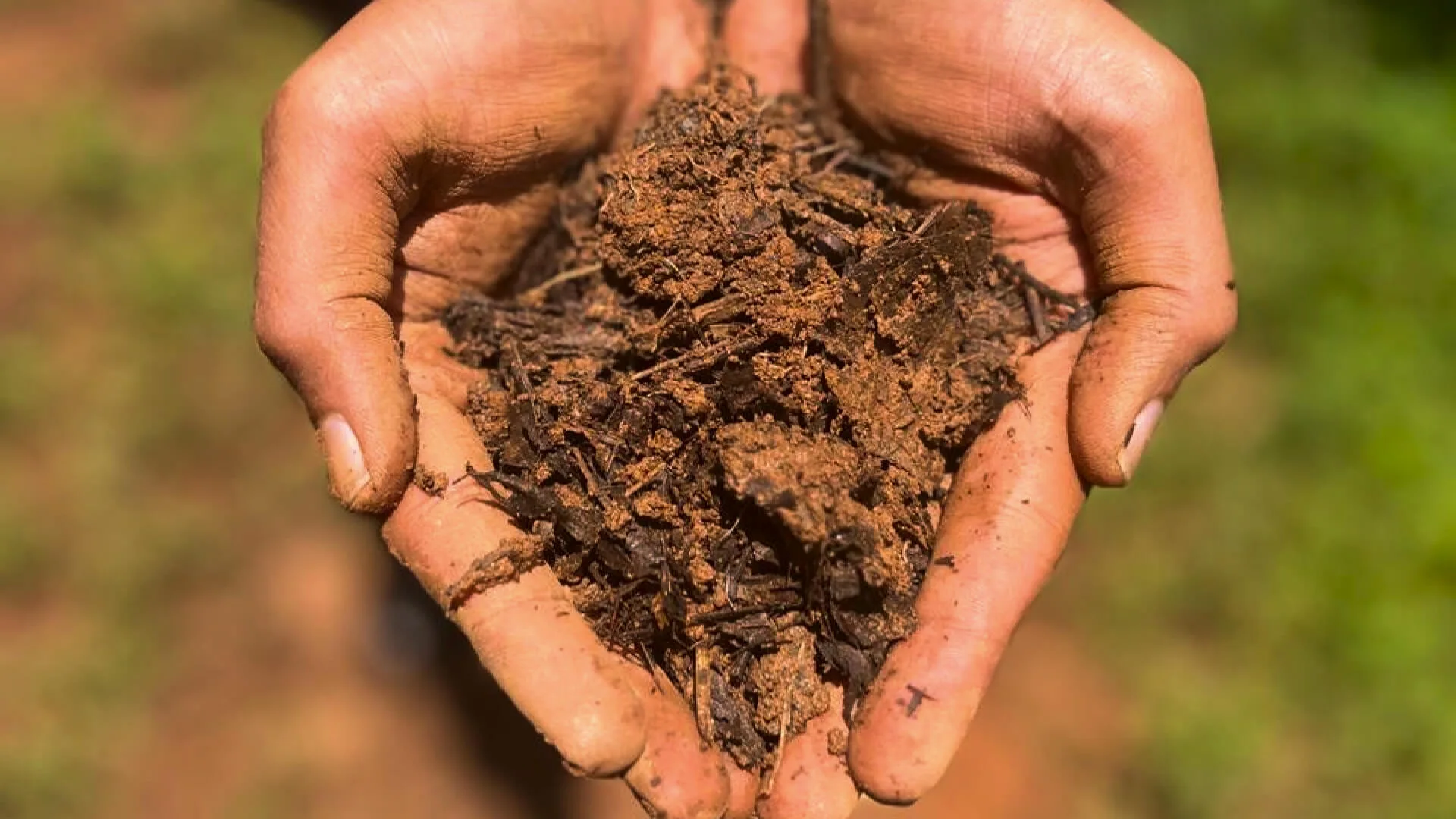
Two hands cupping dark finished compost

What the estate makes before it grows anything — Aura Estate, Mudigere

The Plantation

A forest that produces crops.

Aura grows coffee, tea, pepper, areca and what the season gives, on 150 acres at 3,600 ft in the Western Ghats. Four hours up from Bengaluru the canopy closes over the road and the temperature drops six degrees; that is where the farm starts.

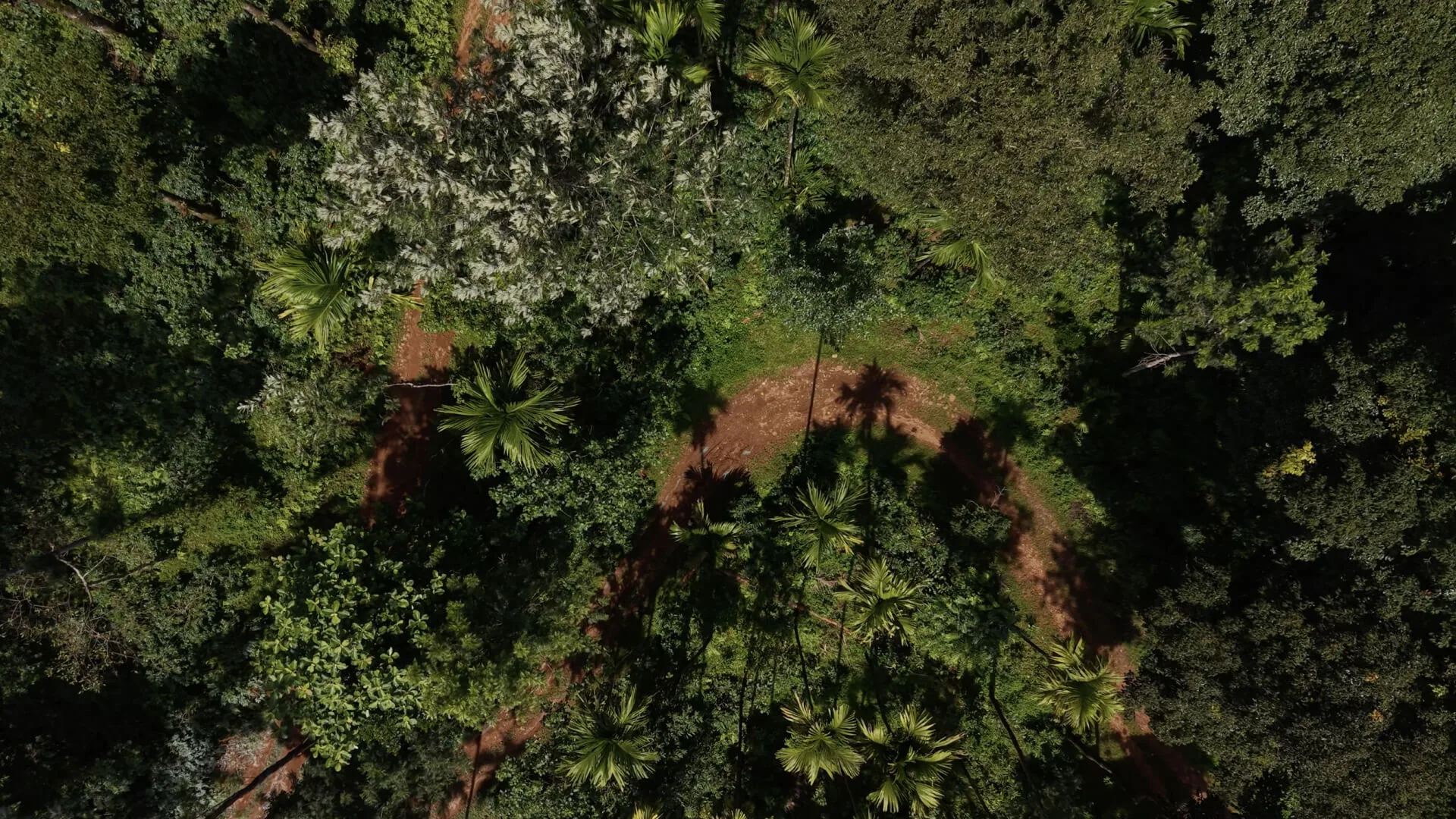
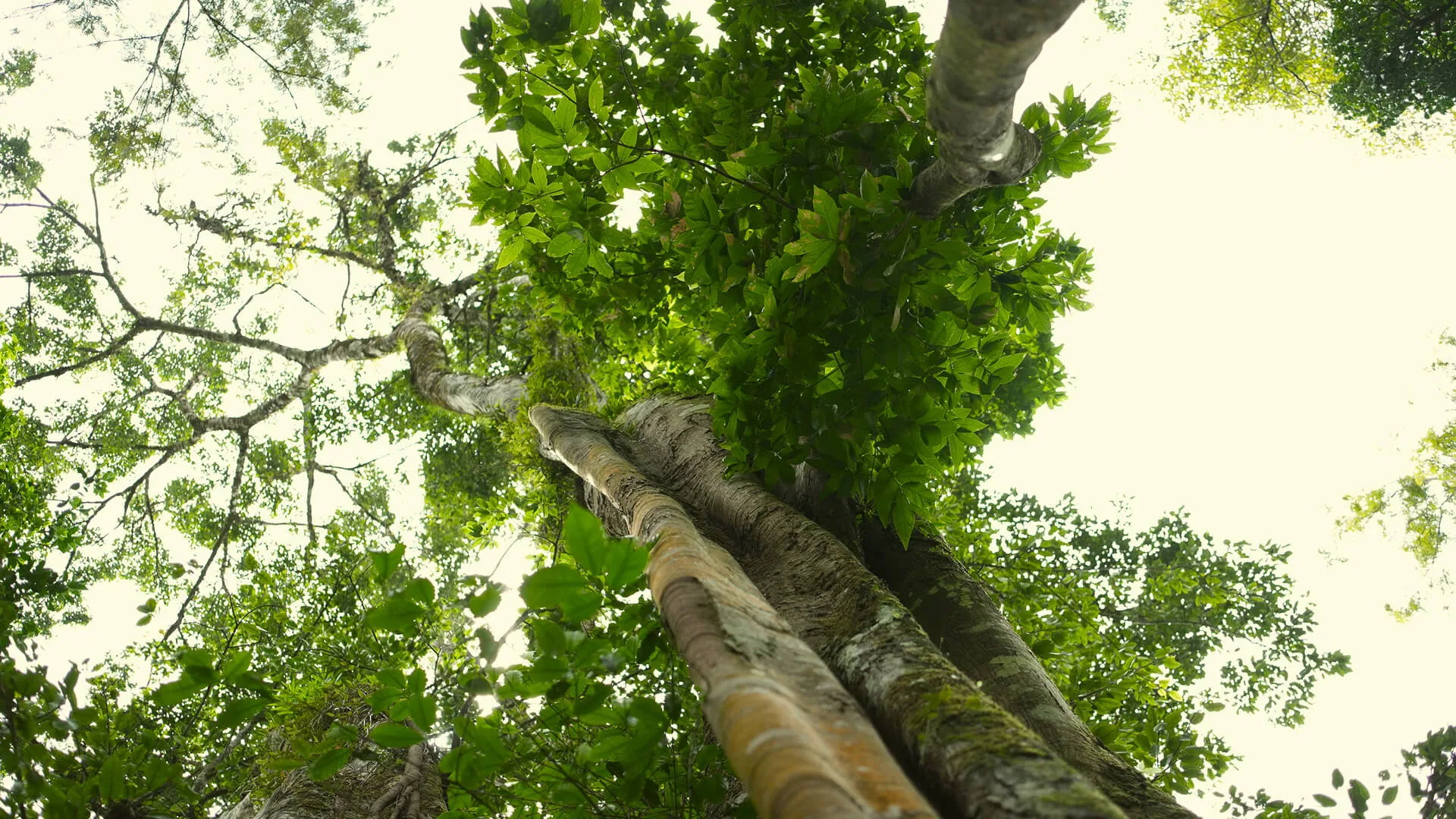
Four storeys of canopy — emergent, canopy, understorey, ground — are maintained rather than cleared, and the coffee grows in the shade of them. Nothing is planted in rows in an open field.

Fertility is made here.

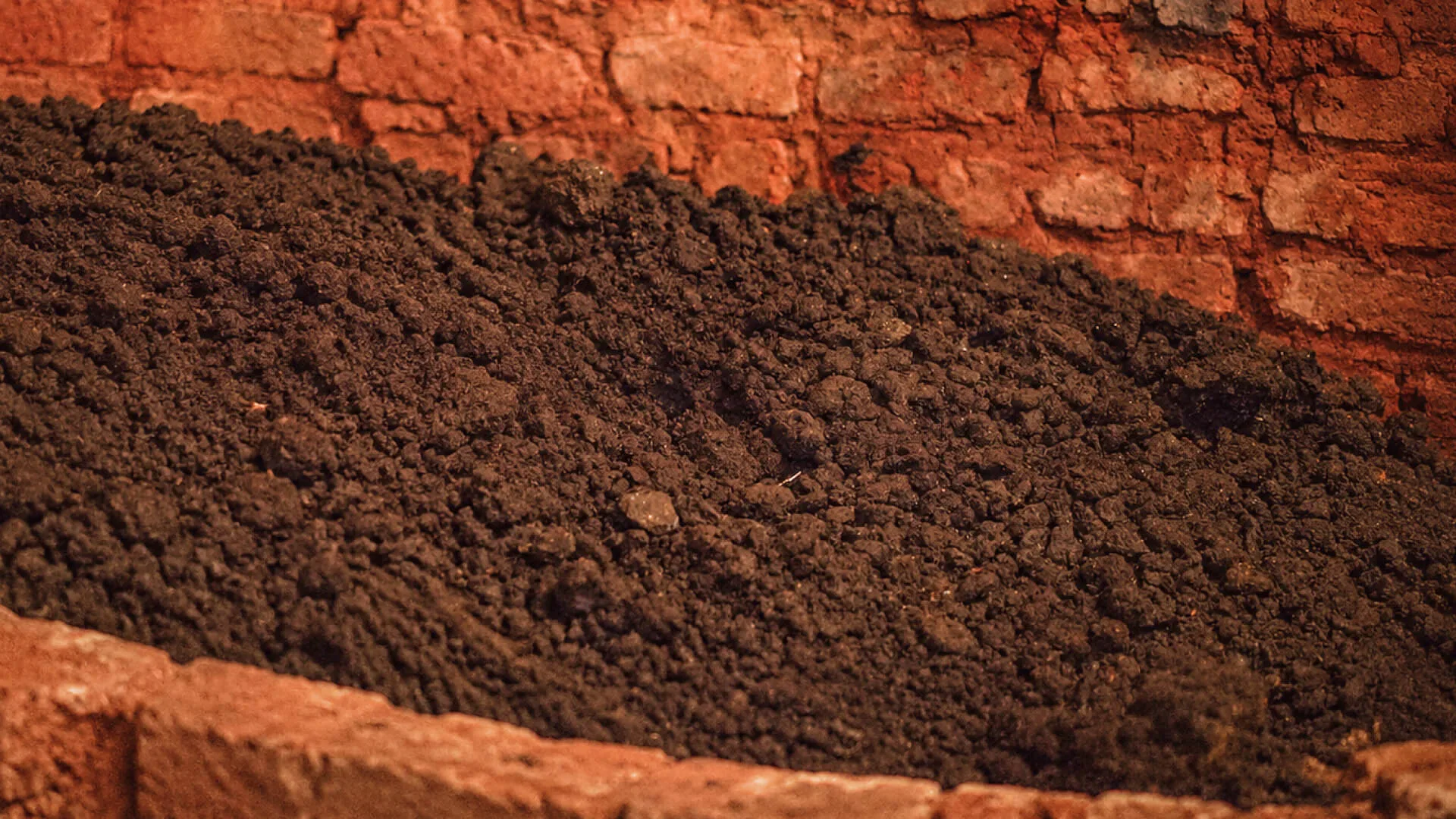
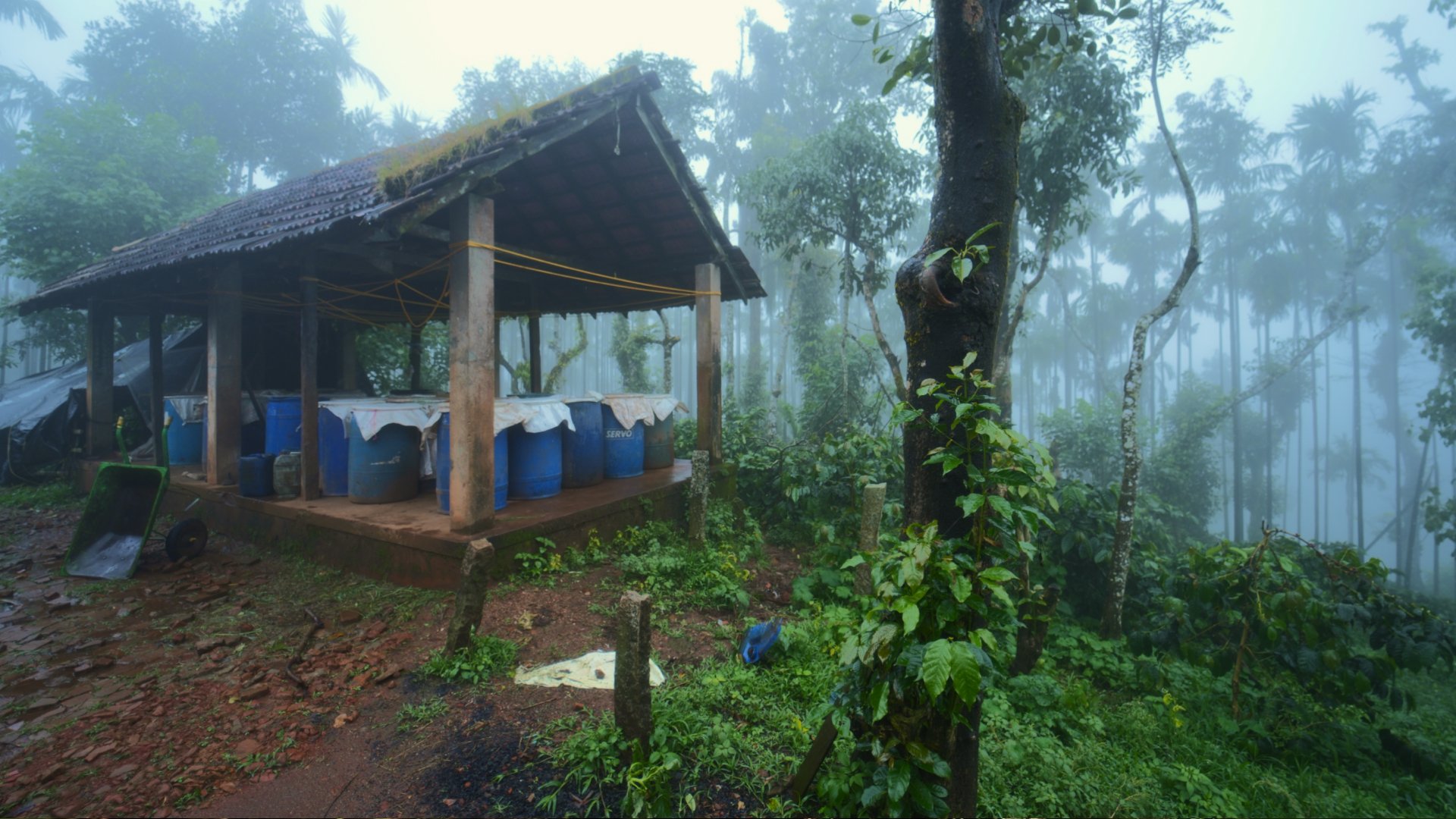
About fifty Malnad Gidda graze the ground the coffee grows in, and their dung becomes the biodynamic preparations and the Vedic brews — BD 500 through 508, Jeevamrit, Panchgavya, Beejamrit, cow pat pit, Kunapjal. All of it is brewed here, from here.

The loop that is closed is the fertility loop. Fuel, tools, packaging and labour come from outside, so the estate is described as closed on fertility rather than closed outright.

What we measure

soil pH, red laterite
6.0–6.5
altitude
3,600 ft
respiration sampling depth, read monthly
0–15 cm
earthworm quadrat, counted quarterly
50 × 50 cm
canopy storeys
Four
acres of coffee / tea
100 / 32
light readings an acre
50
whiskered, May–June 2026
~80 acres
lux, Block 3 zones A / B / C
33 / 62 / 82k
canopy where blocks cup best
65–75% · Aura’s own reading against its own cupping table.
between pH readings through a ferment
15 min
where a ferment is stopped
pH 4.2
mycorrhizal colonisation assessment
Annual
synthetic pesticides across 150 acres
Zero
counted for Trichoderma and Pseudomonas
Every batch
sealed with cow pat preparation and turmeric
Every cut
annual rainfall
40–100 in
temperature range
14–30 °C
humidity
58%

Measured before, measured after.

A canopy is read in lux before a branch is cut. A batch is plated before it is spread, and the block is retested ninety days later against the batch number. A batch that fails is corrected or held, and the block waits.

Everything is written down, and every event is signed by the person who did it — so a claim about a cup can be walked back to the block, the batch, and the morning it went on.

What is claimed, and what is not.

Aura practises organic and biodynamic in full and publishes the record, which is the harder standard to hold and the one a reader can check for themselves. The 32-acre tea block is in organic transition, targeting 2027.

None of these practices is unusual on its own. Doing all of them on the same ground, for decades, and publishing what happened is the part that is hard to copy.

We do not buy fertility. We keep the animals that make it.

Red laterite, and what it does with rain.

The ground here is old, iron-rich and free-draining. In a hundred inches of monsoon that is a gift: water moves through rather than sitting on the roots. In the dry weeks that follow it is the problem, because the same openness lets moisture go.

Almost everything the estate does to the ground is an answer to that second half. The soil is held between pH 6.0 and 6.5 — inside that range, the nutrients already there stay available to a plant. Outside it, they lock up: the fertility exists on paper, but not in the ground.

The four-storey canopy seen from above
The light survey and the disease question, read from two directions

How the soil is read.

A respiration reading measures how much is alive down there. Read monthly by the NaOH method at 0–15 cm — always the same depth, always the same schedule, so it becomes a trend rather than a number.

Retesting a block ninety days after an application, against the batch that went onto it, is what turns a preparation from an act of faith into a result somebody else can check.

What goes back into it.

Woody biomass is cut to 60–90 cm and left in the block it came from, its decay logged in classes I to V — so the carbon going back is recorded as a rate rather than assumed.

Forest islands are built into the planting as small, permanent concentrations of decomposition. Forest Islands covers how one is made and what is watched on it, and The Health Index is where these readings are rolled up with everything else measured on a block.

Coffee does not begin with coffee. It begins about a metre underground.

Four storeys, and everything living in them.

A four-storey canopy — emergent, canopy, understorey, ground — is maintained across 100 acres of coffee and 32 of tea. Earthworms are counted quarterly in a 50 × 50 cm quadrat, in the same frames each time, counted and signed by Pulkit, who runs the biodiversity monitoring.

Aura is in the Western Ghats, a UNESCO World Heritage region. The listing is a serial property of thirty-nine discrete components, and the estate sits in the region rather than inside an inscribed one.

A cut bank of red laterite with dark topsoil above it

Free-draining is a gift in the monsoon and a problem in the weeks after it

What lives in the four storeys.

A plantation is easy to describe as a crop and hard to describe as a community. This is the community the crop sits inside — the residents the canopy, the ground layer and the retained wood are managed for.

Solitary bees

The pollinators the ground layer feeds in the fifty-one weeks coffee is not flowering.

Wasps

Predators that keep pest populations in proportion without anything being sprayed.

Beetles

Deadwood specialists — the reason cut biomass stays in the block it came from.

Spiders

The other half of pest control, and a tenant of the bug hotels.

Earthworms

Counted quarterly in a fixed quadrat. The one invertebrate on the estate with a number.

Fungi

Mycorrhizal networks in the root zone, and the decomposers working through the forest islands.

Birds

Cavity nesters a managed landscape stops housing once the old wood is tidied away.

Cattle

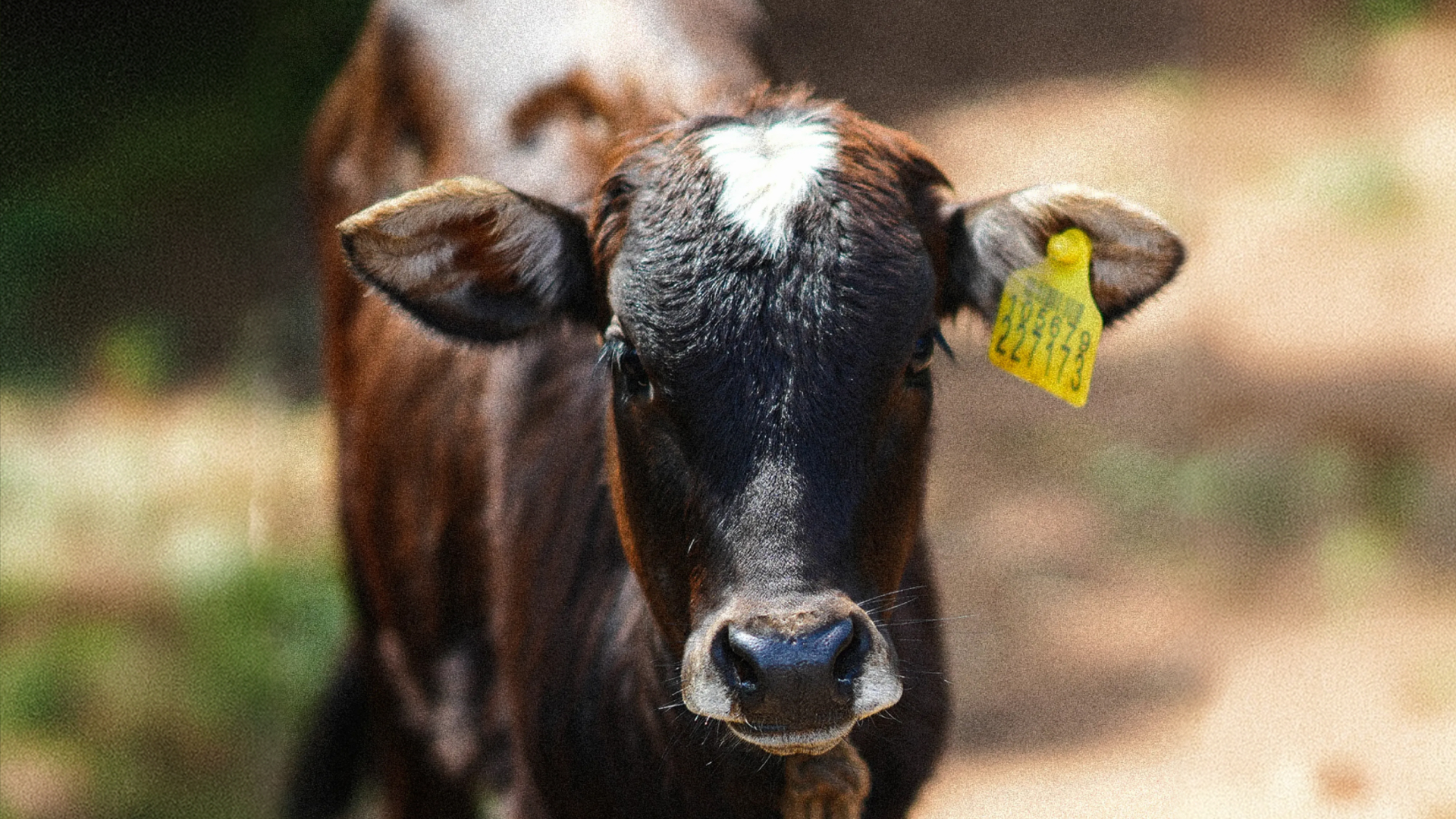
About fifty Malnad Gidda, grazing the ground the preparations return to.

Microorganisms

Counted by name in every batch — Trichoderma and Pseudomonas — before anything reaches a block.

Habitat, built back in.

Bug hotels go up where a working landscape has stopped producing cavities — Bug Hotels explains what is drilled and why nothing is introduced. Forest islands are the other piece: built to about 4 × 1 m and 80–120 cm high, in alternating layers of cow-dung compost and freshly cut green biomass, then left alone.

Woody biomass stays in the block it came from and its decay is logged, which is the same idea at a smaller scale.

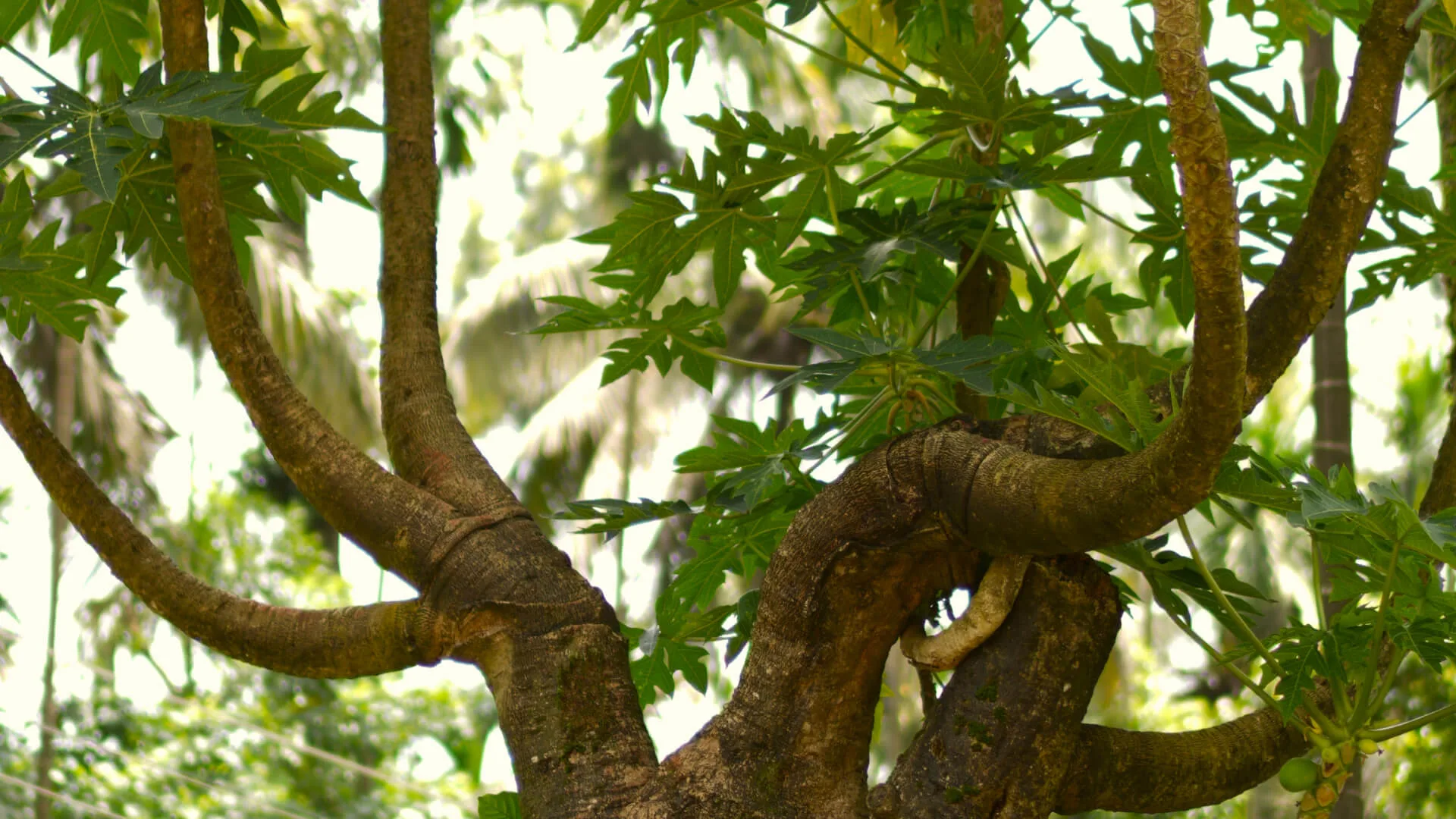
Pepper vine wound along the limbs of a shade tree

A block-level instruction gets one of them wrong

Six plants, taken back out.

Six introduced plants are being taken back out of the understorey so the native ground layer has somewhere to return to. The Flowering Understory names them and what each one does.

The unit of decision is one tree.

Managing at tree level means the unit of decision is one plant. Two trees in the same block can want opposite things, and a block-level instruction gives both the wrong one.

Trees are tagged across the estate, and a cow pat ball can be logged to an individual plant.

Light coming through four storeys of canopy onto a fallen limb

Emergent, canopy, understorey, ground — across 132 acres

Reading the light before anyone cuts.

The 2026 pre-monsoon illuminance survey read five clusters an acre, ten readings each — fifty observations an acre, taken on two digital lux meters.

Block 3, Byton Patte, came back at roughly 33,000 lux in Zone A, 62,000 in Zone B and 82,000 in Zone C, against CCRI targets of 50,000–70,000 for Arabica. The Light Instrument is the full account of the survey and what was done with it.

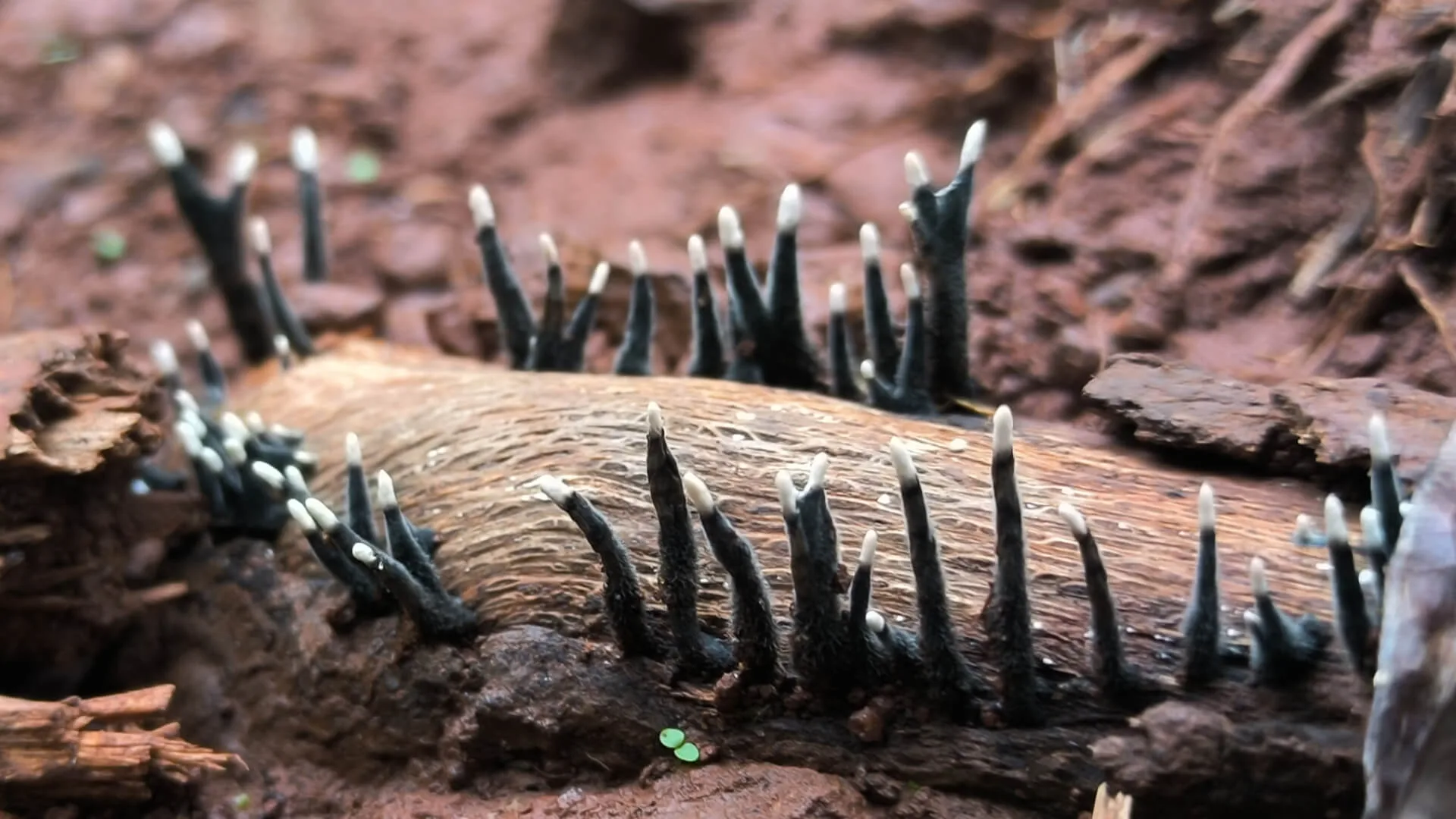
Black finger fungi standing out of a rotting log

A crude instrument, and an honest one

The cut itself.

Whiskering is thinning a canopy by hand, branch by branch, to a light target rather than to a shape. It is slow, and it is the only way to prune to a number. About eighty acres were whiskered in the May–June 2026 window, by eleven loppers and ten choppers, every major cut sealed with cow pat preparation and turmeric.

Measure first. Prune later. Validate afterwards.

Counting what is alive.

A colony count is a crude instrument and an honest one: it says how much is alive in a batch, before and after, on the same medium each time. Trends from a crude instrument used consistently beat one good reading.

Trichoderma and Pseudomonas are counted by name in every batch. Both antagonise common root and leaf pathogens, so their presence is the nearest thing to a reading of what a preparation will do once it reaches a block.

An insect at rest on the bark of a shade tree
Put up where a working landscape stopped producing cavities

Ninety days later, on the same medium.

A block is plated again ninety days after an application and cross-referenced to the batch that went on it, which is the only way to know whether anything survived the journey from barrel to soil. Mycorrhizal colonisation is assessed once a year.

What a plating shows is that a batch changed between two counts. Which organisms did the changing is past what a colony count can tell you.

The ferment is the other half.

In the wet mill the ferment is tracked hour by hour: pH every fifteen minutes, temperature three times a day, Brix at the start, the middle and the end. It ends at pH 4.2. Fermentation sets out how a tank is read and what stops it.

The wild yeasts and lactic-acid bacteria that drive a coffee ferment are well described in the literature. What Aura tracks on this estate is the ferment’s behaviour, and it has not identified the species here.

The herd is an indigenous breed because Aura reads a gut microbiome as following the ground it grazes. No metagenomic comparison against another breed has been run, so that stays a reading the estate acts on.

A number ends the ferment. It stops at pH 4.2, whatever the clock says.

Keeping a plant well, so there is nothing to treat.

The logic is preventive. A plant standing on ground with an active microbial community, cut cleanly and sealed the same day, is a harder plant to infect — so the work happens before there is anything to treat. No synthetic pesticides or chemicals go onto the 150 acres.

Aura can say what goes onto those acres and what is kept off them, and both are logged. Disease incidence across a season is the next measurement to stand up: it needs fixed plants, a fixed interval, and one person who can tell one lesion from another.

Canopy work is disease work.

Humidity is what most leaf pathogens need, and a four-storey canopy holds it. A block held at the right light is a block that dries after rain, and a block that dries after rain is a block under less pressure.

So whiskering to a light target is a disease decision as much as a ripening one, and the two are taken together. The Light Instrument is how that light gets set.

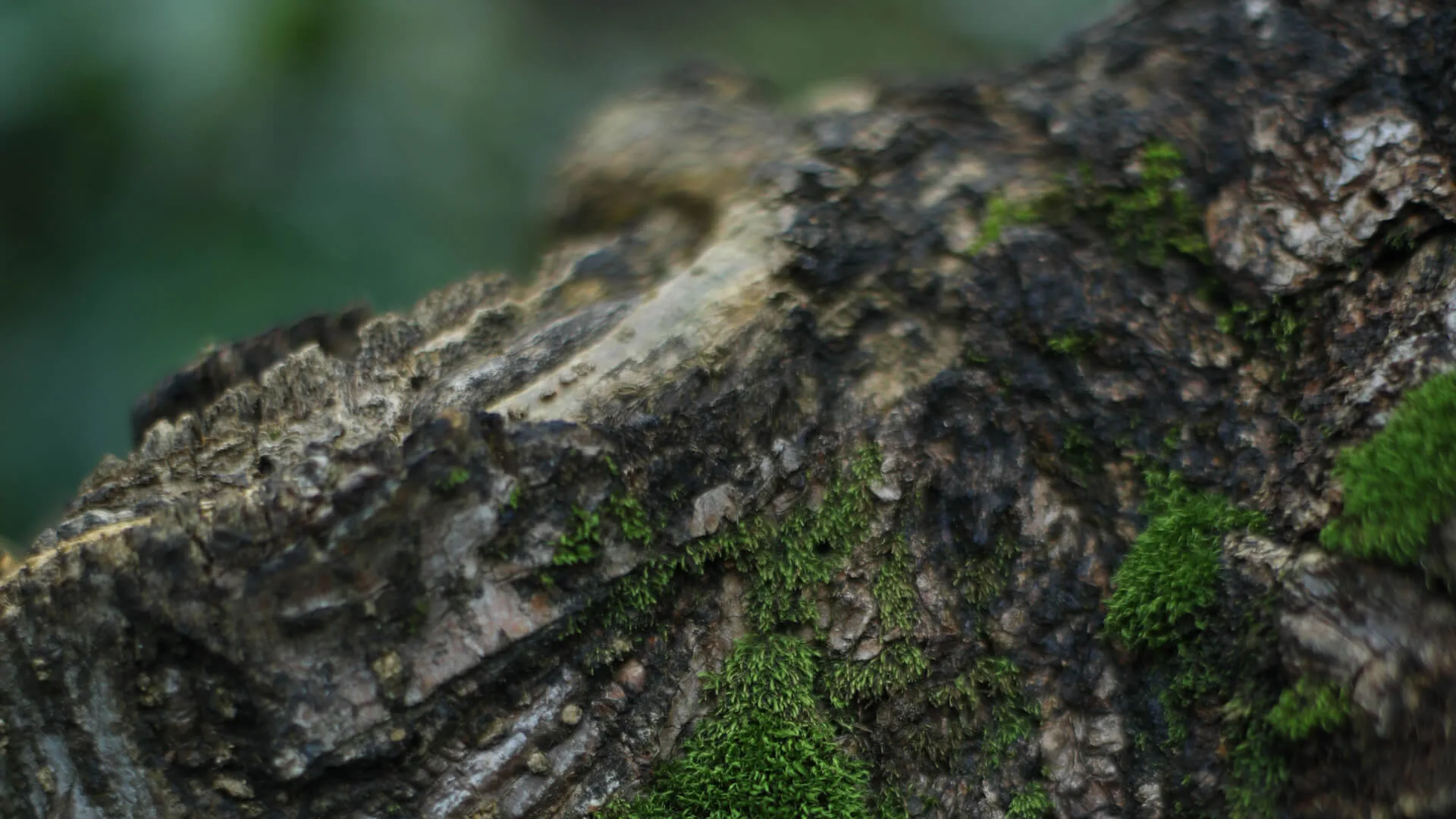
Moss and lichen banked along a trunk in shade
Five clusters an acre, ten readings each

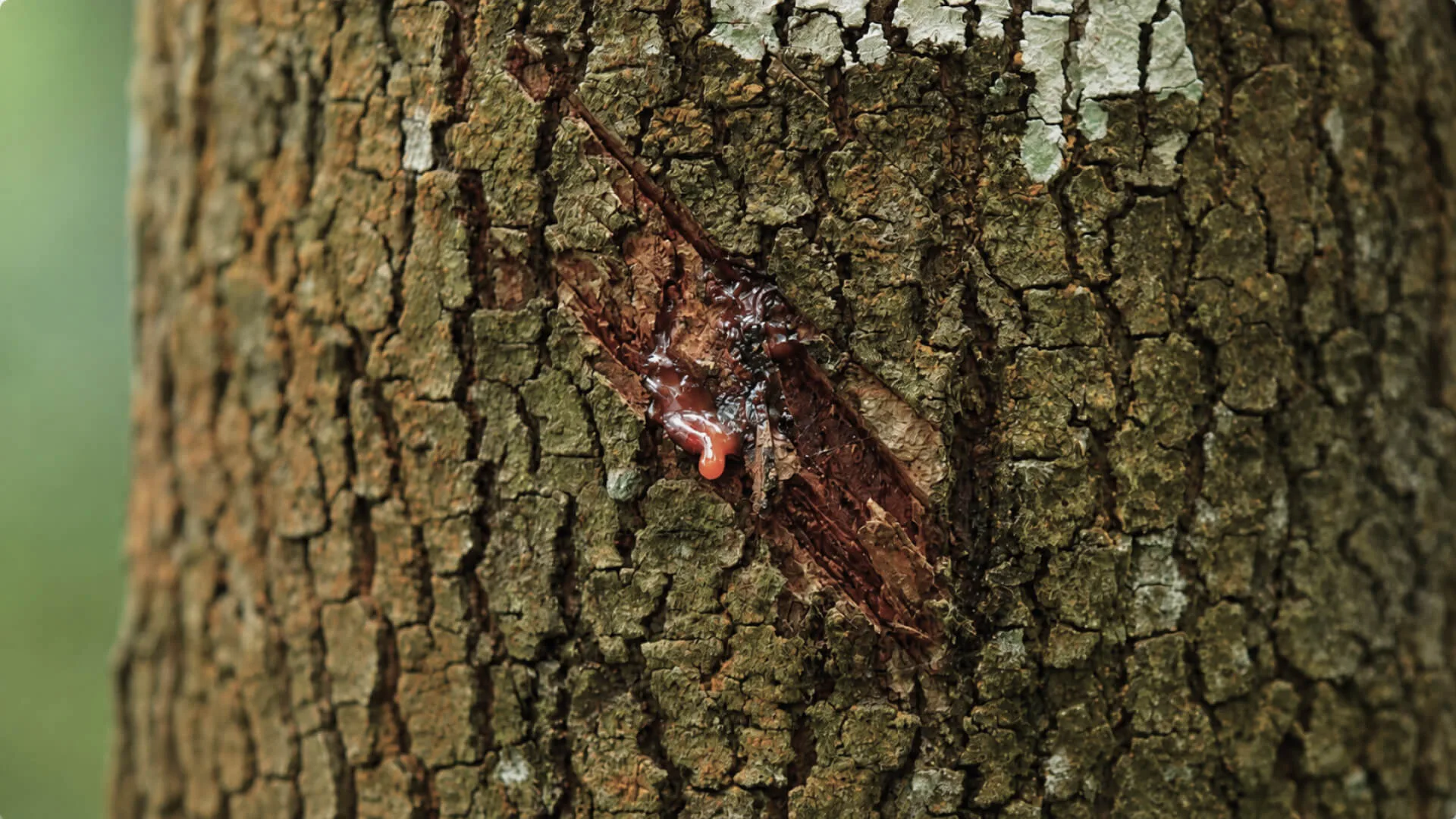
Every cut is a door.

Every cut is a wound and every wound is a door. Every major canopy cut is sealed the same day it is made, with cow pat preparation and turmeric — an antifungal dressing applied on the only day a wound is worth dressing. Eighty acres of whiskering is eighty acres of wounds.

The soil is the other half of it. A root zone with an active microbial community carries its own antagonists, which is why every preparation batch is counted for Trichoderma and Pseudomonas before it goes out.

The question is never how much falls.

The rain does not arrive evenly. Most of the year’s hundred inches comes in a few monsoon months, so the question is never how much falls but how fast it leaves.

Red laterite drains fast — a gift in a hundred inches of rain and a problem in the weeks after it stops. Almost everything the estate does to hold moisture is answering that second half.

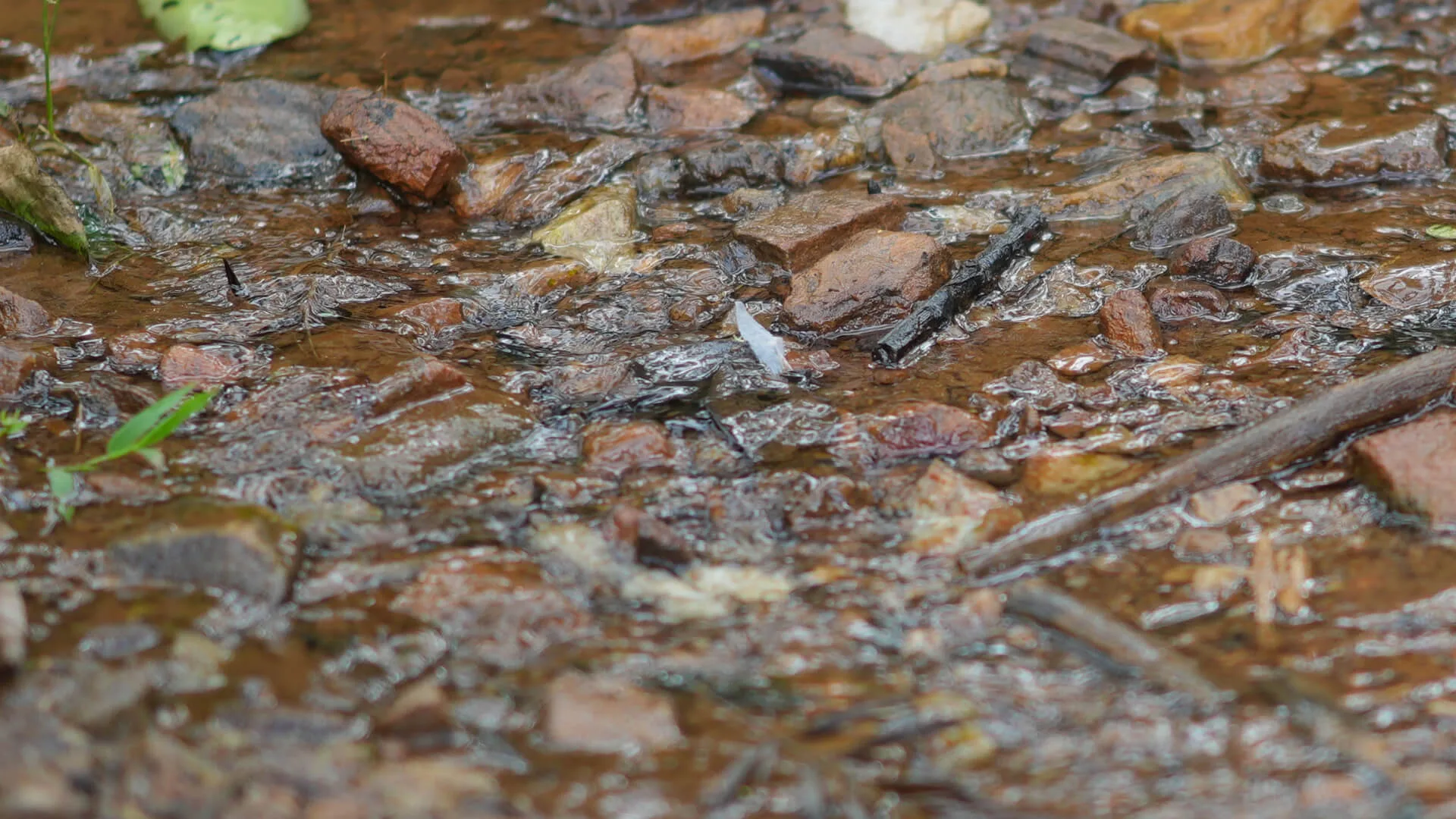
Water running clear over stones in a stream bed

A hundred inches, most of it in a few months

The canopy is the first instrument.

A four-storey canopy is the estate’s main water instrument. It breaks the fall of monsoon rain before it reaches bare soil, slows what runs off, and shades ground that would otherwise give its moisture back to the air by noon.

Canopy is managed for light, and the same readings govern how much rain reaches the ground and how fast it leaves again — The Light Instrument covers how it is measured and cut.

Everything that slows water down.

Ground cover is a water instrument too. Woody biomass left in the block, mulch over a cow pat ball, and a living understorey all slow the same water before it reaches bare laterite.

Phase one of the estate plan is hydrological: reservoirs sized to catch the monsoon and return it to the watershed below, rather than letting a year’s rain leave in a few weeks.

What is measured.

A weather station at 3,600 ft logs rainfall, temperature and humidity. Water is measured again at the point it enters the coffee: total dissolved solids are logged for every lot that goes through the wet mill.

That is weather and process water. Catchment, infiltration and runoff are read in the field and are not yet on a published protocol — The Land carries what is known about the ground this water moves through.

Coffee does not begin with coffee. It begins about a metre underground.