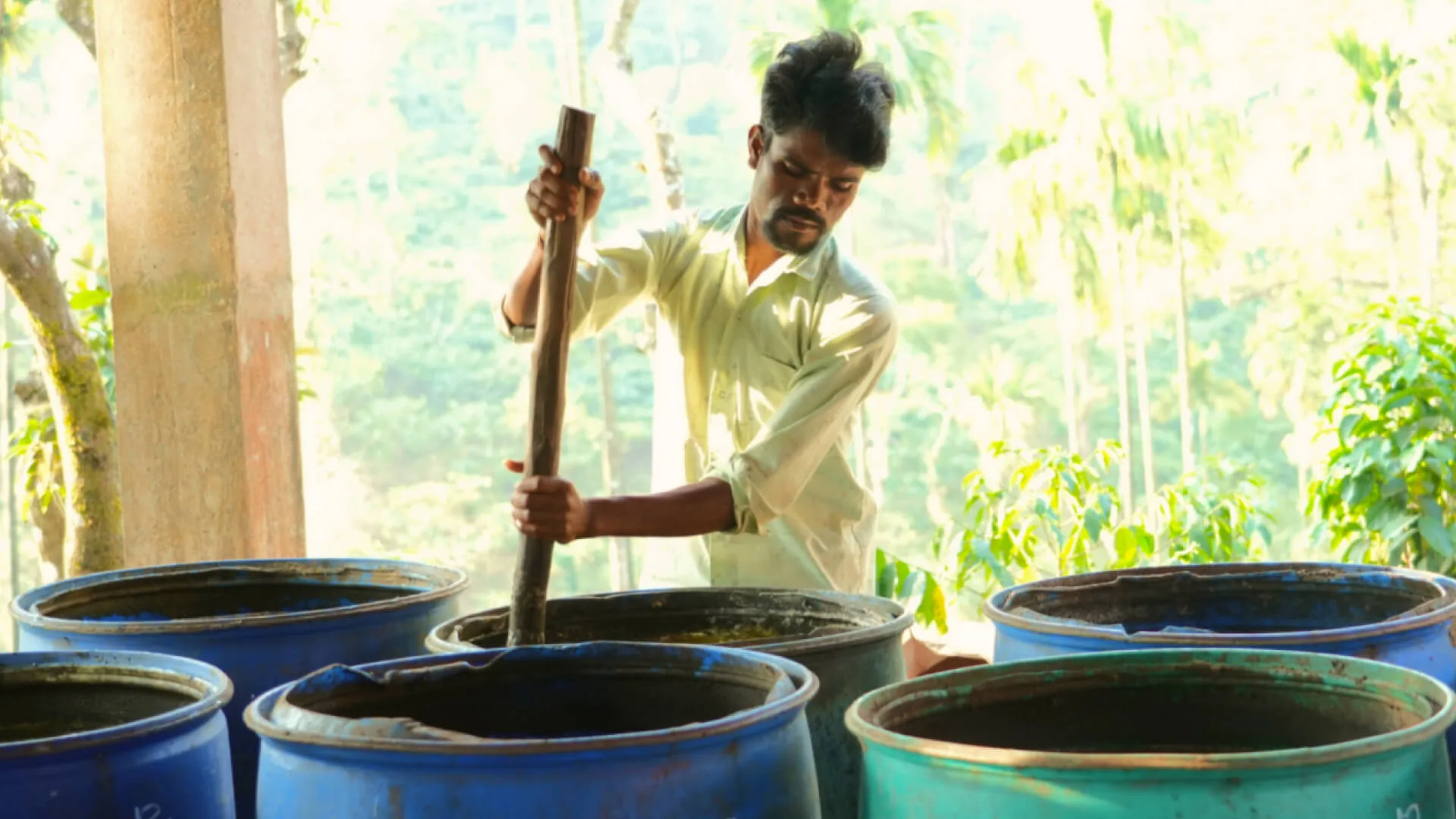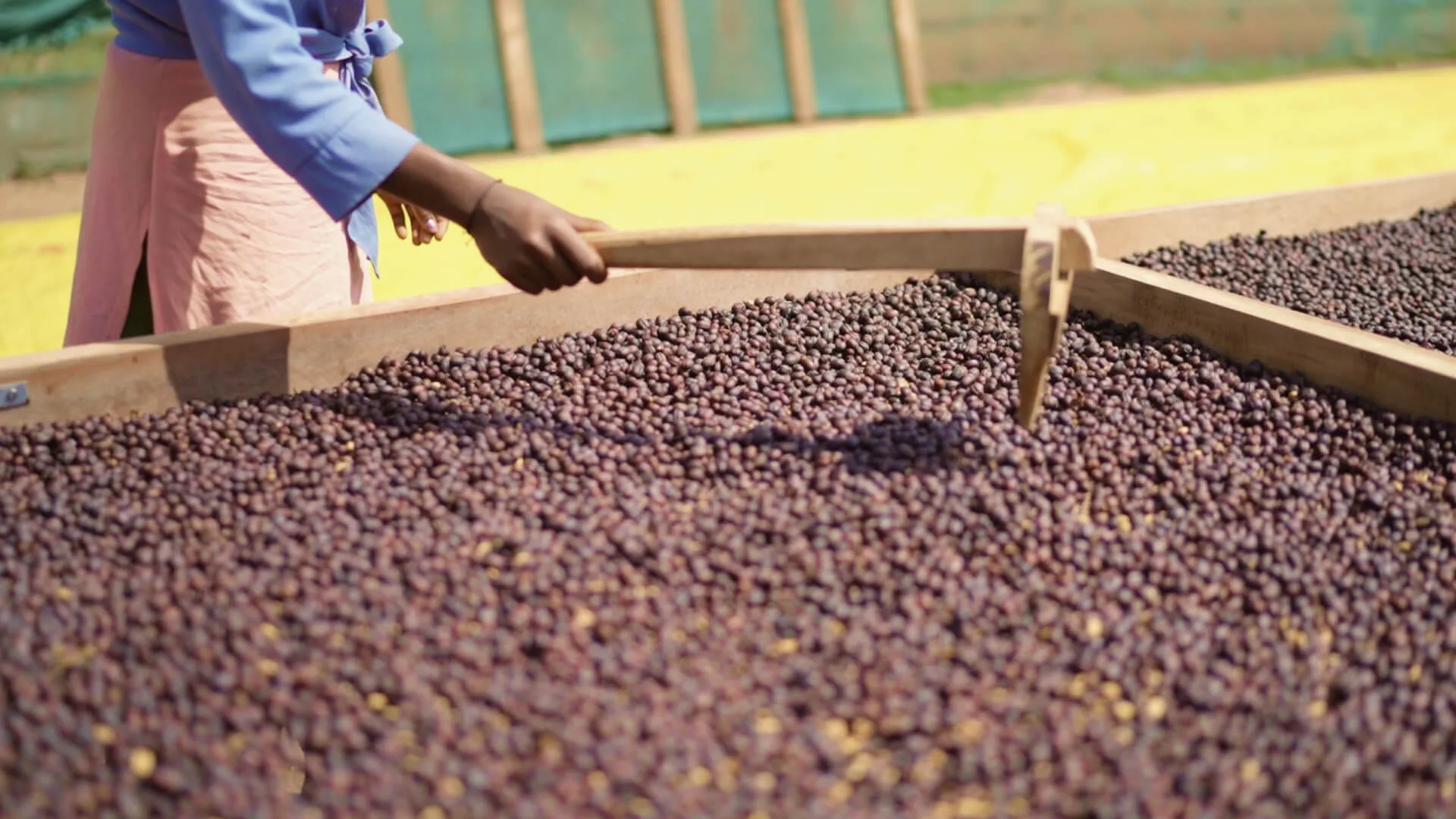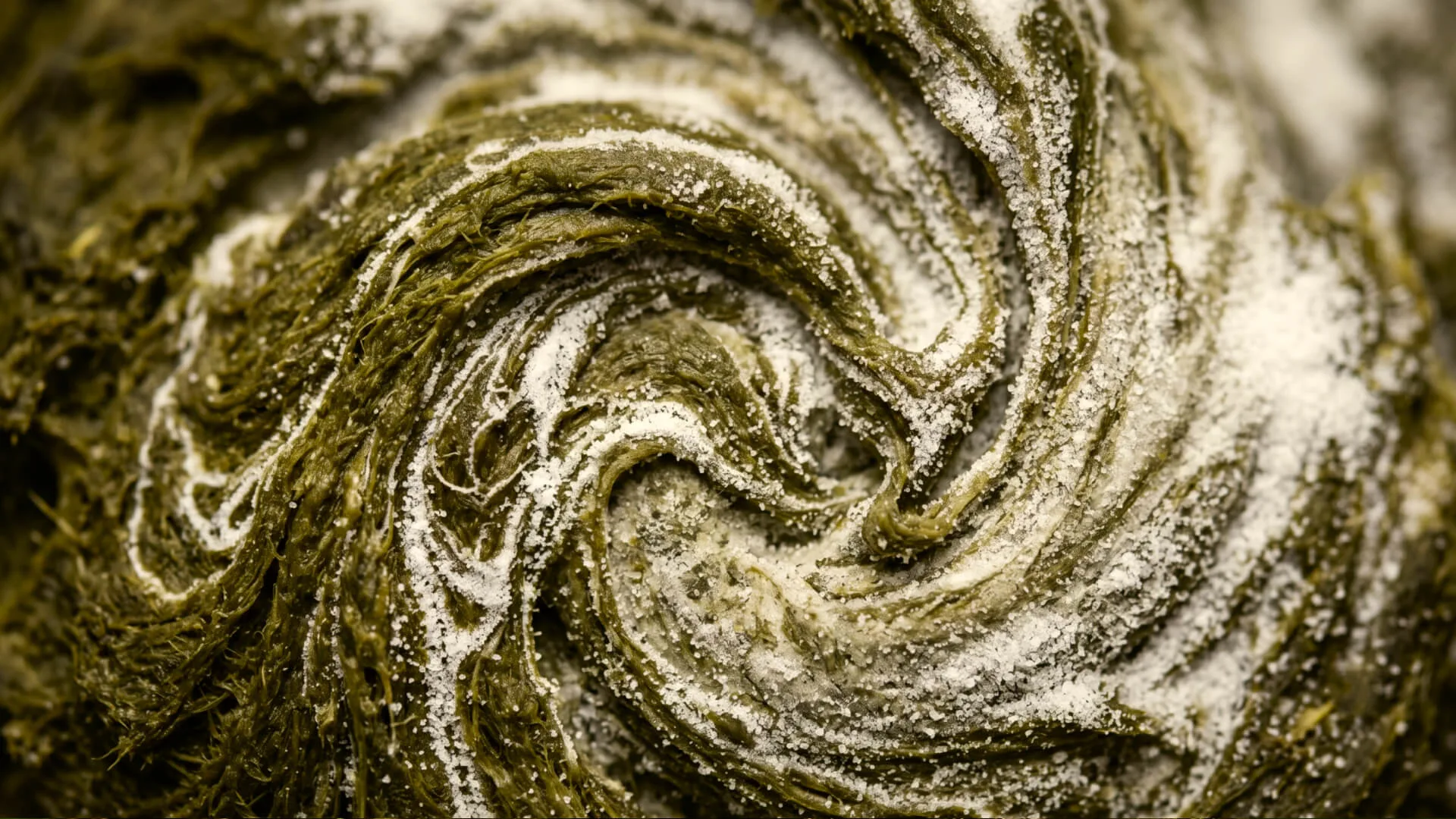
A vortex turned into a barrel of Jeevamrit

The day the calendar names, and only if the plate agrees

Vedic & Biodynamic

The calendar says when. The lab says whether.

A preparation goes out on the day the calendar names, and only if the plate agrees. That is the order of operations the whole system rests on.

The lunar calendar sets the timing; the biology is the reason. The charts are a schedule, and Aura says so in print rather than leaving the impression of a belief it does not hold.
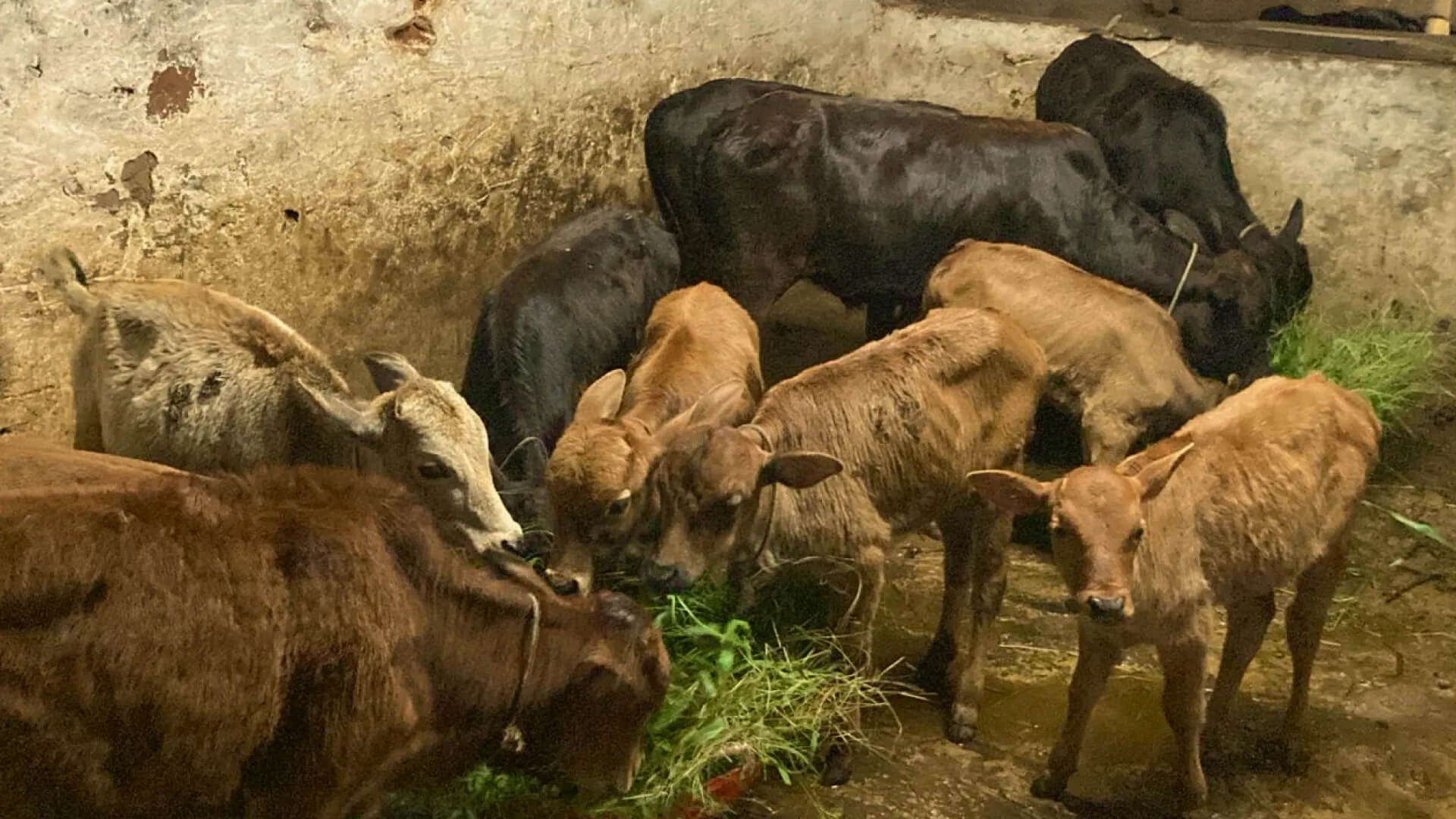
Malnad Gidda cattle lying in the shed
The reason the herd is indigenous and stays on the land it feeds

Made here, from this herd.

BD 500 through 508 are prepared on the estate and applied on a calendar built for 150 acres. The dung comes from about fifty Malnad Gidda grazing the ground the preparations return to — Circular Intelligence follows one batch through that loop end to end.

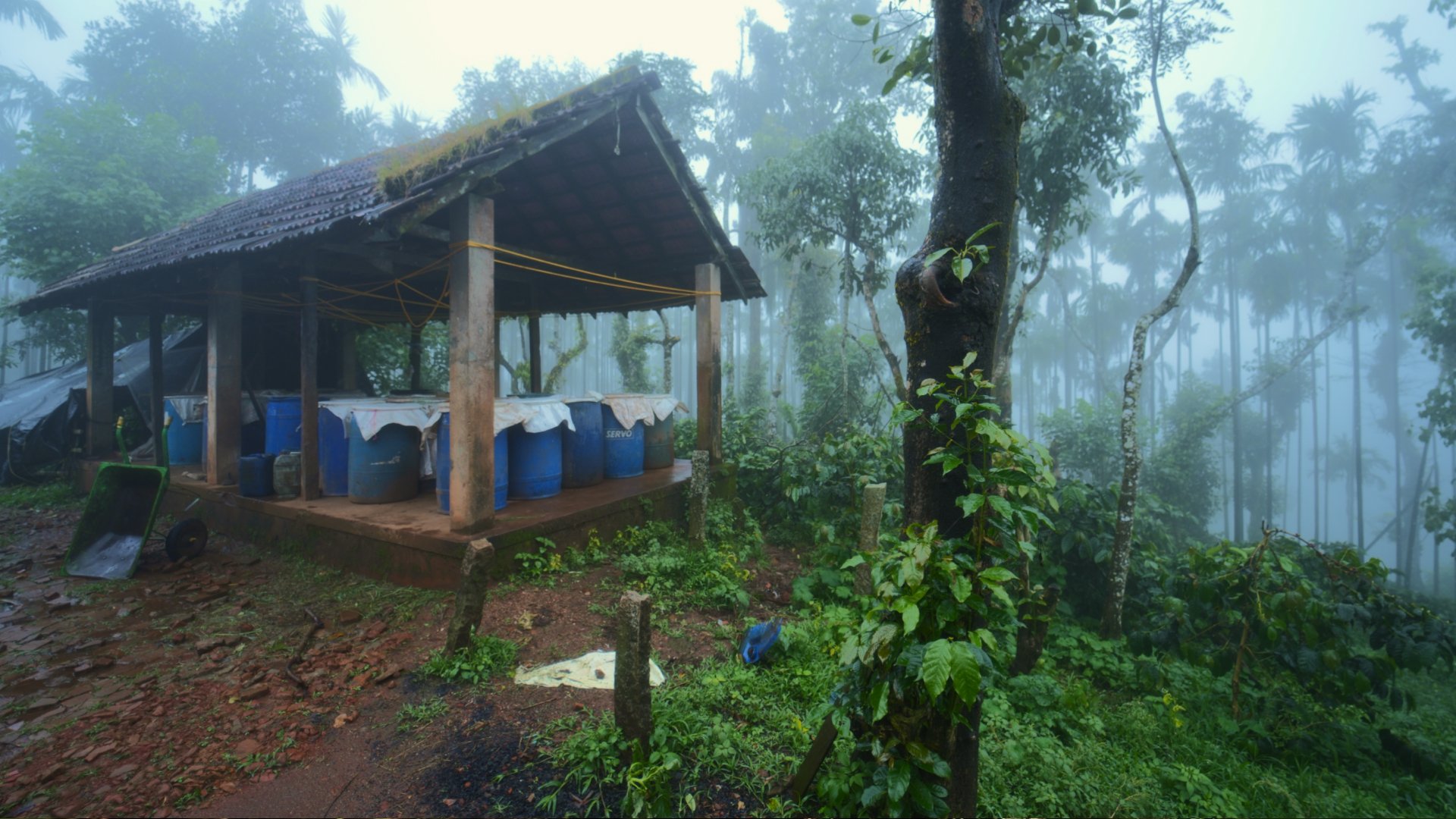
Barrels are stirred by hand for about forty-five minutes a day, vortex and reverse. Cow pat pit matures ninety days; the rest run sixty- to ninety-day cycles.

What we measure

numbered cow pat pits
14
to mature a pit
90 days
stirred daily, vortex and reverse
45 min
of CPP a year
2,420 kg · Planned against the biodynamic calendar for 150 acres.
of Jeevamrit a year
154,000 L · Planned against the biodynamic calendar for 150 acres.
preparations in the Vedic set
5
acres the calendar is planned for
150

BD 500 through 508.

Eight preparations, each with its own job and its own cycle. They are made on the estate, from the estate, and applied on a calendar built for 150 acres.

BD 500

Horn manure. Buried over winter, stirred and sprayed on the soil — the root-zone preparation.

BD 501

Horn silica. Sprayed on the leaf at dawn; the light preparation, and the one in the signed example.

BD 502–507

The compost set — yarrow, chamomile, nettle, oak bark, dandelion, valerian — each steering a different part of the pile.

BD 508

Horsetail. Against fungal pressure, which on a four-storey canopy in a hundred inches of rain is the standing problem.

Cow pat pit

Fourteen numbered pits, matured ninety days, turned by reading rather than by timer.

The gate

Every batch tested before and after. A batch that fails is corrected or held, and the block waits.

Nothing goes out untested.

Every batch is tested before and after it is made: pH, electrical conductivity, colony counts, Trichoderma, Pseudomonas. A batch that fails is corrected or held back, and the block waits — which occasionally means a block waits.

Ninety days after application the block is tested again, cross-referenced to the batch number that went onto it. Chromatography runs alongside as a soil-vitality image: a qualitative indicator, published as a practice rather than as evidence of an outcome.

Aura practises the biodynamic system in full and publishes the record, which is the harder standard to hold and the easier one to check.

No untested material touches the soil.

Five preparations, five jobs.

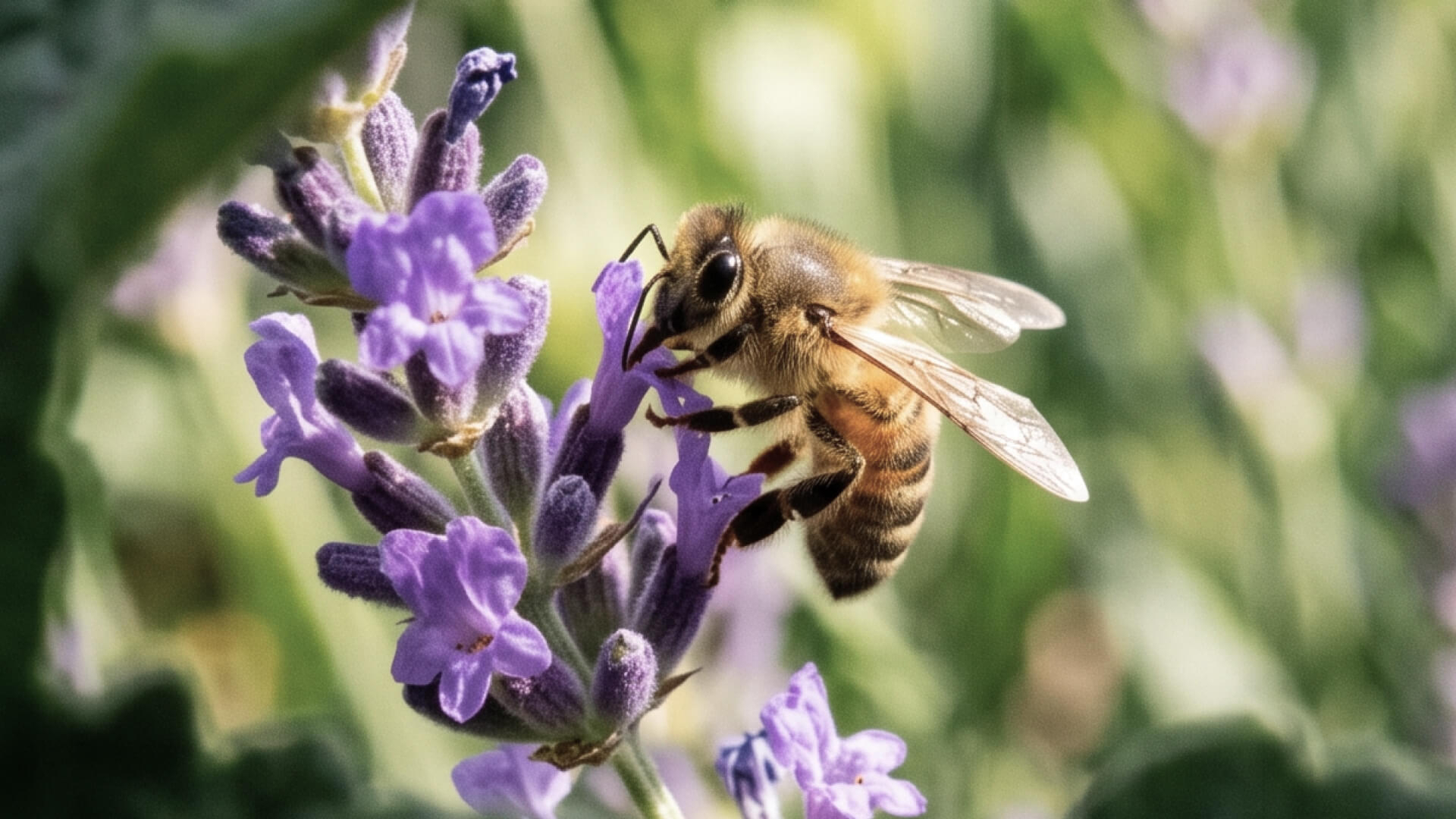
Each does a different job. Jeevamrit inoculates — a microbial culture brewed from dung, urine, jaggery, pulse flour and a handful of undisturbed soil. Beejamrit treats seed before it goes in. Panchgavya is the five cow products together, fed to the plant directly. Kunapjal is the old fermented liquid manure, for nitrogen. Cow pat pit carries composted biology into the soil.

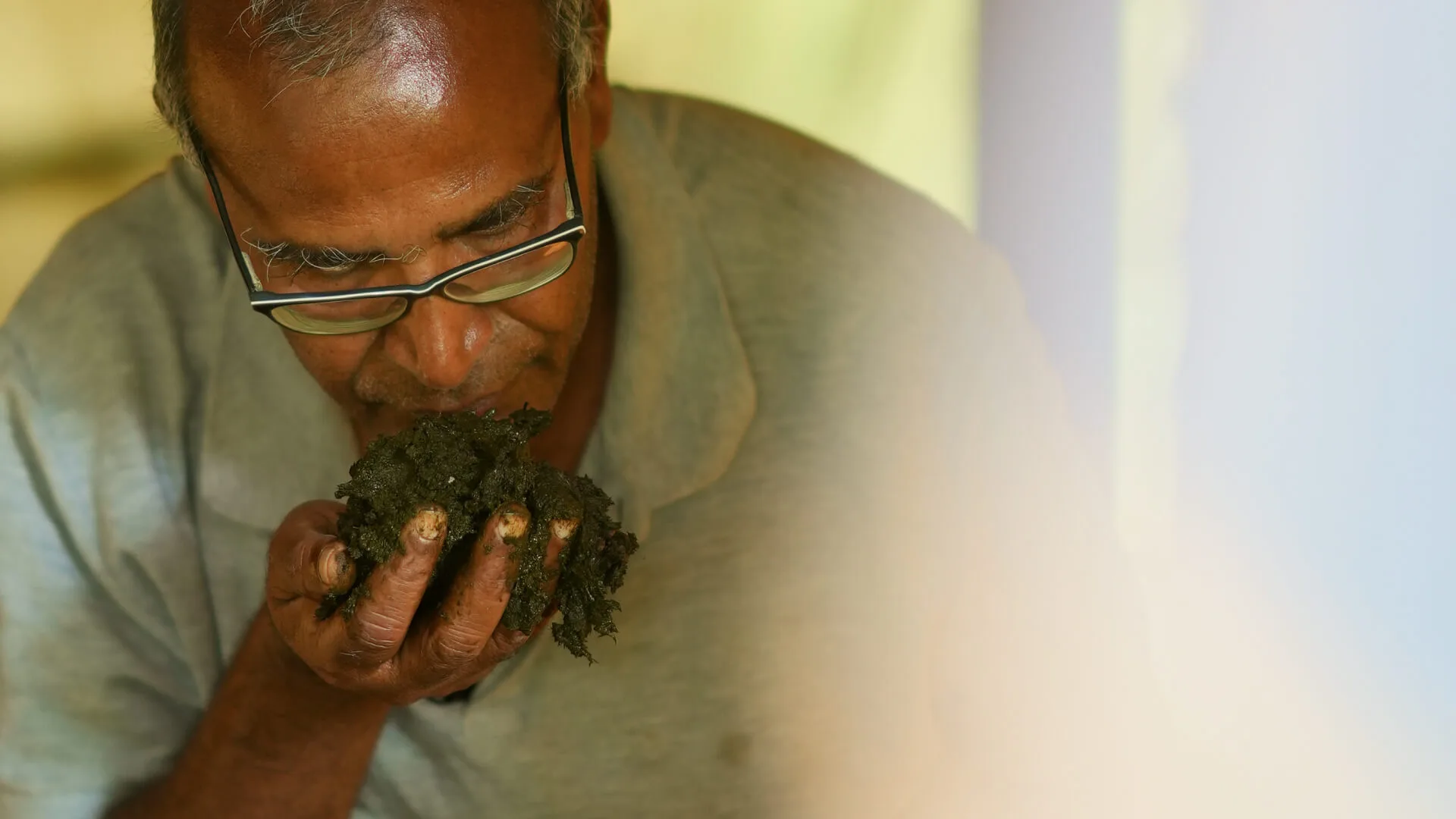
A handful of finished preparation held up and smelled

Each doing a different job in the same system

None of it is bought.

All five are brewed on the estate from the estate’s own herd, which is the reason the herd is indigenous and stays on the land it feeds. Ecosystem Engineers is the herd that makes it.

Stirring a row of barrels by hand with a wooden pole

Forty-five minutes a day, vortex and reverse

Planned backwards from the calendar.

Volume is planned backwards from the biodynamic calendar for 150 acres, and stock registers track every batch against that plan. The same gate applies as to everything else: tested before and after, held back if it fails.

The 32-acre tea block is in organic transition, targeting 2027. The preparations themselves come from the Vedic tradition, which is older than the standards now used to certify it.

A batch that fails is corrected or held. No untested material touches the soil.