Back
Living Systems

Read the land first — relationships over isolated variables

LivingSystems

A forest that produces crops. Not a farm that plants trees.

150 acres of four-story polyculture in the Western Ghats, read as a single living dataset.

Most agricultural systems isolate variables. Aura studies relationships instead. The estate is not divided by crop; it is divided by block — because the unit of record is the land, not the product.

The estate, in numbers.

150

Acres under care.

3,600 ft

Altitude in the Western Ghats.

35,000

Individual trees.

52

Malnad Gidda cattle, indigenous.

3–5×

Carbon sequestration vs monoculture.

UNESCO

Biodiversity zone.

Four stories, one canopy.

The estate operates through four canopy layers. Every layer influences the next.

From the silver oak overhead to the cardamom on the floor, each story holds the conditions for the one below it — and reads as a signal for what the next will do. The relationships matter more than the layers themselves.

01 — Canopy.

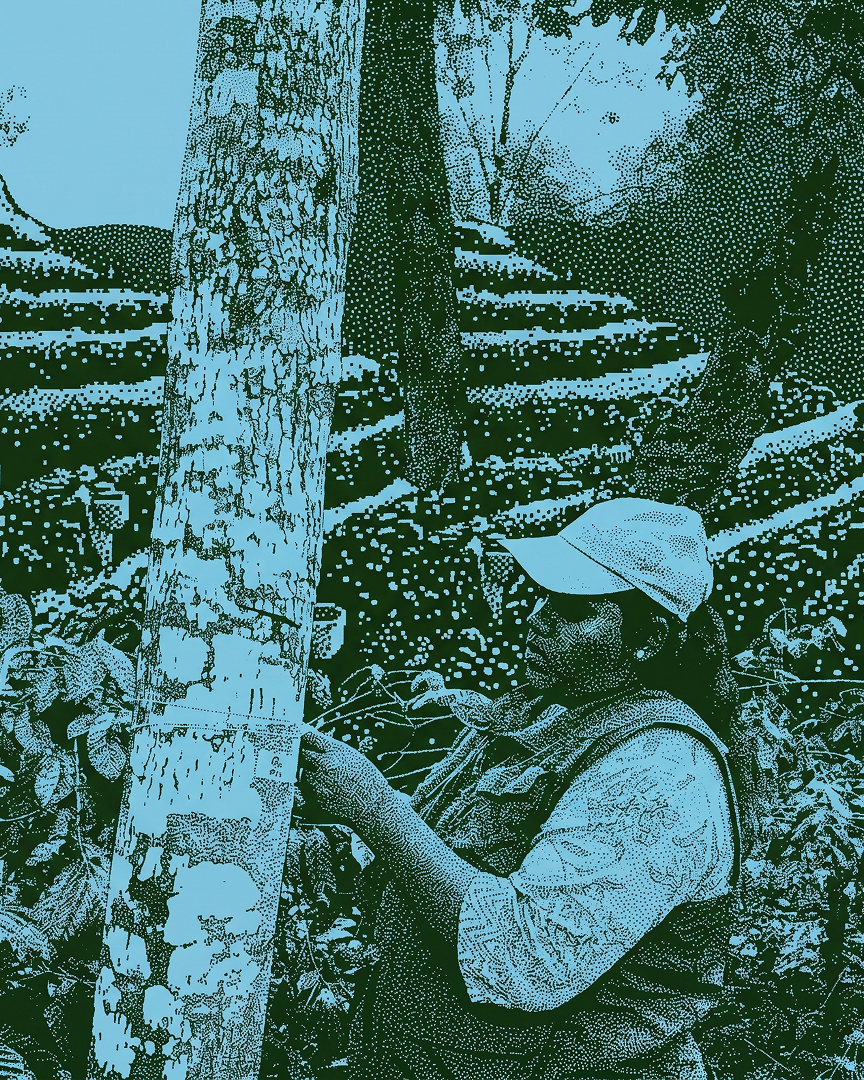
Silver oak, Albizzia, jackfruit, fig, native hardwoods. Target cover 60–80% per block. Blocks with 65–75% canopy produce measurably higher Brix in the coffee beneath them.
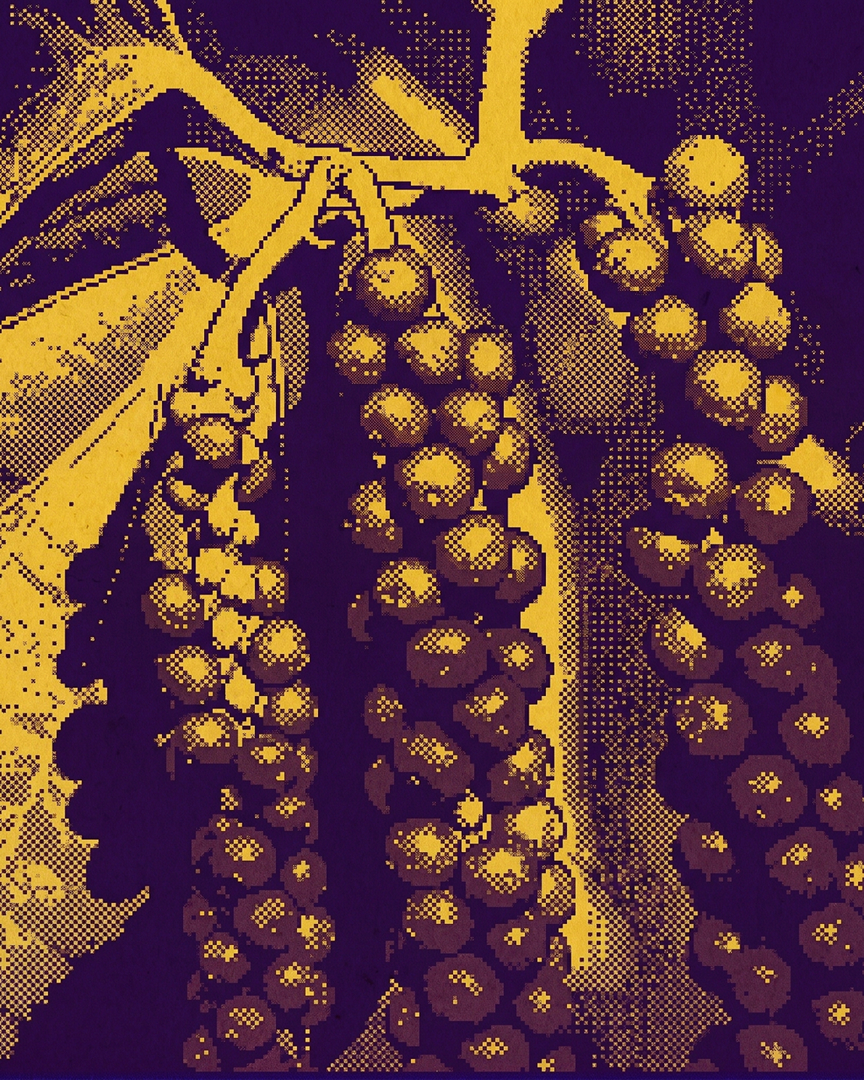
Arecanut palms rising through the shade with black pepper vines climbing them

02 — Mid-canopy.

Arecanut palms rise through the shade. Black pepper climbs them — each areca palm simultaneously a trellis and a companion. If an areca column stresses, the pepper vine loses vigour within six to eight weeks.

03 — Primary crop.

Arabica Sln.9 and Sln.795. Thirty-five acres of tea, in organic transition targeting 2027. Every input logged against the transition clock. A single prohibited substance resets it.
Cardamom, cover crops and beehives on the forest floor — the understorey layer

04 — Understorey.

Cardamom, cacao, avocado, cover crops, beehives, chickens. Hives connect the flowering seasons across every layer. When activity drops during flowering, it predicts lower cherry set four to six weeks ahead.

Hives — the connective signal across every layer

The herd is biological infrastructure.

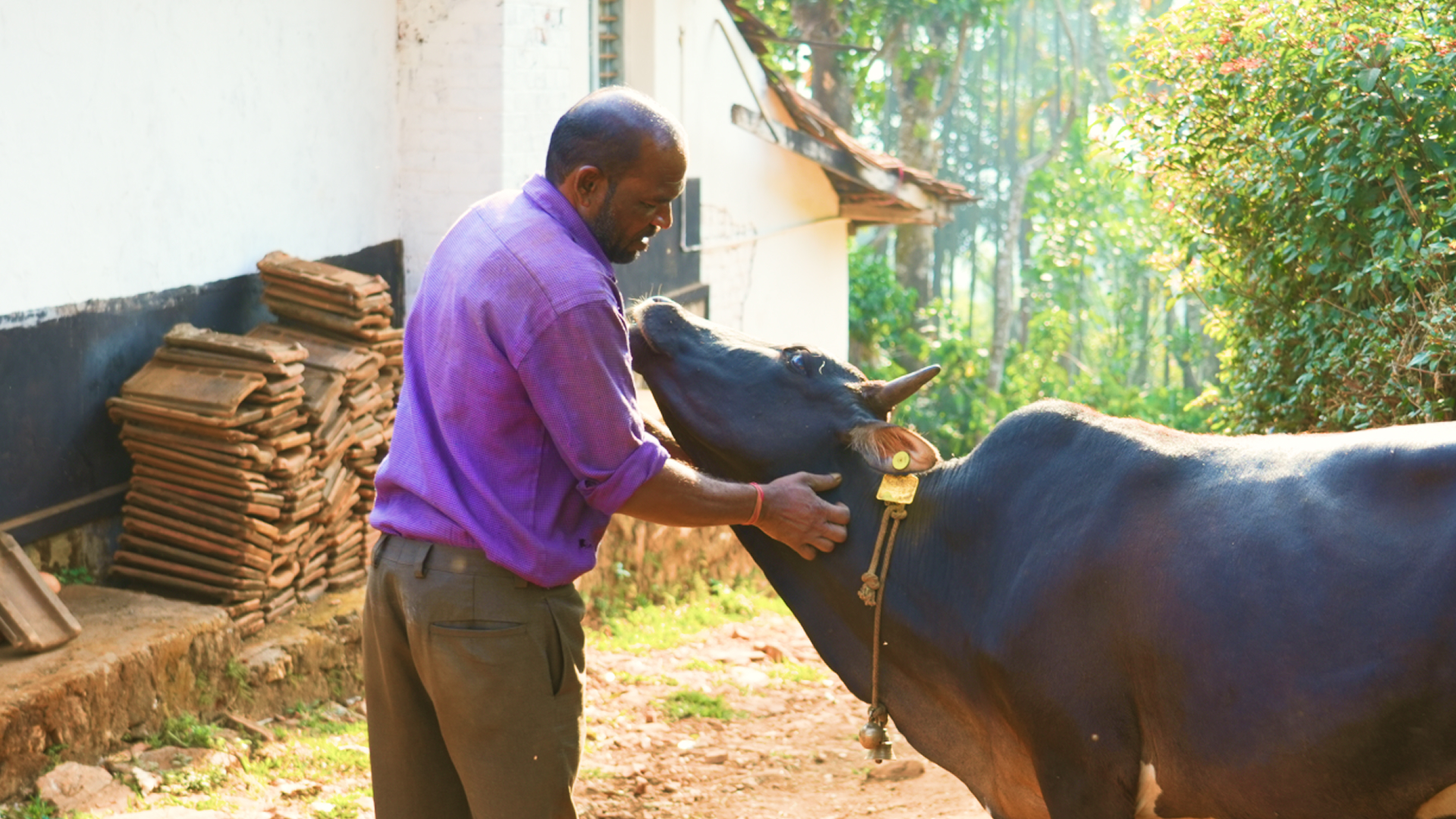
Fifty-two Malnad Gidda cattle — an indigenous Karnataka breed adapted to this altitude, soil, and climate over centuries.

They rotate through blocks timed to coffee cherry development stages. Their dung drives every biodynamic preparation on the estate. They are not assets. They are participants in a biological system.

A Malnad Gidda at pasture — indigenous Karnataka breed in the block rotation

A Malnad Gidda at pasture — rotation timed to cherry stage

Nine streams of continuous data.

The estate generates nine streams of continuous data. Each one is useful; the value is in being able to read them together.

Coffee fermentation.

pH every 15 min, temperature 3× daily, Brix start to end.

BD applications.

Crop layer, blocks, lunar day, weather, worker, dung batch.

Soil health.

pH and moisture at 5 cm and 20 cm, quarterly.

Carbon & biodiversity.

Multi-story canopy and species count, annual.

Cattle & dung cycle.

Pasture, health, rotation timing per block.

Canopy health.

NDVI per block, quarterly.

Pepper & areca.

Column health, vine density, fermentation.

Tea transition.

Start date, estimated certification 2027.

Understorey & bees.

Hive weight, honey harvest, activity windows.

SOIL HEALTH readings thirty days after cover-crop incorporation predict the FLAVOUR PROFILE of the coffee lot that block will produce.

The signals between.

The intelligence lives in the cross-references.

Canopy density predicts coffee cherry Brix. Areca health signals pepper yield weeks early. Cattle rotation timing shapes soil biology for the next season. Beehive activity forecasts flowering quality. Dung batch quality determines BD preparation potency. Cover crop biomass after incorporation predicts fermentation character.

This is what we mean by a living system. The estate has a heartbeat — short pulses from sensors, medium rhythms from crop lifecycles, long arcs from ecosystem health measured across decades.

The eye that reads the signals — Malnad Gidda

Most farms track a crop.Aura tracks an ecosystem.Every layer talks to every other layer.The forest is the farm.

Where the data lives.

The granular data — every sensor reading, every field action, every BD application log — lives in the Farm OS, built on NocoDB, stored in open formats. Readable without any specific software, in plain text and timestamps that outlive any vendor.

The milestones — a coffee lot lifecycle completed, a BD seasonal cycle finished, an annual carbon baseline, an organic certification event — go on-chain. Permanent, public, verifiable.

The system must outlast any technology it is built on. Complexity in the machine. Simplicity in the field.