Mudigere

Aura Estate · 150 acres · 3,600 ft · Western Ghats · Karnataka

The world’s oldest Arabica region, rediscovered.

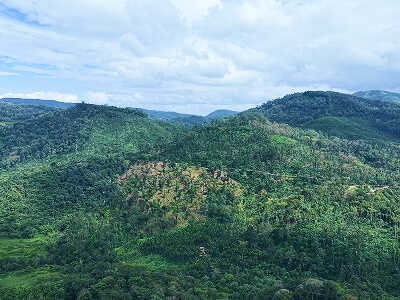
Four centuries ago, seven coffee seeds crossed from Yemen into the hills above Chikmagalur and took root — the cradle of Indian coffee, held in the Western Ghats, a range older than the Himalayas and among the eight most biodiverse places on Earth.

Aura farms 150 acres of it at 3,600 feet, on red laterite under a canopy that has never been cleared. The work bends toward Ṛta — the old idea that a thing is right when it sits in alignment with all around it. We read the land before we touch it; we grow around it, not through it.

LOCATION

Mudigere, Chikmagalur District, Karnataka, India.

COORDINATES

13.1365° N, 75.6403° E

ALTITUDE

3,600 ft.

TEMP.

14–30°C

HUMIDITY

58%

WIND

5 KM/H

AVG. WIND

5 KM/H

Explore Aura Estate

A hundred and fifty acres, read as one.

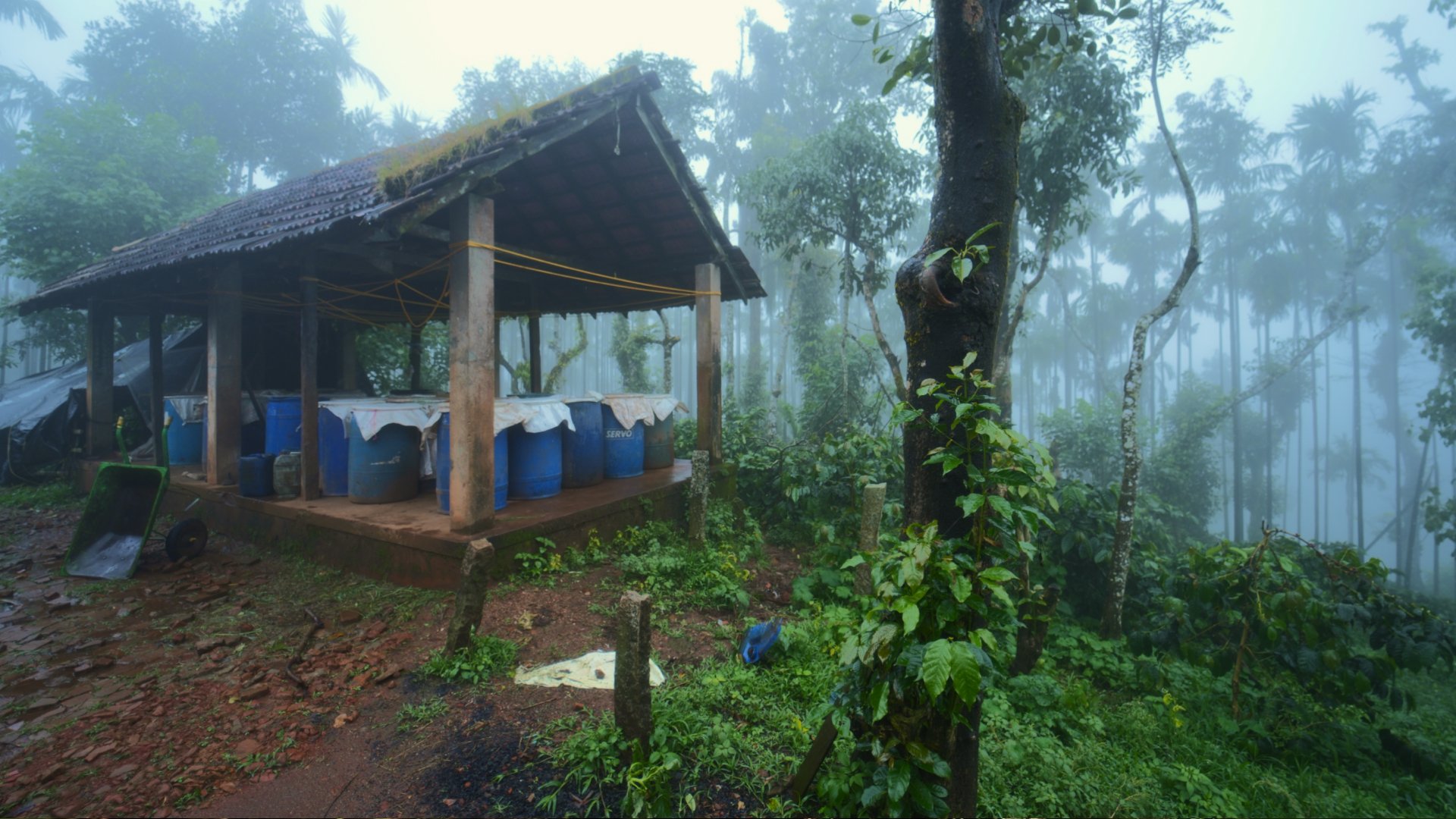
Aura Estate lies in Chikmagalur district, forty-five minutes from town — the last stretch an unpaved ghat road that drops through mist into coffee country. Every acre is mapped at 1:2,500: boundary, contour, water channel, and standing structure, set down to scale before a single new line is drawn.

Its eastern edge runs hard against the Bhadra Wildlife Reserve buffer, and twenty acres of unbroken forest fall inside the estate itself. Leopard and gaur move through it; Malabar giant squirrel travel the high branches, pied hornbill nest in the old trees, and king cobra have been recorded on the ground. The land is worked to draw the wild in, not wall it out — the protected acres run as a corridor into the reserve, extending the habitat instead of fencing it off.

150 acres

Total surveyed area — 20 acres protected, on the Bhadra boundary.

100 acres

Shade-grown Arabica across 6 micro-lots — 4 centuries in cultivation.

32 acres

Tea, in organic transition.

3,000 mm

Annual monsoon rainfall.

35,000

Trees, across four canopy layers.

52

Malnad Gidda cattle.
A forest that produces crops, not a farm that plants trees

A forest, farmed in four layers.

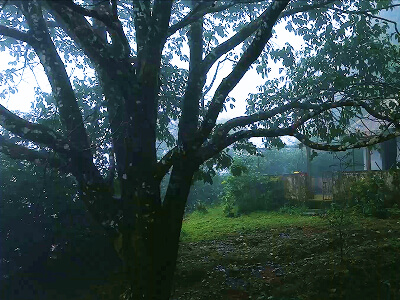
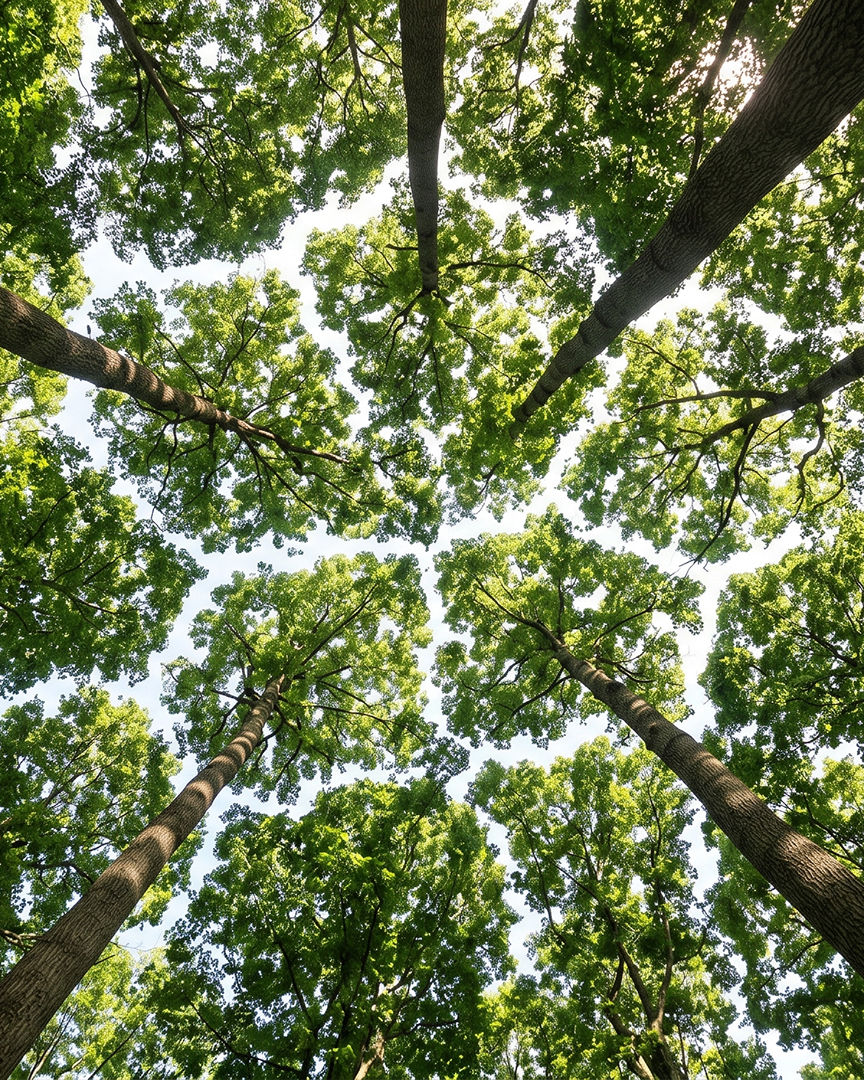
Nothing here grows alone. Native shade trees hold the sky; areca and pepper share the middle air; coffee and tea fill the understory; cardamom, cacao, and cover crops knit the floor. Each layer shelters the one beneath it, and the whole behaves like a forest that happens to yield a harvest.

Blocks with 65–75% canopy coverage measurably outperform the rest — proof, on the land’s own terms, that the shade is not a compromise but the point. The canopy pays past the cup, too: four layers and thirty-five thousand trees draw down three to five times the carbon of open monoculture.

Layer 1 · The canopy

Silver oak, albizzia, jackfruit, fig, and rosewood hold the sky at 15–25 m — 60–80% cover, the shade the whole system grows beneath.

Layer 2 · The middle air

Areca palms run in ranks, each one a living trellis for black pepper. Avocado fills the margins.

Layer 3 · The understory

A hundred acres of Arabica — Sln.9, Sln.795, Chandragiri — with thirty-two acres of tea easing into organic.

Layer 4 · The floor

Cardamom, cacao, and medicinals carpet the ground; cover crops, vermicompost, and recovering honeybee colonies — no chemical input.

Six micro lots · Arabica Sln.9 & Sln.795 · Aura Estate

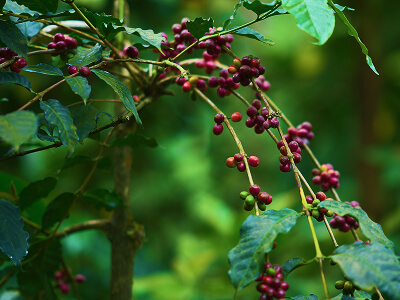
Arabica, ripening in the understory

Six micro lots. Three ferments. One appellation.

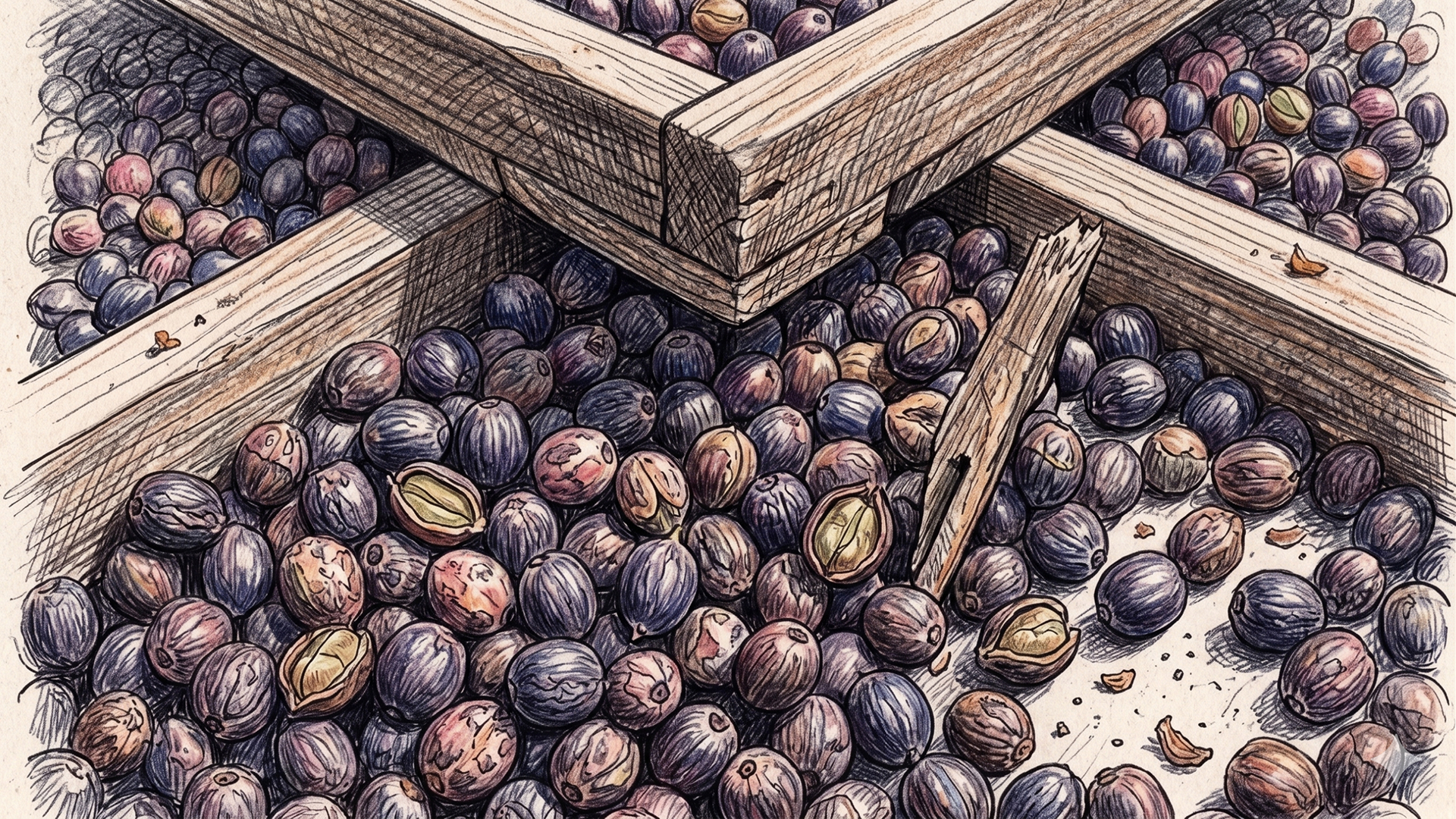
Arabica grown at 3,600 feet under native shade. Altitude slows the cherry, concentrating sugar and acid into complexity; three fermentation disciplines carry it forward — Red Honey, Solera Maceration (the flagship), and a 25-day natural.

Only fully ripe cherries, 95% minimum. Short micro-ferment windows, twenty-five days of drying, each lot on its own clock — cupped fresh at source, specialty-grade. The wet mill is the cellar: in the Solera tanks, the culture of one batch seeds the next. Appellation, in microbial form.

Coffee grading by screen size and defect — SCA protocol on the estate

The cherry.

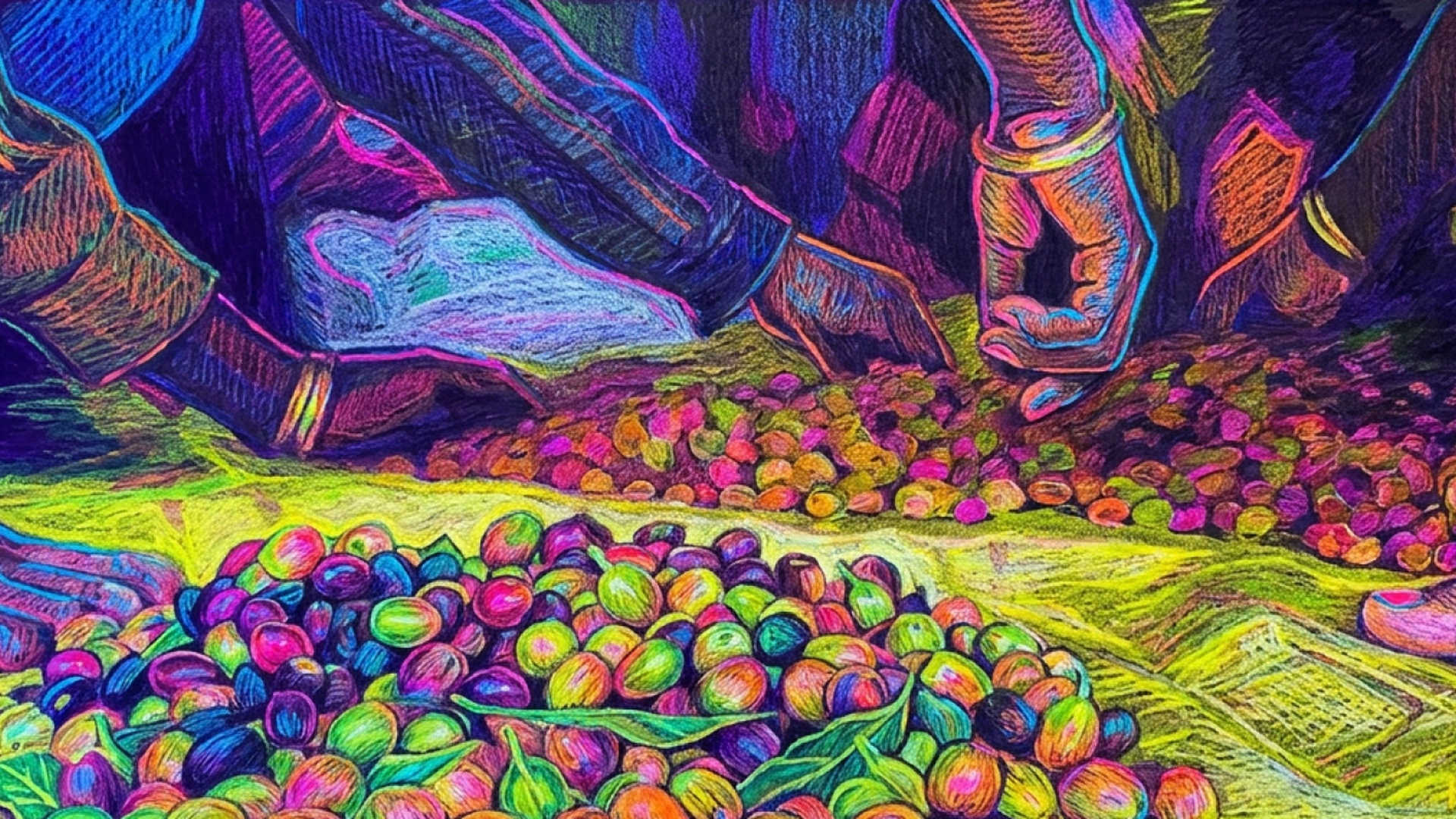
Hand-picked dead ripe; the harvest-day Brix reading sets each lot’s path through the wet mill.
Red Honey lot — sticky mucilage on parchment, named Liquid Gold

The ferment.

Micro-ferment windows kept short; tank temperature logged by the hour.

The carry-forward.

A live mother culture carried from batch to batch — the cellar never starts from zero.

Fauna of Mudigere

The closed loop.

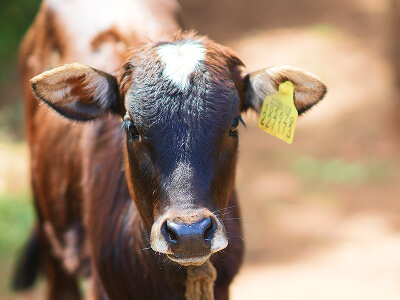
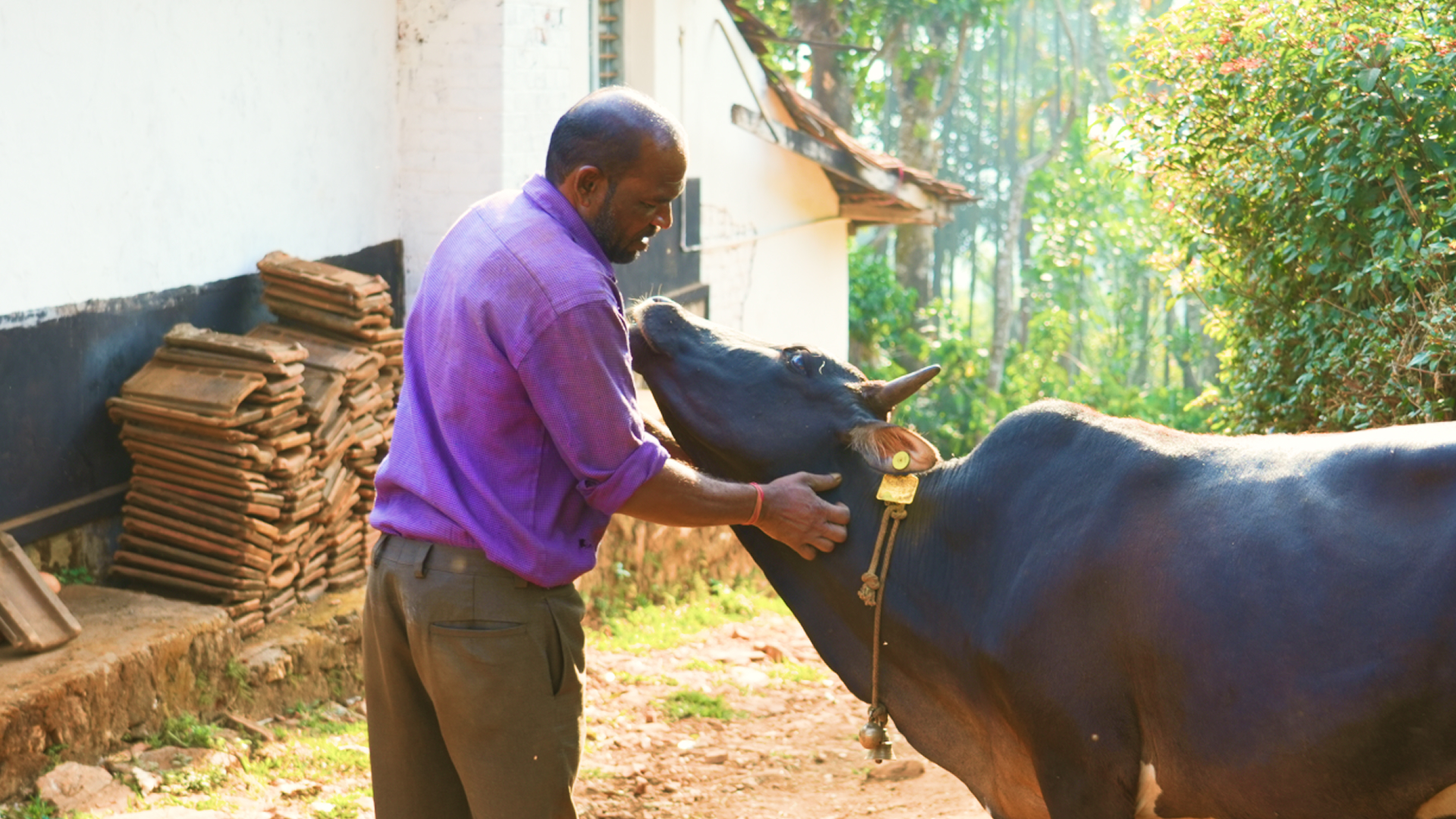
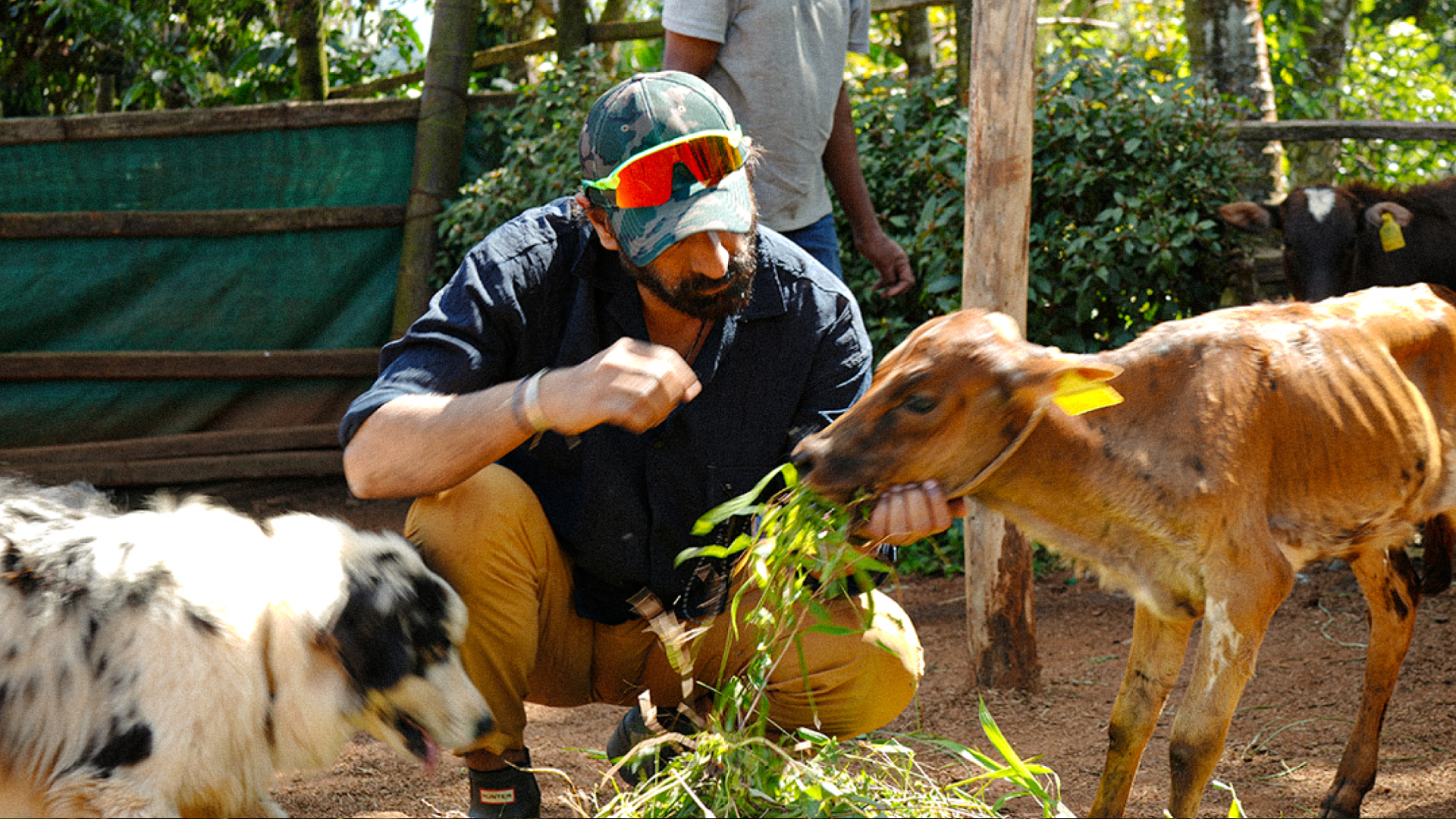
What the coffee draws on, the animals give back. The Malnad Gidda — an indigenous breed, bred to this altitude — move through the blocks as the rotation; their dung and urine feed the biodynamic preparations (BD 500–508), timed to the moon and the season.

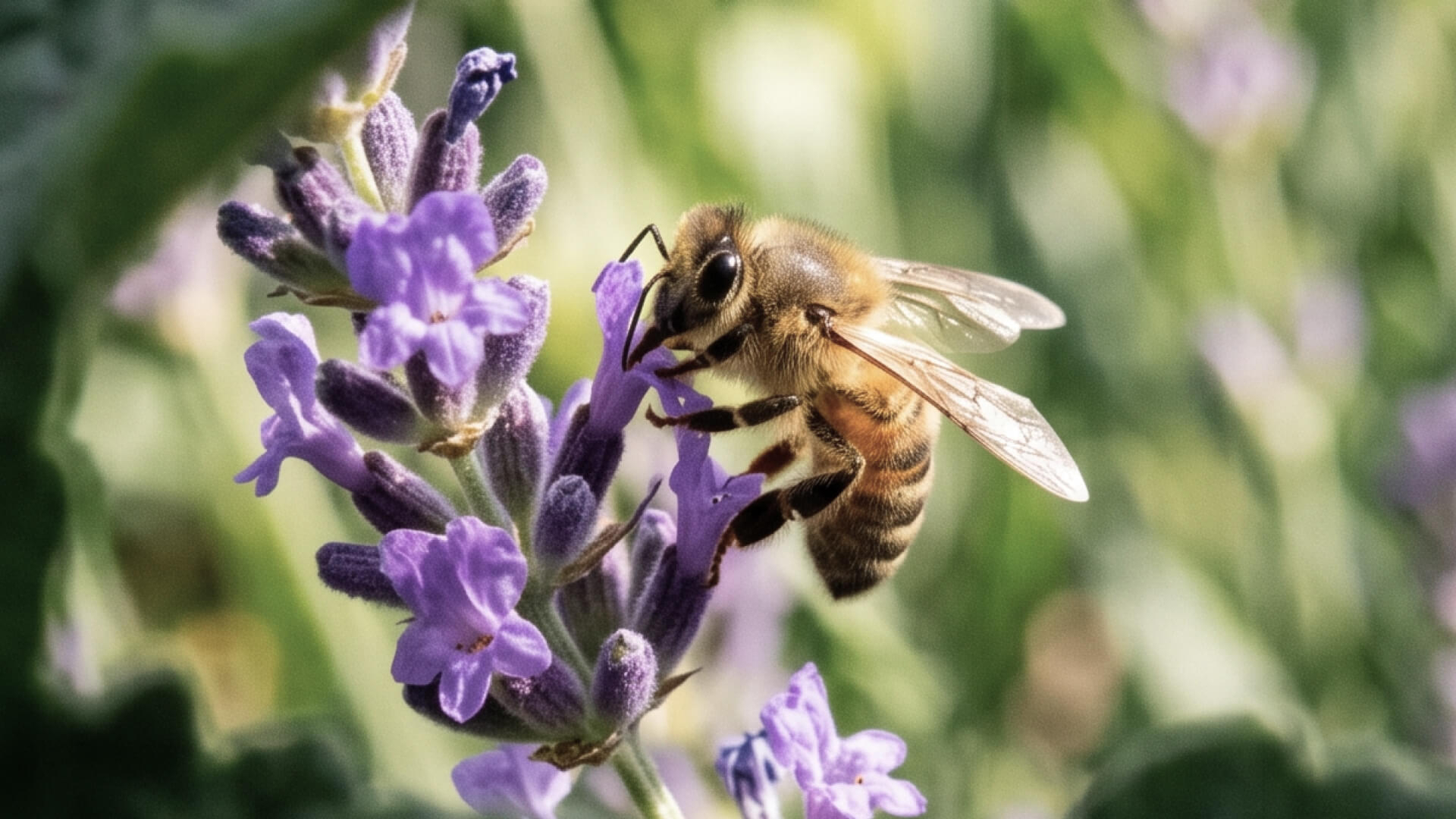
The bees keep the ledger: when colonies thin during flowering, the cherry set drops four to six weeks on. A 12-acre nursery raises native species for the canopy of the next century; orchid restoration is the long horizon. With zero chemical input, season on season, the living soil rebuilds itself — the slow capital every harvest draws on. Nothing leaves the loop.

Malnad Gidda grazing through the coffee blocks

52 cattle, in rotation.

Their movement through the coffee IS the rotation. Their dung is the input.
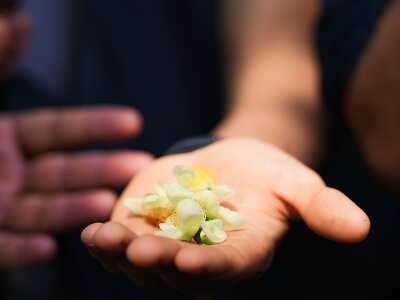
Native bee colonies working pepper and citrus flowers

The bees.

Native colonies in the pepper and the citrus. Pollination windows open and close with the rain.
The twelve-acre native canopy nursery propagating threatened species

The nursery.

12 acres in propagation — native canopy species, raised to be planted out.
What we build should be transparent in 30 years

Monastic polymaths. Crazy misfits.

A working estate is a community before it is anything else — the hands that read the land, the families that have kept it for generations, and the ones who come to stay and learn. What is learned here is written down and given away: biodynamic and Vedic practice, documented and taught, opened to anyone who comes.

Together they are turning a colonial-era plantation, built for extraction, into a living system — one that grows its structures around the landscape rather than through it. An artist residency, a research laboratory, sanctuary spaces: built to be lived in, not only worked.

Phase one fixes the hydrology — reservoirs that catch three thousand millimetres of monsoon and return it to the watershed below, and a five-acre biophilic pilot, the proof of concept for everything that follows. The master plan sets a permanent armature and leaves the rest adaptive: presence without imposition, a place felt more than seen. The canopy planted today is the forest of 2125 — built, from the first drawing, to outlast its builders.

Rebuilt as a living system — the forest of 2125

The land sets the brief.The forest is the farm.Come and stand on it.Walk it at your own pace.The estate reveals more in a single morning than this page can in a year.Coffee at dawn, the canopy at noon, the valley quiet by dusk.