Climate Resilience
An estate in the Western Ghats lives by the rain. For most of its history, the rhythm was dependable enough to build a calendar on. That is no longer true. The hot months run hotter, the dry spells run longer, and when the rain does come it often comes all at once.
We do not answer this with a single fix. We answer it the way we answer most things here: by making the living system harder to break. Deeper soil. More shade. More species. More water held in the ground instead of running off it.
The foundations of climate resilience.
- Water-sensitive landscapes: Work with the natural slope of the land to slow rainfall, improve infiltration, recharge groundwater and store water for dry periods.
- Living soil: Build organic matter and microbial life so the soil retains moisture, resists erosion and stays healthy through changing seasons.
- Biodiversity: Grow a diversity of native trees, shrubs, crops and other species to create a more adaptable ecosystem that can recover from shocks.
- Layered canopy: Use shade trees and multiple layers of vegetation to regulate temperature, reduce evaporation and protect coffee plants from extreme weather.
Keeping water in the landscape.
Rainfall is an opportunity to replenish the land.
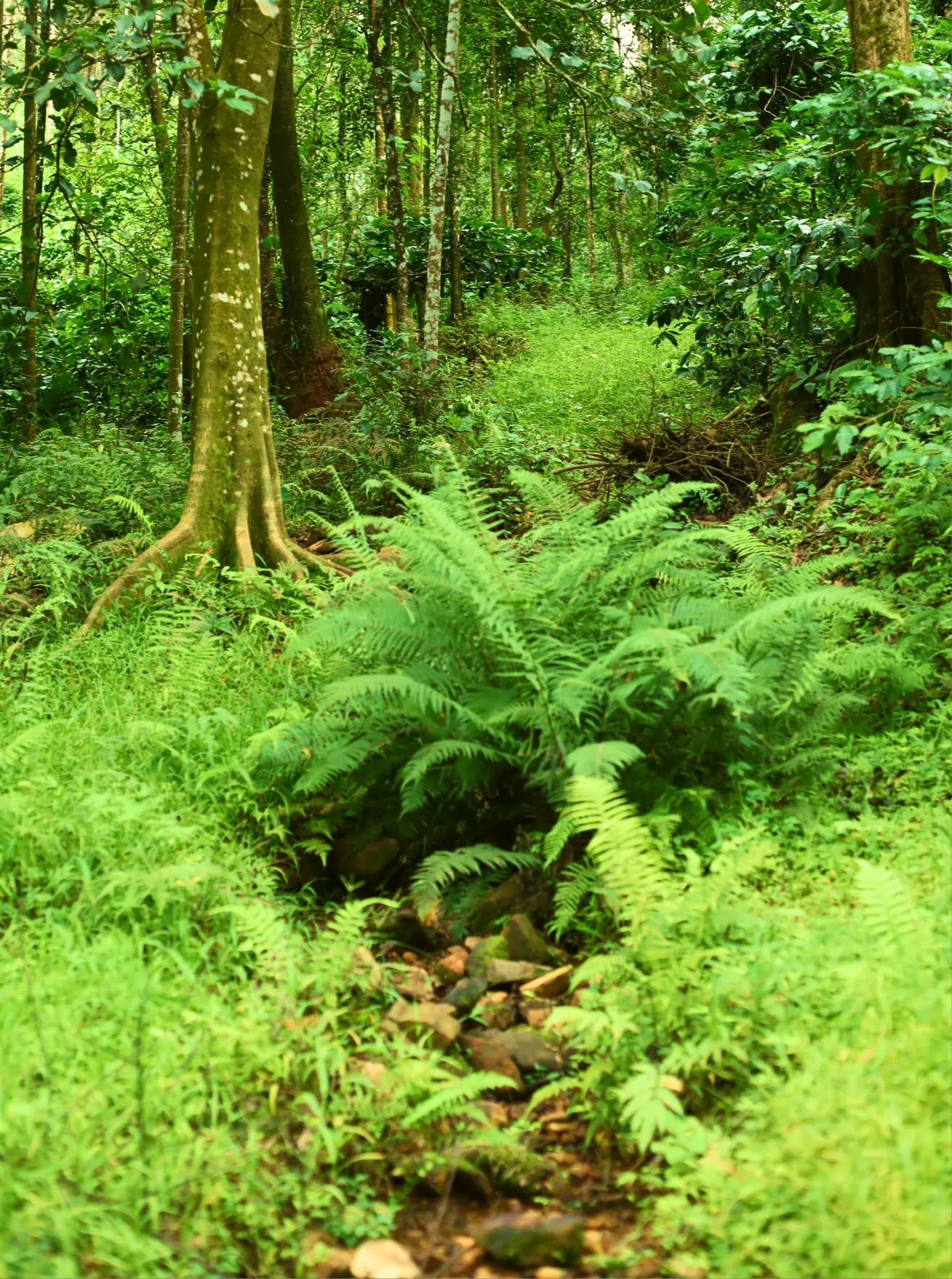
We study the slope, trace the movement of water across each block, and shape the landscape to help it slow down, soak in, and recharge the ground.
Every intervention begins with understanding the land. The aim is to carry more of the monsoon into the months that follow.
Giving the rain a reason to stay.
- Swales and contour trenchesCatch runoff along the slope and let it soak in.
- Infiltration and percolation pitsSend water down to recharge the ground.
- Stone and earthen bundsBreak the speed of water on steeper ground.
- Check dams and gully plugsTurn erosion channels back into places where water rests.
- Farm ponds and rainwater harvestingStore the surplus of the wet season.
- Restored wetland areasHold water and life at the same time.
The ground first, the drip line second.
Healthy soil, layered shade and water-retaining land help sustain the estate through dry periods. Drip irrigation supports young plants as they establish and provides additional water when drought demands it.
The aim is to help the land meet more of its own needs, season after season.
Resilience begins from the soil.
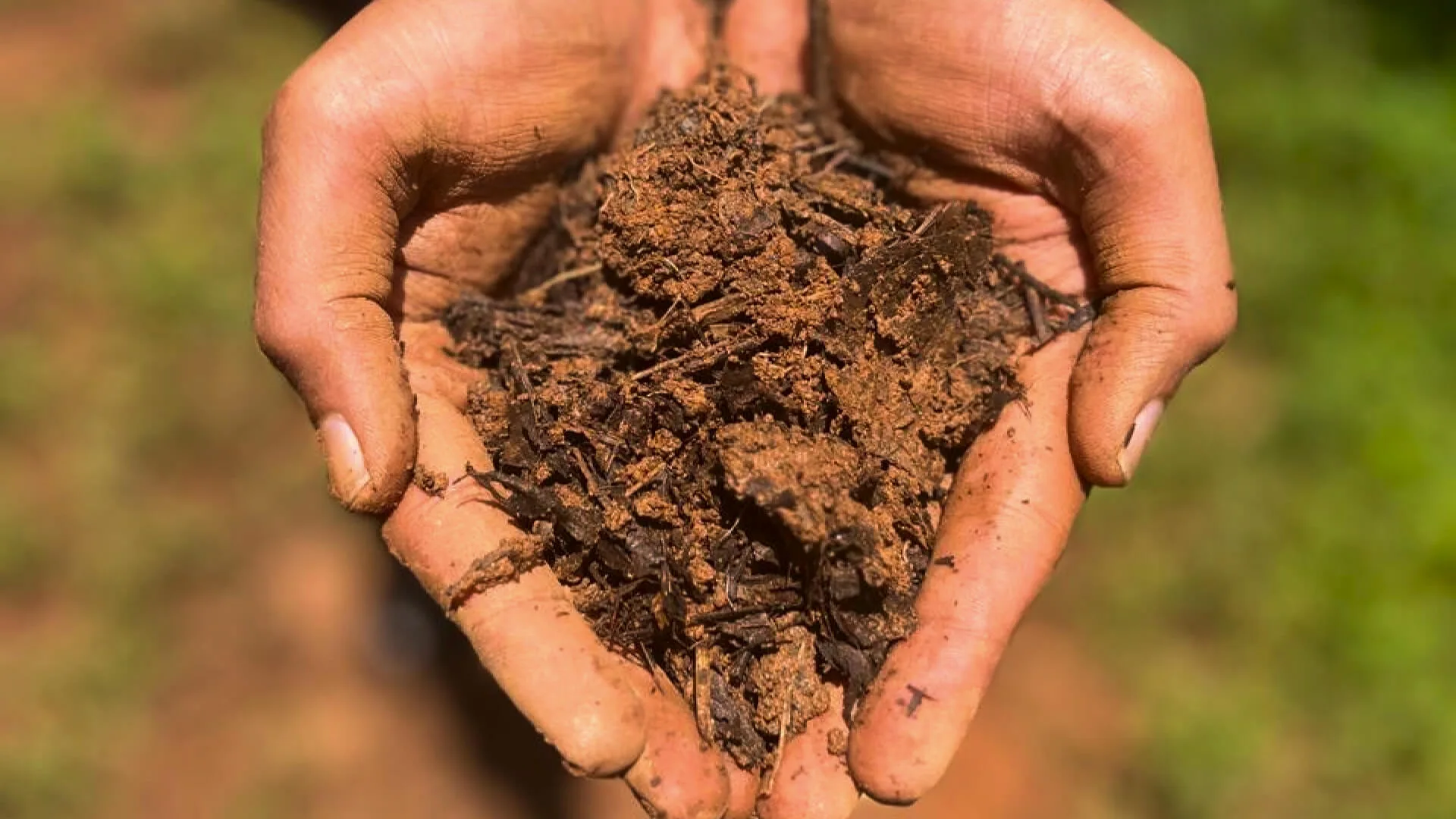
The first defence against drought is soil that can hold water. Organic matter helps the ground retain moisture, build structure and withstand heavy rainfall. Compost, dung, mulch and crop residue return nutrients to the earth. Coffee pulp becomes compost, biochar is added where it helps, and minimal soil disturbance protects the life beneath the surface.
Every season, we build soil that can hold more water, support more life, and sustain the next cycle of growth.

Soil thrives under cover.
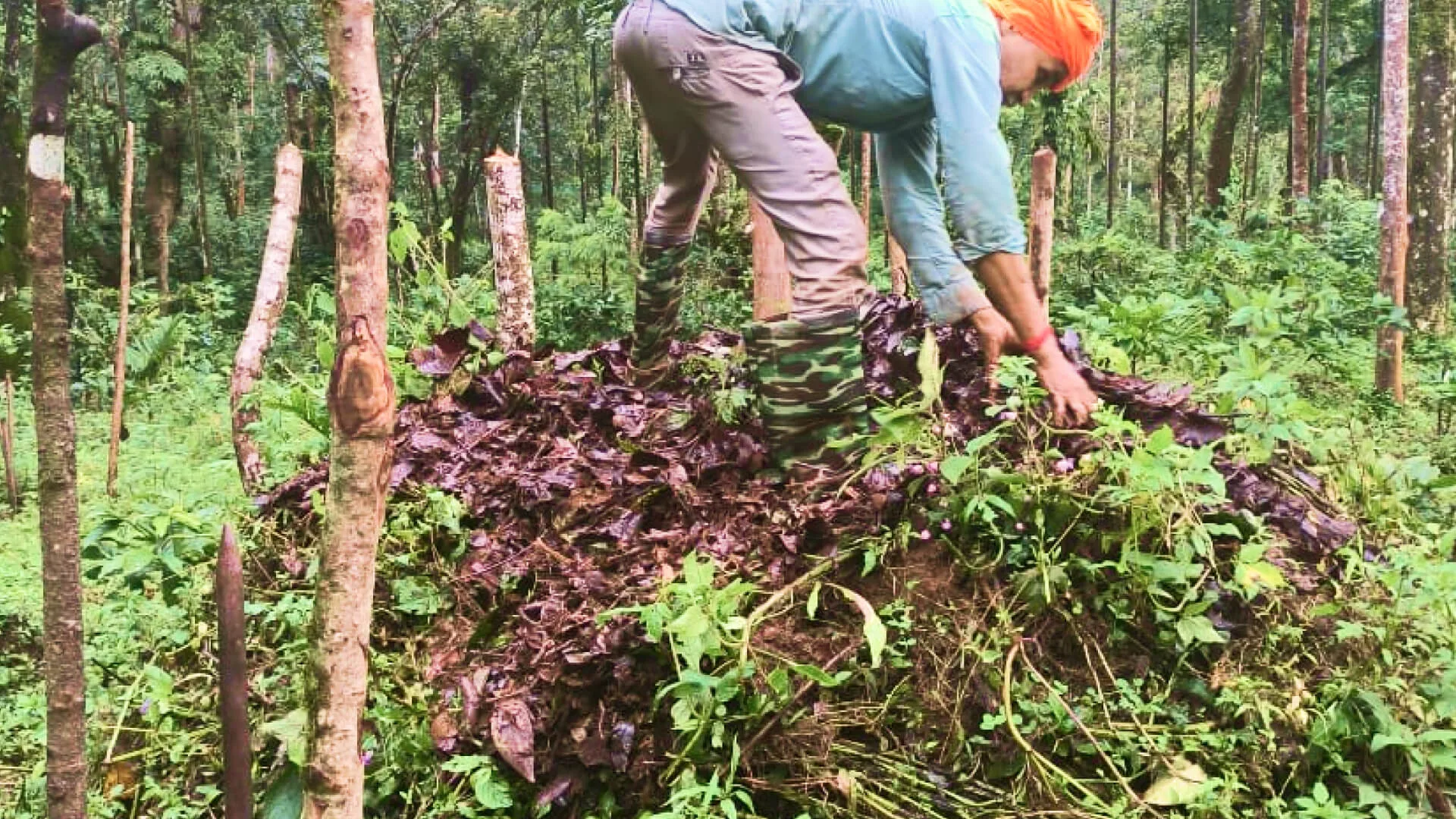
Mulch, leaf litter and living groundcover protect the earth from heat, slow evaporation and help rainfall soak into the ground. They also feed the living network beneath the surface.
We look for progress in the soil itself: more organic matter, richer microbial life, better water retention and less erosion. We test, observe and test again, building a clearer picture of how the land changes over time.
A diverse landscape is a more resilient one.
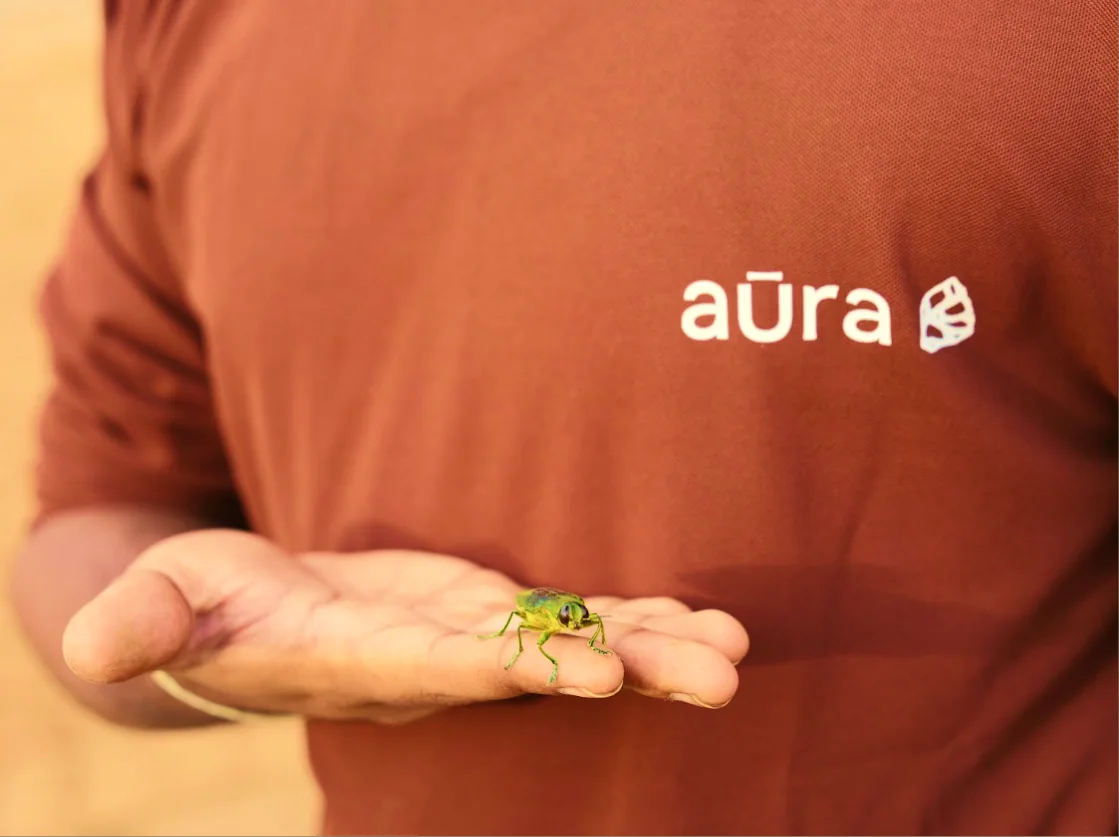
Native trees, hedgerows, pollinator strips and wildlife corridors create space for more life. We protect habitats, manage invasive species like Lantana, and return cut vegetation to the soil as mulch.
We count birds, insects and soil life alongside the crop, because each plays a part in keeping the landscape healthy.
The right plant for the ground it stands in.
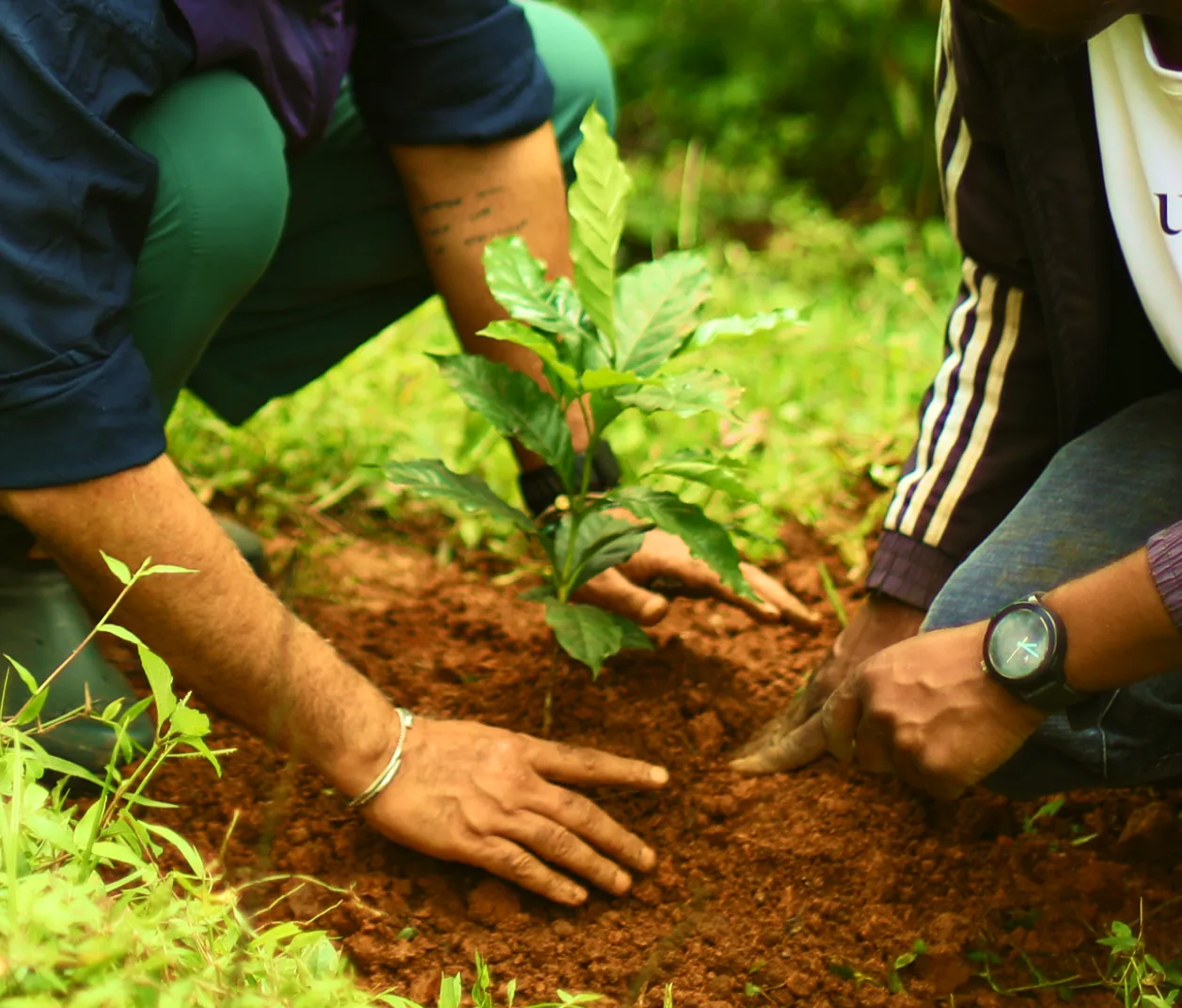
Resilience is also genetic. We choose species and varieties for the estate’s real conditions, favouring native and adaptive ones. We run trials of climate-resilient varieties, plant mixed-variety blocks, keep local landraces alive, and mark the plants that hold up best so their seed can carry the estate forward.
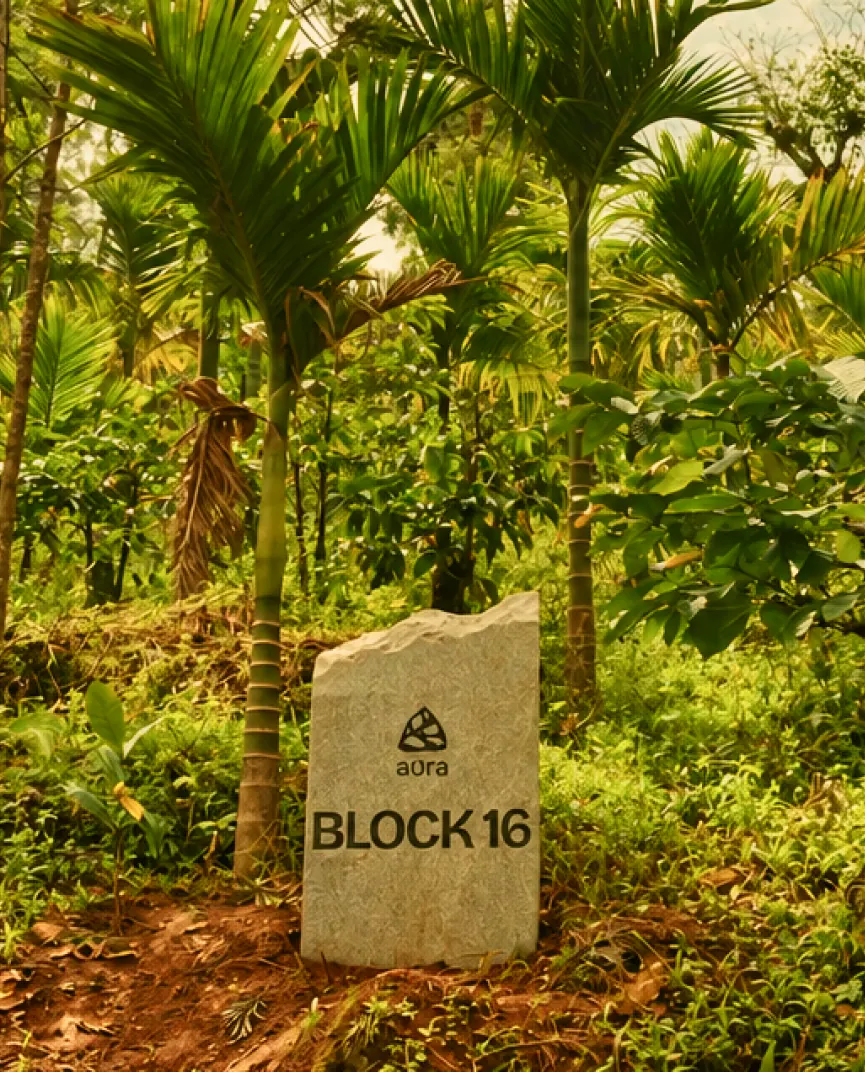

Shade as strategy.
Shade helps regulate the estate’s microclimate.
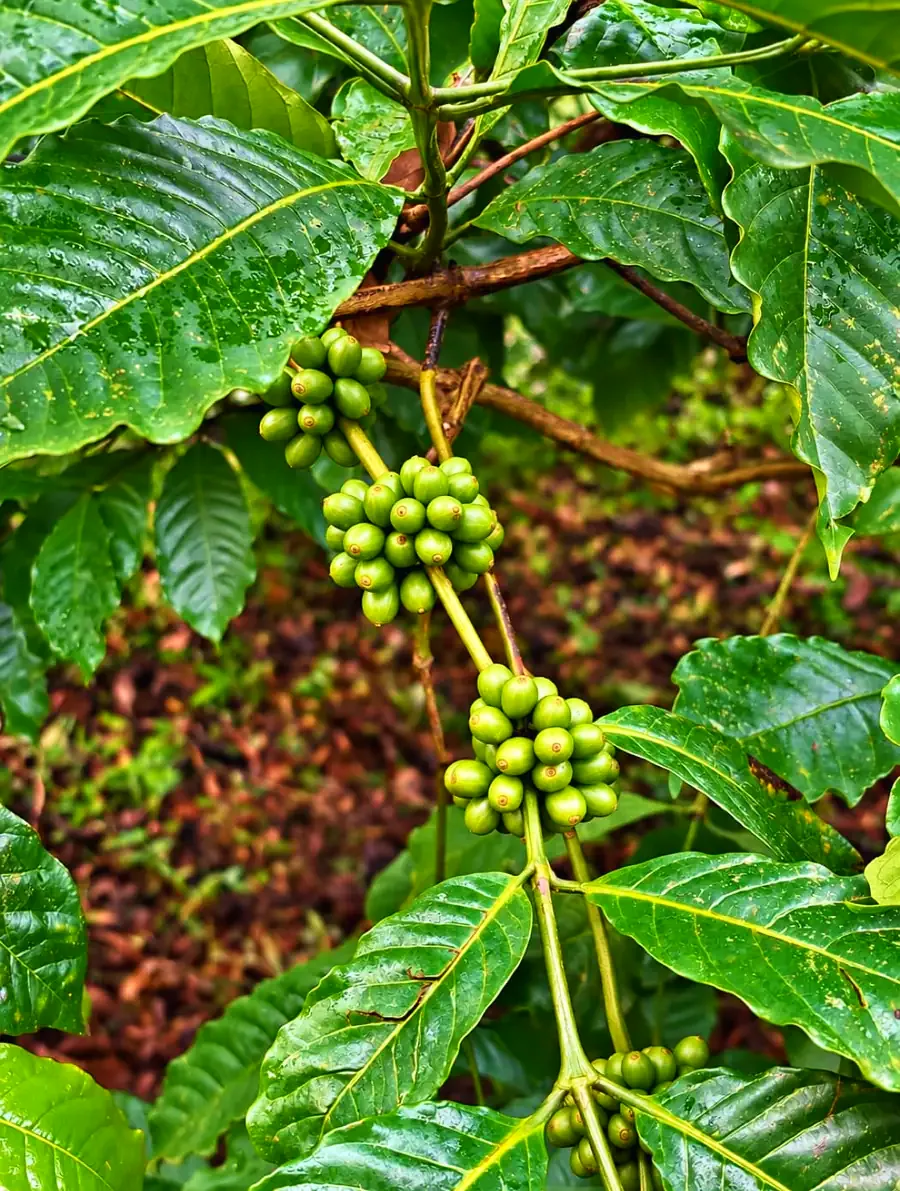
A well-managed canopy cools coffee plants, reduces moisture loss and softens the impact of heavy rain. We monitor shade across the estate and adjust it to the season and the needs of each block.
In the heat, we increase cover where plants need protection. In the monsoon, we open the canopy to improve airflow and reduce fungal pressure. The goal is a canopy that responds to the landscape, season after season.
Growing in layers.
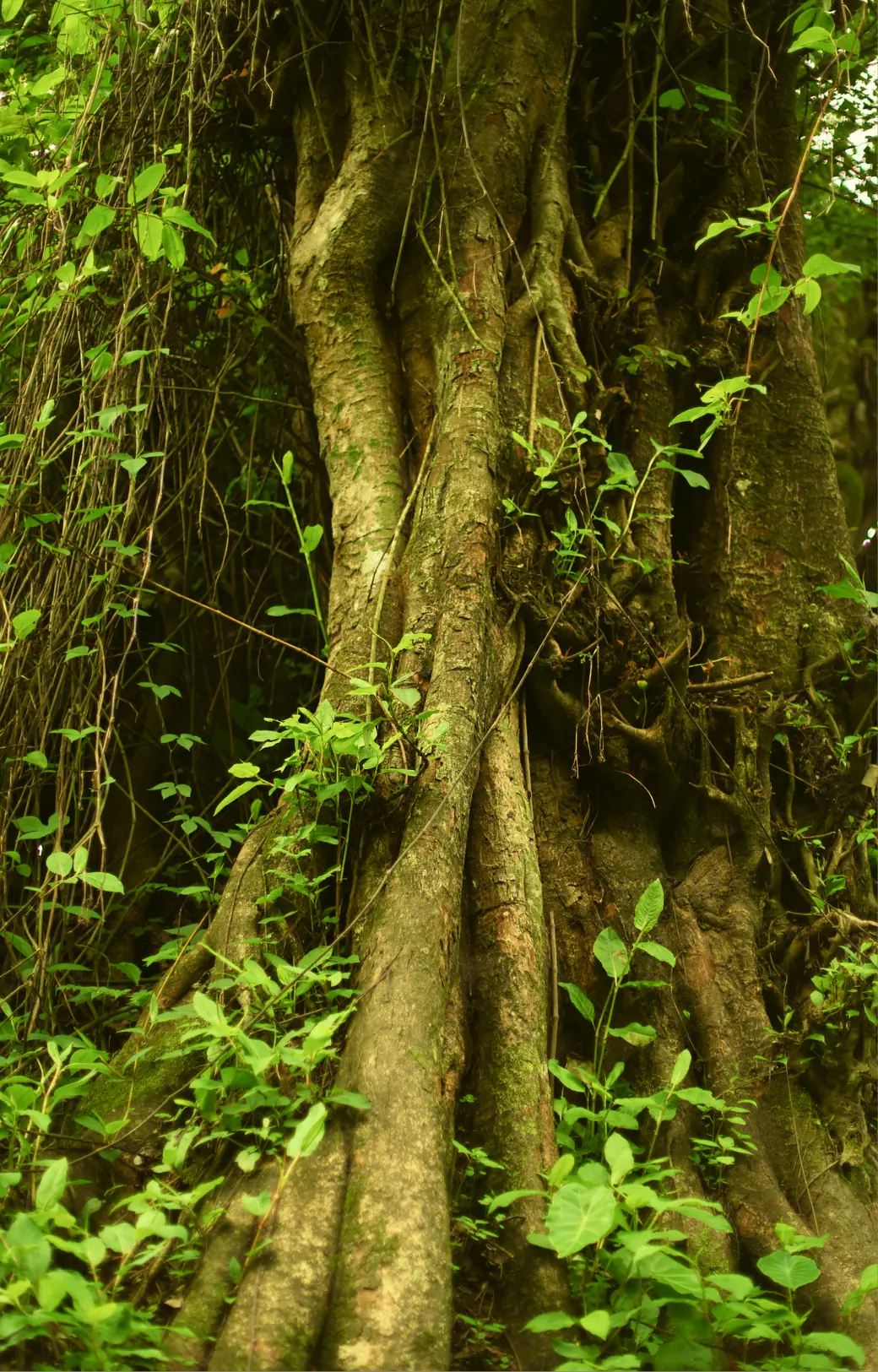
We grow coffee as part of a layered, living landscape.
Shade trees, pepper vines, areca, fruit and timber trees, nitrogen-fixers, shrubs and groundcover each play a role. In time, cocoa will join them, adding another layer to the system.
Together, these layers hold moisture, support biodiversity and create a more resilient estate, with more ways to thrive through changing seasons.
Observe first. Then act.
None of these are reflexes. Each intervention begins with someone on the ground, looking at a specific plant or slope and asking what is actually wrong. We record what we did, why, the conditions, and what happened next. Over time, this builds a record of what works on this land, tracking block health, soil and water trends, and whether each intervention made a difference. So every season begins with more knowledge than the last.
Resilience is a claim. We build the evidence to support it.
Thinking in decades.
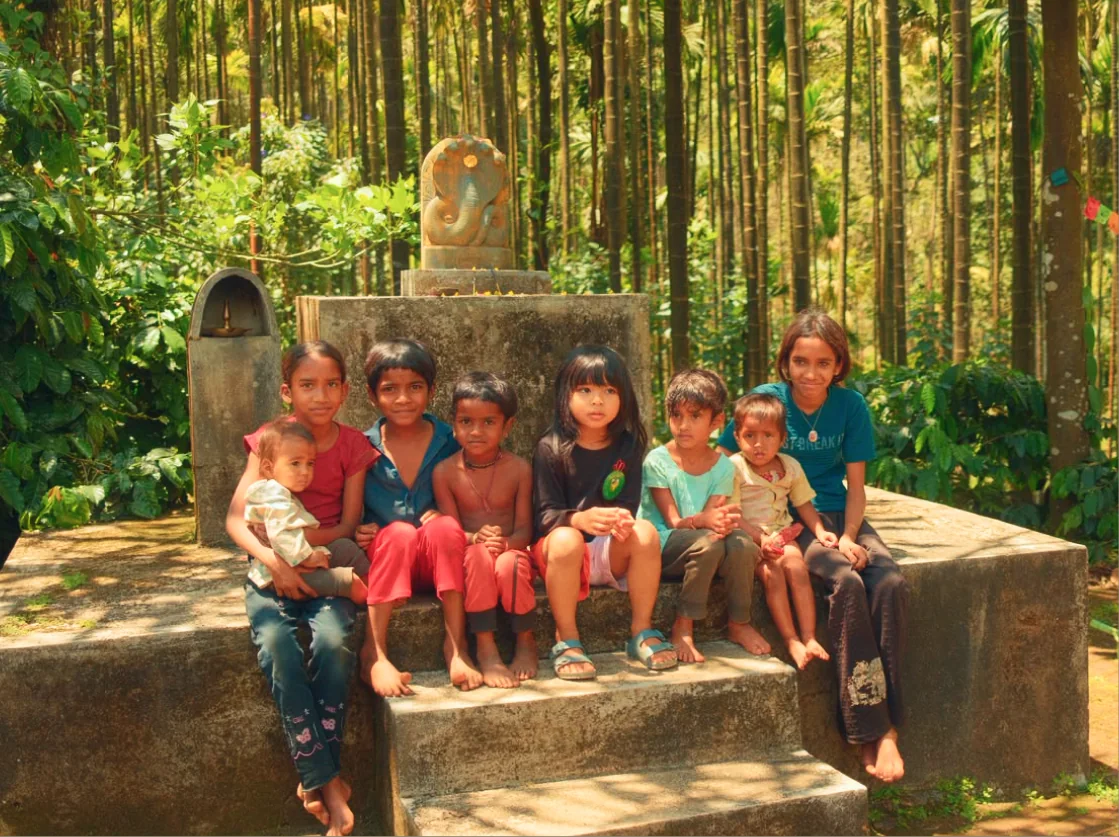
A drought year tests a decision made ten years earlier. The shade tree planted this season, the swale dug this winter, the soil built one handful of compost at a time: these are not for this harvest. They are for the estate our children and grandchildren will walk.
The estate should be measurably more alive each cycle.
In a changing climate, that is what resilience means.