Malabar Pepper

The vine grows up the palm.

Piper nigrum is a climber. At Mudigere, Aura trains it up the areca palm — one vine to a trunk — so the pepper rises into the mid-canopy on living wood, the way it has grown in the Western Ghats for centuries. The method is old; the attention Aura pays it is exact.

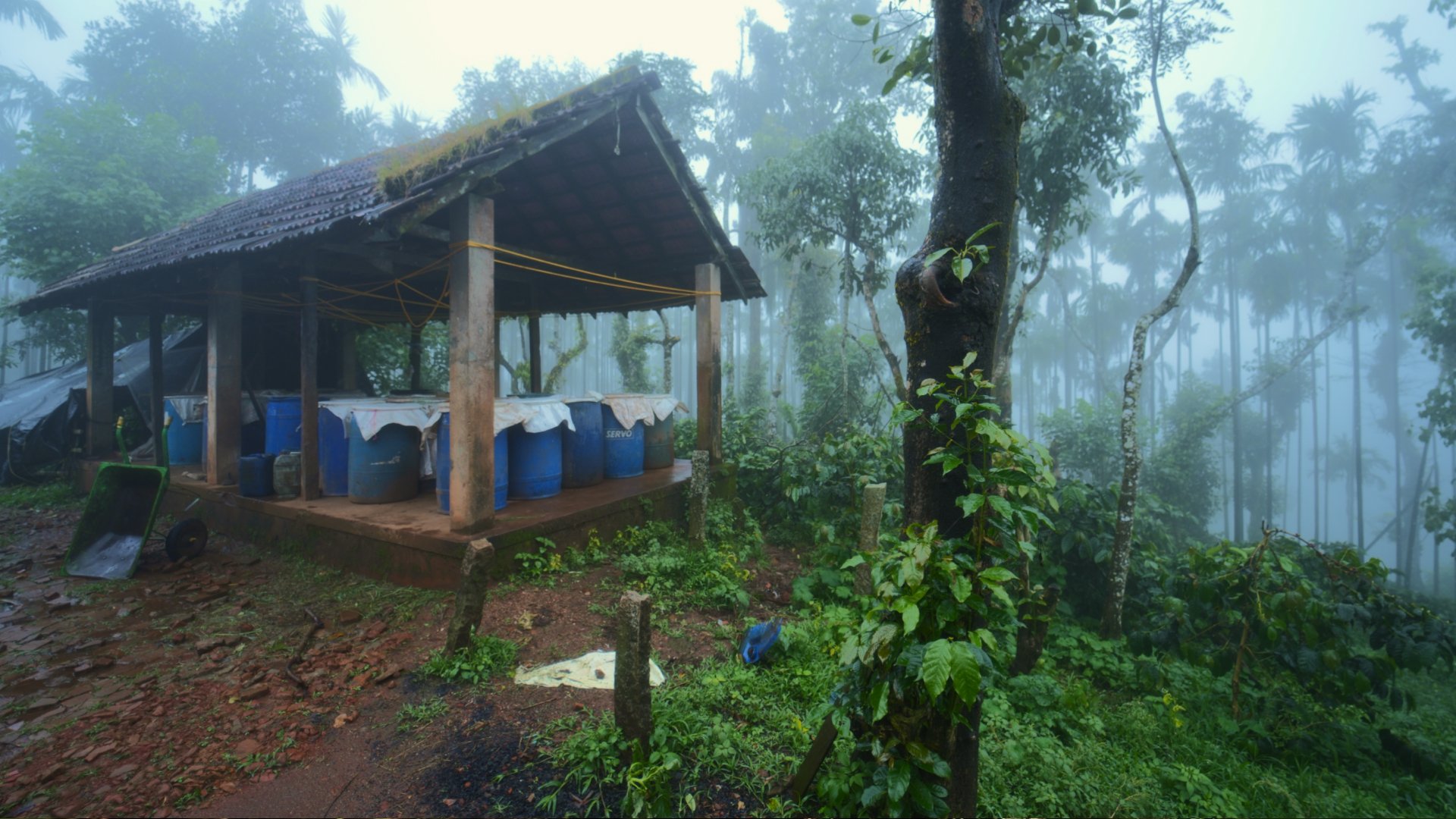
The vines sit at 3,600 ft on the red laterite the coffee roots into, under the same four-story shade. The monsoon arrives in June and leaves in September. Flowering follows the first rain; the pick runs through the dry months that follow, by hand, cluster by cluster, never stripped.

Areca palm

The living trellis — one vine to a trunk, in the mid-canopy.

3,600 ft

The coffee's elevation, the coffee's laterite, the coffee's shade.

By hand

Picked cluster by cluster through the dry months, never stripped.
Portrait · canopy · Black pepper climbing the rain-slick trunk of a mature areca palm at Mudigere

Black, white, and green.

Black, white, and green pepper come from the same berry. Which one it becomes is decided in the first forty-eight hours after the pick — by how ripe the corn was when it left the vine, and by what Aura does with it next.

Black · sun-dried

Picked just before full ripeness and dried whole in the sun until the skin wrinkles dark around the corn. The heat is forward, the aromatics at their sharpest.

White · retted

Picked fully ripe and soaked in cool running water until the outer skin lifts away from the pale corn beneath. Heat with the top-note taken off — the pepper for a broth.

Green · fresh-kept

Picked young and held in brine or flash-frozen to keep the grassy, live character of the fresh drupe. The pepper closest to the vine.
Process · sun-drying · Drupes on raised bamboo platforms, taking the first sun after the pick

Retted, not rushed.

Pepper is one of the estate's ferments, alongside the coffee and the cattle dung that feeds them both. Aura rets its white pepper in spring water from the estate catchment, changed daily and run cooler than river retting — which is what brings it out round in the cup.

The pepper and the coffee draw on the same biodynamic inputs, so the shed schedules one calendar around the other. One anaerobic lot is still young — a few sealed vessels, watched daily, coming out fruitier than a classic corn. Aura releases it when it earns release, and not before.

Picked by hand.Dried in the sun.Released by the season.

Place as signature.

The quality of the pepper is the quality of the ground it grew on. The Ghats terroir gives Malabar its signature — forward heat, a citrus top-note, and a pine-resin depth — and Aura grows toward that mark season by season.

Every lot is labelled with the block it grew in, the month it was picked, and the palm the vine climbed. That record — kept the same way the coffee's is — is the whole appellation: the altitude, the laterite, the shade, and the microbiome of one strip of the Ghats, written down so a buyer can read it back.

Heat without a *shortcut*.

The vine outlives the year.

A pepper vine crops for decades on the same palm, so Aura works it on a decade's horizon — feed the soil the vine roots into, hold the shade above it, and let the block deepen season after season. The oldest method in the Ghats, worked with modern measurement: Natural Intelligence, applied to a vine.

Single-estate pepper, small-parcel trade, and chef partnerships: spice@theaura.life. Lots are small and released by the season. Aura does not blend across estates — every jar is from this land.